

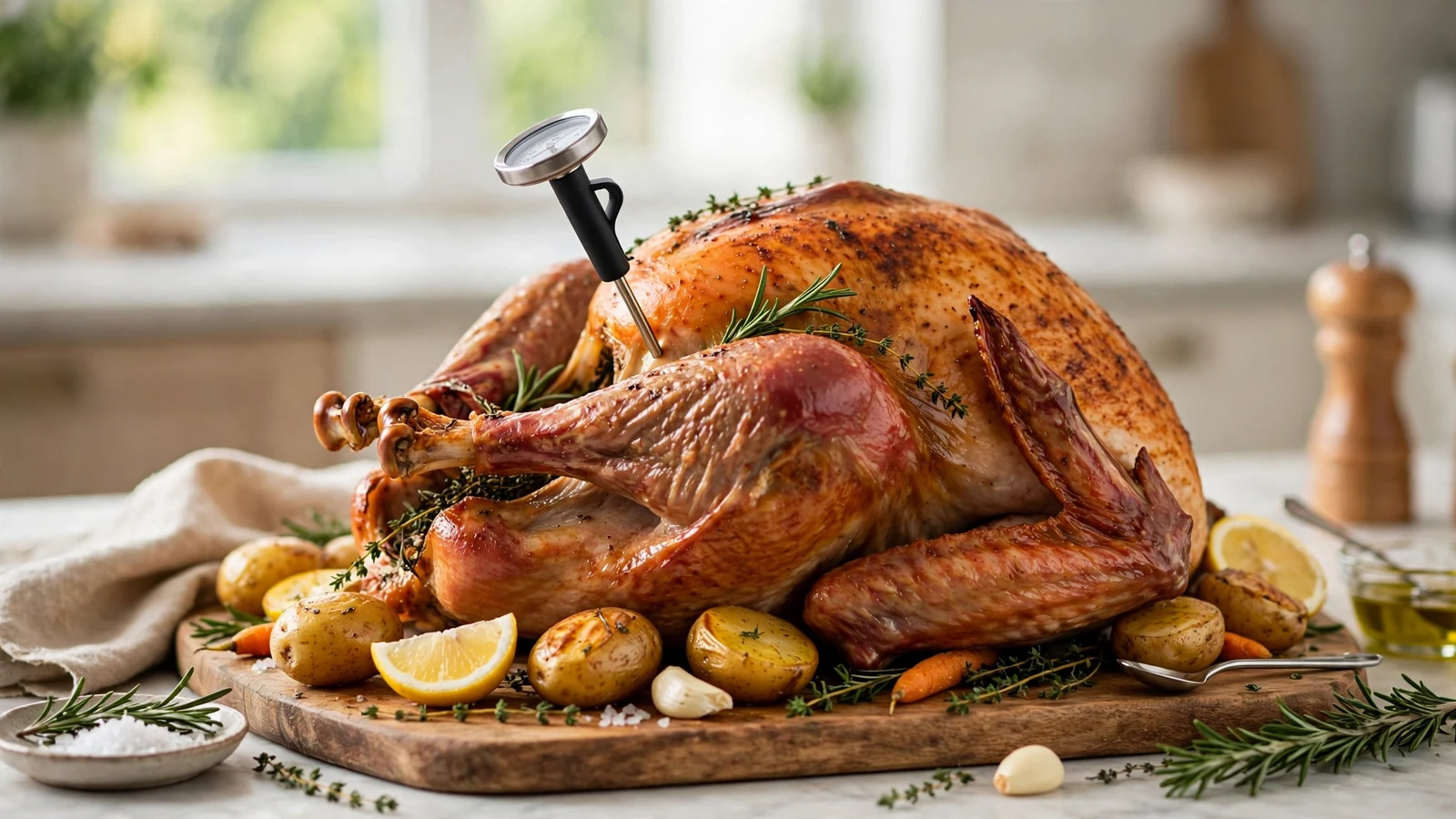
Cooking a holiday bird without proper tools is a gamble nobody needs to take. Getting the process right means mastering how to use a meat thermometer for turkey, ensuring the meat stays juicy while hitting the precise internal temperature required for food safety.
Dry meat and undercooked surprises both ruin a holiday meal. Skip the guesswork this year by learning the mechanics of accurate temperature tracking.
Choosing the Right Type of Meat Thermometer
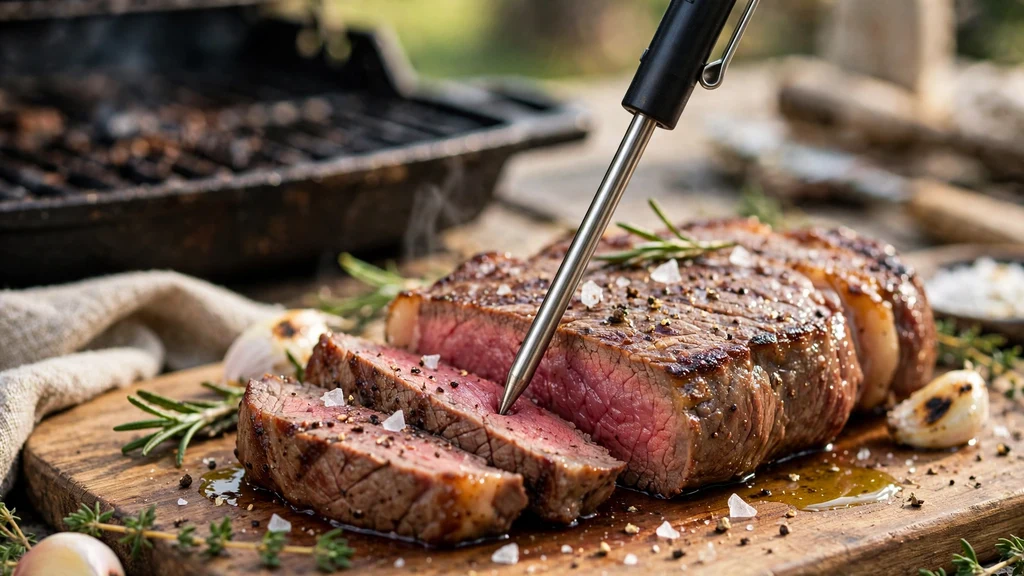
Selecting the correct device changes everything about how you monitor your main course. You need a tool that responds quickly and provides exact readings without letting all the oven heat escape. Different styles serve distinct purposes during a long roasting session, so picking the right model depends on your cooking method.
The market offers several varieties, ranging from traditional analog dials to advanced digital gadgets. Understanding their differences helps you pick a reliable companion for your roasting pan.
- Digital instant-read models: These give you a fast number on an LCD screen within seconds, perfect for spot-checking near the end of roasting.
- Leave-in probe thermometers: These feature a thin metal cable attached to a base unit, allowing you to monitor the heat continuously without opening the oven door.
- Dial thermometers: Traditional round-faced options that take longer to register, though they work fine if calibrated properly before use.
- Wireless smart probes: High-tech options that connect to your phone via Bluetooth, letting you track progress from the living room.
Each style has specific quirks. Digital screens require batteries, while analog dials need manual calibration in ice water. Knowing how your specific tool operates prevents kitchen mishaps on Thanksgiving day.
Understanding Safe Internal Temperatures for Turkey
Food safety standards require specific heat thresholds to eliminate harmful bacteria in poultry. Relying on visual cues like skin color or clear juices leads to inconsistent results. The USDA recommends pulling your bird when it reaches a specific internal temperature.
Many home cooks wonder whether the target should be 165 or 180 degrees. The truth depends entirely on where you place the probe.
| Location | Target Temperature | Notes |
|---|---|---|
| Deepest part of the breast | 165°F (74°C) | Remove heat immediately to prevent dry meat. |
| Thickest part of the thigh | 175°F to 180°F | Dark meat contains more connective tissue and needs higher heat. |
| Center of the stuffing | 165°F (74°C) | Measure this last if you cook stuffing inside the cavity. |
Breast meat dries out rapidly if pushed past the safety threshold. Thigh meat, conversely, benefits from a slightly higher reading because it breaks down tough collagen and renders out excess fat.
Finding the Correct Placement Spots
Where you stick the metal stem dictates whether your reading is accurate. Jamming the tip blindly into the bird causes false readings that ruin dinner. You must target the meatiest zones while avoiding bone and hollow cavities.
The thickest part of the breast sits just above the wing joint, sloping upward toward the neck cavity. Slide your device in at an angle rather than straight down from the top.
For the thigh, find the spot between the leg and the body where the muscle bulges the most. Keep the tip away from the actual pelvic bone. Touching bone gives a deceptively high reading because metal conducts heat faster than flesh.
If you roast a spatchcocked bird or a boneless breast roast, the geometry changes slightly. Always target the geometric center of the thickest mass of muscle tissue available.
Mastering the Insertion Technique
Inserting a probe correctly requires a steady hand and a bit of anatomical knowledge. Many digital thermometers feature a small notch or dimple on the metal stem. That physical mark indicates where the actual sensing element lives inside the metal.
Make sure that dimple sits right in the center of the meat. If the tip pokes all the way through into the hollow cavity, you are measuring the hot air circulating inside the bird rather than the flesh itself.
Push the probe in horizontally when working with a whole bird on a roasting rack. This angle prevents the heavy weight of the bird from bending thin metal shafts and keeps your hands safely away from hot oven surfaces.
Hold the device steady for a few seconds until the digital display stops climbing. If the number keeps creeping up, the sensing tip hasn’t reached the core yet.
Using Leave-In Probes and Smart Technology
Modern kitchen tools allow you to track your roast without constantly opening the oven door and losing valuable heat. A leave-in digital model features a heat-resistant wire connected to a remote display outside the oven.
Set the alert feature on your unit for a few degrees below your target threshold. Ovens retain residual heat, meaning the meat continues cooking slightly even after you turn off the heat source.
Wireless smart probes take convenience further by syncing temperature data directly to an app on your smartphone. You can monitor the ambient oven heat and the internal progression while relaxing away from the kitchen.
Route external wires carefully so they do not pinch tightly in the oven door seal. A pinched cable damages the internal wiring and ruins the device permanently.
Dealing with Stuffed Birds and Special Cuts
Cooking a stuffed bird introduces unique challenges to temperature monitoring. The cavity stuffing absorbs moisture and takes significantly longer to reach a safe heat level than the surrounding meat.
Always check the center of the stuffing last. If the poultry reads safe, but the stuffing sits below 165 degrees, you risk food-borne illness from bacteria trapped inside the cavity.
For smaller cuts like a bone-in turkey breast or a rolled roast, the same core principles apply on a smaller scale. Locate the densest muscle mass and insert your tool horizontally from the side.
If you want to read more about official food handling guidelines and safety thresholds, check out the USDA Food Safety and Inspection Service for comprehensive guidelines on holiday meal preparation.
Troubleshooting Common Thermometer Errors
Sometimes your equipment malfunctions or gives readings that defy logic. A sudden reading of 200 degrees thirty minutes into cooking means your tip hit a bone or poked through into the empty cavity.
Calibrate analog dials regularly by submerging the tip in a glass of crushed ice and water. The needle should point directly to 32 degrees. If it drifts, twist the calibration nut on the back until it matches.
Digital screens sometimes glitch due to weak batteries or moisture getting into the housing. Keep spare batteries nearby and never submerge the electronic display unit in dishwater.
Cleaning your gear immediately after use prevents grease buildup on the metal stem. Residue acts as an insulator and slows down response times during your next cooking session.
Letting the Meat Rest Before Carving
Taking your bird out of the oven is only half the battle. Slicing immediately causes all the flavorful juices to run out onto the cutting board, leaving dry, disappointing slices on the plate.
Leave your roasting thermometer in place during the resting period if you use a leave-in model. Watch how the internal heat continues to rise by five to ten degrees as the muscle fibers relax.
Cover the platter loosely with a tent of aluminum foil to trap warmth while steam escapes. Give a whole bird at least twenty to thirty minutes of uninterrupted rest time before bringing it to the table.
This resting window also gives you time to finish your gravy and clean up workspace counters. Proper timing transforms an ordinary roast into an unforgettable centerpiece.
Frequently Asked Questions
Where do I put a meat thermometer on a turkey?
Insert the probe into the thickest part of the breast, making sure to avoid the bone. You can also check the deepest part of the thigh, keeping the metal tip away from the hip joint for an accurate reading.
Is a turkey done at 165 or 180 degrees?
Pull the breast meat when it hits 165 degrees Fahrenheit. Thigh meat can go up to 175 or 180 degrees because dark meat benefits from higher heat to render connective tissue.
Can you leave a meat thermometer in a turkey while it cooks?
You can leave oven-safe digital probes inside the bird throughout the entire roasting process. Never leave basic instant-read digital models inside a hot oven because high heat destroys their internal electronics.
Do I need to calibrate my thermometer?
Analog dial models require periodic calibration in ice water to maintain accuracy. Digital models generally arrive pre-calibrated from the factory and rarely require manual adjustments.
Conclusion
Mastering temperature tracking eliminates holiday stress and guarantees a juicy, perfectly cooked centerpiece. Follow these steps, trust your equipment, and enjoy the praise for a well-prepared meal. Get your tools ready before the big day arrives.