

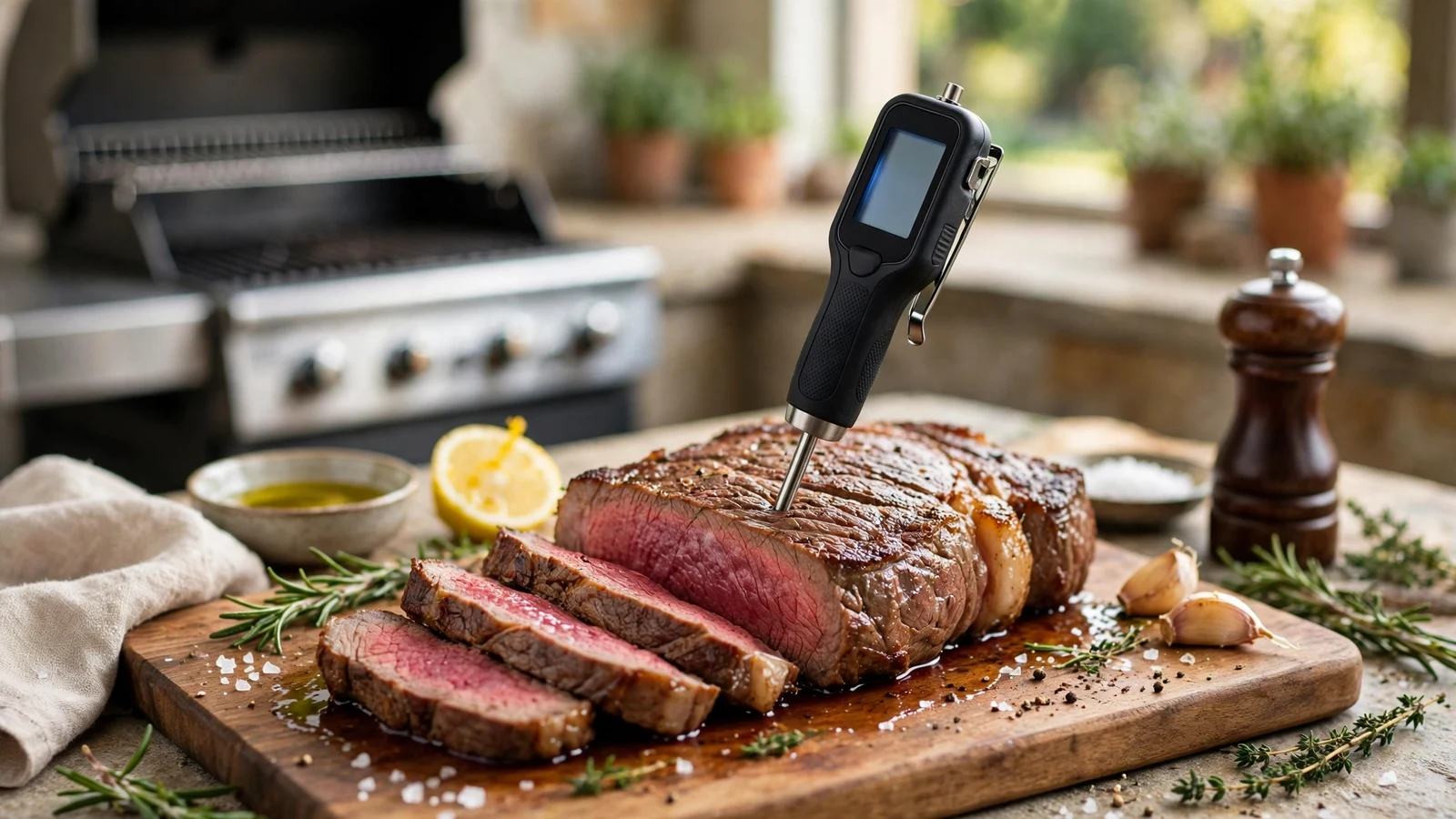
Finding a reliable way to check doneness changes everything in the kitchen, making you wonder how you ever managed without a proper tool. Figuring out what a good meat thermometer actually looks like requires cutting through marketing noise to focus on speed, build quality, and sensor precision. Whether you are searing a thick ribeye or nursing a brisket through a long smoke, knowing your equipment prevents dinner disasters.
Understanding Core Thermometer Types

You cannot talk about kitchen tools without dividing them into two main categories: instant-read models and leave-in devices. Each serves a distinct purpose during food preparation. Picking the right device depends entirely on your cooking style and what kind of meals you make most often.
An instant-read thermometer gives you a fast snapshot of internal heat. You insert it manually into the thickest part of the food, read the screen, and pull it right back out.
These gadgets do not stay in the oven or on the grates. They are built for speed and agility, letting you check multiple spots in seconds.
On the flip side, leave-in units feature a metal probe connected by a heat-resistant wire to a base station, or they operate completely wirelessly. You stick the sensor into the roast before it goes into the heat, and it stays put the whole time. This setup monitors long, slow cooks without opening the door or lid.
Speed and Precision Matter Most
When you stand in front of a hot oven or an open flame, waiting ten seconds for a reading feels like an eternity. A truly accurate device should register the true temperature in under three seconds. This speed stops heat from escaping your cooking chamber and keeps your hands safe from steam flare-ups.
Precision is just as critical as velocity. Cheap gadgets often drift by several degrees, which is the difference between a tender medium-rare steak and a dry, overcooked piece of leather.
Look for tools calibrated to within plus or minus one degree Fahrenheit. This level of reliability ensures your poultry is safe to eat while preserving optimal moisture in expensive cuts of beef.
Build Quality and Weather Resistance
Kitchens and backyards are messy environments. Water splashes, grease splatters, and smoke rolls everywhere. If a device lacks proper sealing, moisture creeps into the housing and ruins the internal electronics within weeks.
A durable design features a waterproof or highly water-resistant body that survives quick rinses under the tap. Stainless steel probes attached to braided cables can handle extreme oven heat without melting. If you drop your gadget on the concrete patio, a ruggedized rubberized grip prevents catastrophic shattering.
Display Readability in All Lighting Conditions
Trying to squint at a tiny, dim screen while grilling in the dark is frustrating. The best models feature a large, crisp display with bold numbers that you can scan from a distance. Bright viewing angles matter when you are leaning over a hot stovetop.
A built-in backlight is non-negotiable for evening grilling sessions or midnight brisket flat-wraps. Some advanced screens even rotate automatically depending on how you hold the unit, making left-handed readings just as effortless as right-handed ones.
Smart Features and Wireless Connectivity
Technology has transformed outdoor cooking over the last decade. Modern units now sync with your smartphone via Bluetooth or Wi-Fi, sending real-time alerts straight to an app in your pocket. This means you can prep side dishes inside while your roast cooks outside.
- Monitor target thresholds without standing by the cooker
- Track graphing trends over time for long smoking sessions
- Receive custom alerts when protein reaches your preferred doneness
- Save preset profiles for beef, pork, poultry, and fish
These smart additions free up your attention. You no longer need to babysit the equipment every single minute, reducing stress during large holiday dinners or backyard parties.
Battery Life and Power Sources
Nothing ruins a weekend cookout faster than a dead battery right when the meat goes on the grates. Traditional instant-read models typically run on coin-cell batteries that last for thousands of hours of active use. Some high-end units feature auto-shutoff sensors that power down the screen the moment you fold the probe away, preserving energy.
Rechargeable lithium-ion batteries are common in wireless leave-in systems. They charge via USB-C ports hidden neatly inside the charging dock. Always check how long a single charge lasts, especially if you plan on tackling twenty-hour pork shoulder cooks that test equipment endurance.
Comparing Popular Thermometer Configurations
To help visualize your options, the table below breaks down the primary styles available on the market and where they excel.
| Thermometer Type | Best Used For | Key Advantage |
|---|---|---|
| Instant-Read | Steaks, chops, quick checks | Lightning-fast readings in seconds |
| Wired Leave-In | Roasts, ovens, long smokes | Continuous monitoring without opening doors |
| True Wireless | Rotisseries, closed smokers | Zero wires to tangle or melt |
For more detailed safety guidelines on cooking temperatures, check the recommendations provided by the United States Department of Agriculture regarding safe internal thermal minimums for various meats.
Choosing the Right Brand and Price Point
The market is flooded with cheap knockoffs that look impressive online but fail after a few uses. Investing in a reputable brand saves money over time because you won’t have to replace a broken tool every six months. Premium manufacturers engineer their sensors to withstand heavy professional abuse in restaurant kitchens.
Prices range widely from budget pocket options to luxury multi-probe systems. Decide which features you genuinely need before spending top dollar.
If you only sear burgers on weekends, a basic fast-reading stick is plenty. If you are a dedicated pitmaster hosting neighborhood feasts, a multi-channel wireless system is worth every penny.
Frequently Asked Questions
What kind of meat thermometer is most accurate?
Digital instant-read models generally offer the highest accuracy because their thin tips sense exact thermal points quickly. Calibration adjustments can also be made on many high-end units using ice water baths to verify precision.
What should my meat thermometer be set at?
Target settings depend entirely on the protein you are preparing. Poultry requires 165 degrees Fahrenheit for safety, while beef steaks range from 125 for rare up to 160 degrees for well-done.
What are the best brands of meat thermometers?
ThermaWorks sets the gold standard for speed and durability, while brands like Meater dominate the true wireless leave-in category. Choosing established names ensures better customer support and reliable sensor performance.
What is a good leave-in meat thermometer?
A good leave-in unit features a heat-resistant probe, a stable wireless connection, and customizable high-low alarms. It lets you monitor long cooks remotely without constantly lifting your oven or smoker lid.
Conclusion
Investing in a dependable tool takes the guesswork out of meal preparation and guarantees consistent results every single time. By prioritizing speed, build quality, and features that match your cooking style, you will elevate your culinary confidence immediately. Take time to evaluate what you actually cook most often, pick a reliable model, and enjoy perfectly prepared meals going forward.