


If your digital probe died right as you were about to fire up the grill, you don’t need to panic or ruin an expensive cut. Learning how to check meat temp without a thermometer relies on a mix of tactile feedback, visual cues, and understanding how proteins change as they heat up.
Mastering these kitchen workarounds takes a little practice, but it saves dinner when your gadgets fail you. We will walk through the most reliable sensory methods to gauge doneness so you can pull your cuts off the heat at the exact right moment.
The Hand Touch Test for Steaks
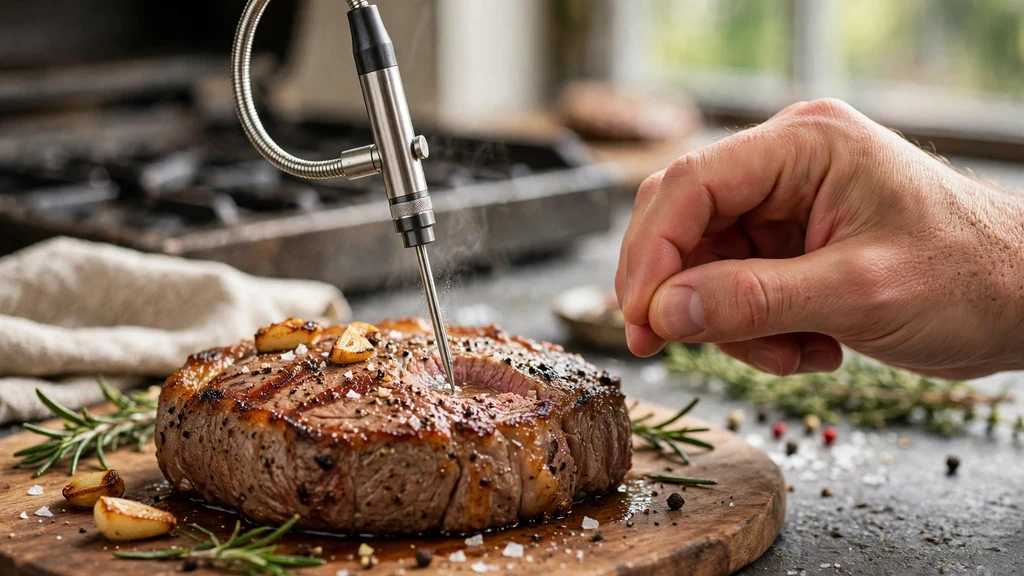
The human hand offers a surprising baseline for measuring protein firmness. By comparing the resistance of your own palm against different finger combinations, you can estimate how a steak feels on the inside. This classic culinary trick maps muscle tension directly to meat doneness.
To try this out, relax your left hand completely. Touch the fleshy part of your palm right below your thumb using the index finger of your right hand.
That squishy, soft resistance mimics a completely raw steak. As you touch your thumb to different fingers, the underlying muscle tightens up, mimicking various degrees of internal cooking.
- Thumb and index finger: Soft and squishy, representing rare doneness.
- Thumb and middle finger: Slightly firmer, matching a medium-rare texture.
- Thumb and ring finger: Noticeably springy, corresponding to a cooked medium profile.
- Thumb and pinky finger: Very tight and stiff, indicating a well-done cut.
Keep in mind that hand sizes vary, but the relative changes in muscle tension remain remarkably consistent. Press your steak gently with tongs or a clean finger, then compare that resistance back to your palm test.
Reading Visual Cues and Juices
Watching how proteins behave in the pan tells a clear story about their internal temperature. As muscle fibers contract under heat, they squeeze out moisture. A completely raw cut looks glossy and wet, while properly seared meat shifts in color and translucency.
For beef and lamb, pay close attention to the moisture pooling on the surface. When tiny drops of clear or slightly pinkish liquid start bubbling up through the top crust, the center is transitioning past rare. If those juices turn completely clear and stop flowing profusely, you are looking at a well-done piece.
Pork and poultry behave a bit differently under heat. While older culinary advice demanded that pork be cooked until gray and dry, modern food safety standards allow for a slight blush of pink in the center of a pork chop. You can consult the USDA guidelines to confirm safe minimum temperature benchmarks before heading into the kitchen.
The Upper Lip and Fork Method
Chefs often use thermal conductivity to judge temperature without piercing the meat. By inserting a metal skewer or the tines of a small metal fork directly into the thickest part of the cut for a few seconds, you can test the transferred heat on a sensitive part of your body.
Pull the metal tool out and carefully touch the shaft against the skin just above your upper lip or inside your wrist. These areas possess a high concentration of nerve endings that register temperature differences instantly.
If the metal feels cool, the interior is still raw. If it feels lukewarm or body temperature, you are hovering around medium-rare.
When the metal feels genuinely hot against your skin, the meat has reached a well-done state. This technique takes some calibration, but it works exceptionally well for large roasts and thick cuts of poultry.
Evaluating Flexibility and Resistance
A rigid piece of meat cooks very differently than a floppy, uncoordinated one. Lifting a steak or chicken breast with tongs provides immediate feedback regarding its internal structure. Raw proteins lack internal support and will bend easily under their own weight.
As proteins coagulate and moisture evaporates, the internal matrix firms up. A medium-rare steak will retain a slight bend when lifted with tongs, but it will spring back horizontally rather than drooping. A well-done steak stays completely rigid.
Pressing down firmly with the flat side of a spatula also reveals structural integrity. If the indentation bounces back immediately, the protein is still juicy and medium. If the indentation stays permanently depressed, the interior fibers have tightened past the point of return.
Understanding Color Changes in Poultry
Poultry requires absolute caution because undercooked chicken can carry harmful pathogens. Without a digital probe, you have to rely entirely on visual inspection of the deepest muscle groups. Cutting into the thickest part of a breast or thigh reveals whether the translucent pink has vanished.
Fully cooked chicken meat should transition from pink to an opaque white throughout the entire piece. If you notice any rubbery, translucent sections near the bone, it needs more time on the heat. Never rely on bone color alone, as bones can darken or turn purple during freezing and cooking regardless of meat safety.
Juice clarity remains your best secondary indicator here. Clear running juices mean the poultry is safely cooked, whereas cloudy, yellow, or heavily blood-tinged juices mean you need to close the lid and keep cooking.
Accounting for Carryover Cooking
One of the biggest mistakes home cooks make involves pulling protein off the heat too late. Heat energy continues traveling inward even after a cut leaves the hot pan or grill grate. This phenomenon is known as carryover cooking, and it can easily push a medium-rare steak into well-done territory if you aren’t paying attention.
Large roasts can climb ten to fifteen degrees while resting on a cutting board. Smaller cuts like pork chops or chicken breasts usually rise about five degrees. Factor this thermal momentum into your sensory tests by removing the item slightly before it feels completely finished to your touch.
Giving your food adequate resting time also allows the internal juices to redistribute evenly throughout the muscle fibers. Cutting into a steak immediately after it leaves the heat causes all those flavorful juices to spill out onto the board, leaving your dinner dry.
Comparing Sensory Doneness Indicators
Different protein types require slightly different sensory adjustments. The following breakdown maps out how various cuts respond to heat without digital tools.
| Protein Type | Rare Indicators | Medium Indicators | Well-Done Indicators |
|---|---|---|---|
| Beef Steak | Soft, bouncy, red juices | Springy, pink center, clear juices | Firm, brown throughout, no juice flow |
| Pork Chops | Not recommended | Slightly pink, tender, moist surface | Firm, uniform white, dry texture |
| Chicken Breast | Unsafe, translucent | Opaque white, slight resistance | Very firm, completely dry core |
Common Mistakes to Avoid
Relying on kitchen hacks requires a watchful eye to prevent common pitfalls. Many cooks ruin their dinner by poking too many holes in the meat, which lets precious moisture escape into the pan. Use your tongs or flat surfaces whenever possible instead of stabbing the protein repeatedly.
Another frequent error is failing to account for thickness. A thin flank steak cooks in minutes and changes texture rapidly, while a thick ribeye requires a much longer transition period between stages of doneness. Adjust your timing expectations based on the physical dimensions of the cut.
Finally, remember that stove heat levels vary wildly. A scorching cast iron skillet cooks the exterior much faster than the interior, meaning your touch test might trick you into thinking a steak is done when the middle is still ice cold.
Frequently Asked Questions
Can you accurately tell meat temperature by touch?
You can estimate doneness quite accurately through touch once you calibrate your fingers against the palm test. While it lacks the exact decimal precision of a digital probe, it provides a reliable working estimate for everyday cooking tasks.
Is it safe to eat pork if it has a little pink?
Modern culinary standards confirm that pork can be safely consumed with a slight pink blush in the center as long as it reaches proper internal heat. Sensory indicators like firm texture and clear juices help confirm its safety.
Why do meat juices change color during cooking?
Meat juices change color because myoglobin, the protein responsible for storing oxygen in muscle tissue, denatures under heat. It shifts from bright red to pink, then gray, and finally brown as temperatures rise.
How long should meat rest after cooking?
Most standard steaks and chops benefit from a five to ten-minute rest on a cutting board. Larger roasts require fifteen to twenty minutes to allow the muscle fibers to relax and retain their natural moisture.
Conclusion
Learning how to check meat temp without a thermometer turns cooking from a strict science into an intuitive craft. By paying close attention to tactile resistance, visual cues, and structural firmness, you can consistently serve perfectly cooked meals. Take these techniques into your kitchen today, trust your senses, and enjoy the delicious results of your cooking.