

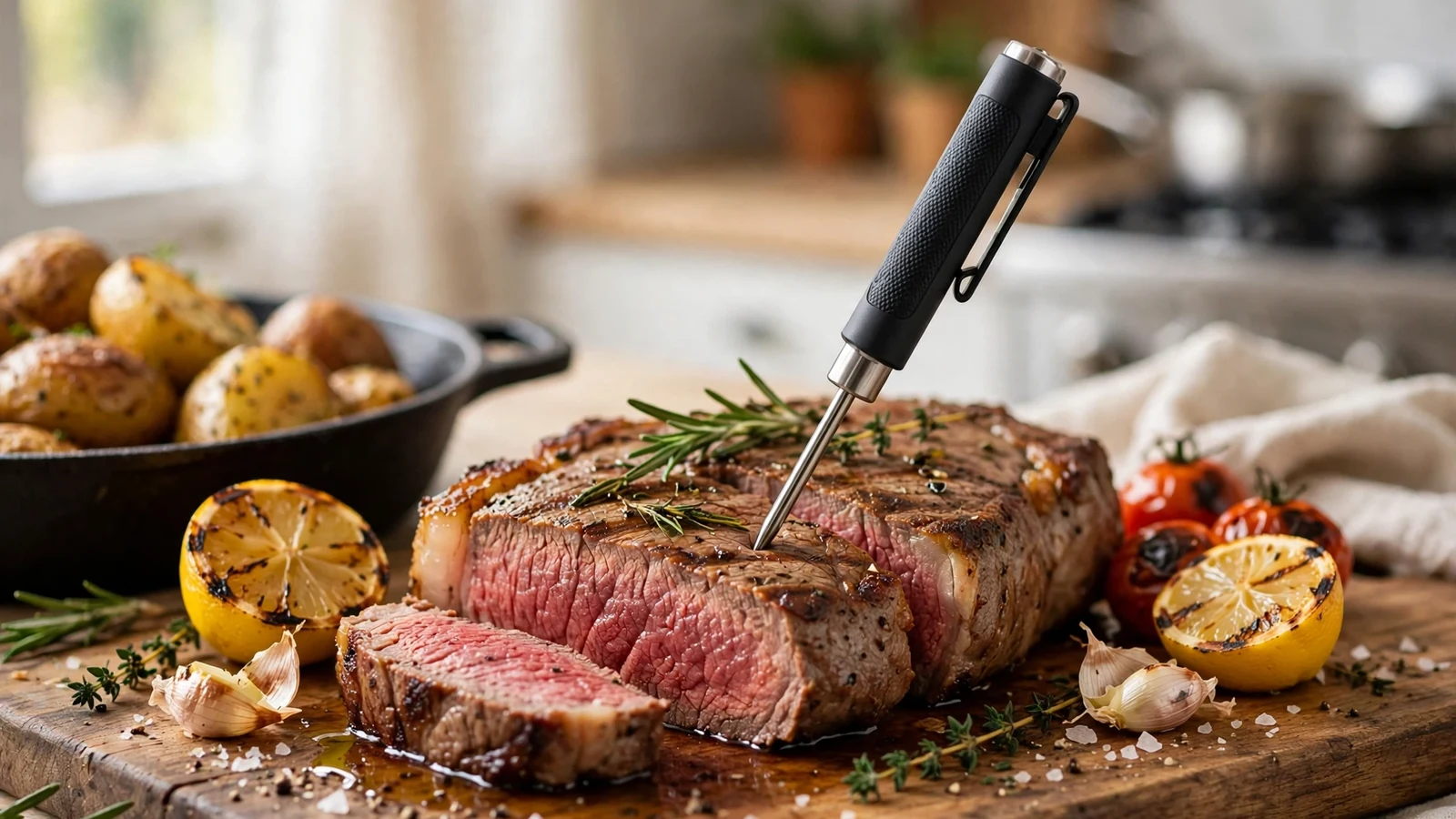
When you are staring down a thick ribeye or a whole turkey, figuring out if it is actually done can feel like a guessing game. That is usually the moment someone asks themselves what a meat thermometer look like before running to the kitchen drawer. Knowing what these tools look like helps you spot the right instrument for your roast, chicken, or steak without playing the guessing game.
Anatomy of a Traditional Dial Meat Thermometer
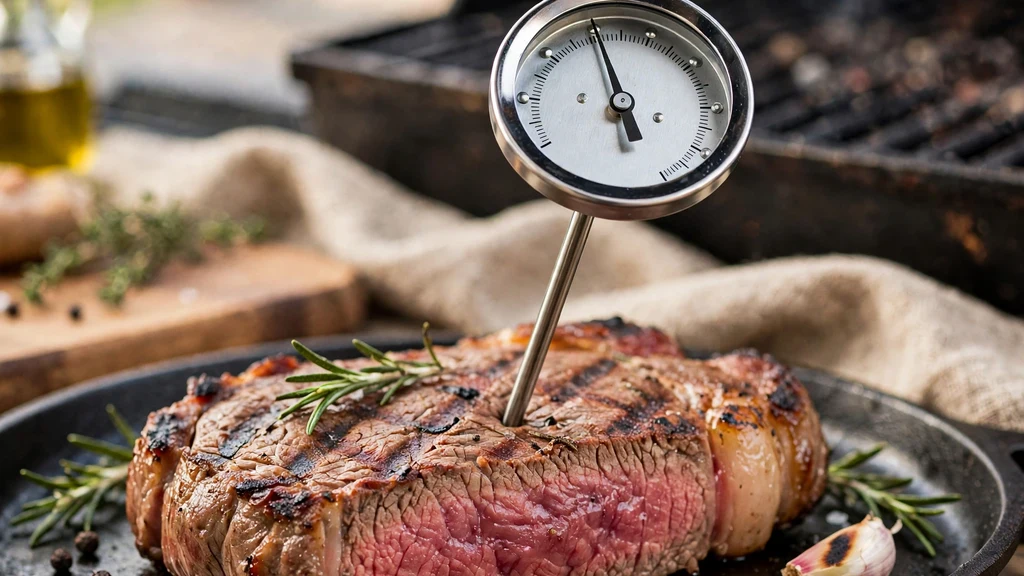
The classic analog dial model is the picture most people conjure up when they think of a kitchen temperature gauge. This vintage style features a round, clock-like face with a metal needle pointing at various numbers that represent degrees.
Sticking out from the bottom of that dial is a long, stainless steel metal stem. That long metal rod is the probe, which you push directly into the thickest part of your roast.
The dial itself usually sits protected behind a glass or clear plastic lens so steam and grease do not smudge the numbers. Around the edge of the metal stem, you will often spot a small indentation or dimple.
This tiny mark is the penetration depth indicator, showing you how far deep the rod needs to go to get an accurate reading. These analog tools do not require any batteries, making them reliable grab-and-go gadgets for the kitchen drawer.
- Round analog display face with a mechanical needle
- Long stainless steel stem for deep insertion
- Dimple line marking the mandatory insertion depth
- Manual calibration nut usually located beneath the dial
While they are wonderfully simple, dial gauges take a bit of patience. The internal metal coil has to expand as it heats up, which means waiting anywhere from 10 to 30 seconds for the needle to stop moving. If you pull it out too fast, you will miss the true peak reading.
Digital Instant-Read Models and Their Sleek Profiles
Modern digital instant-read devices look very different from their round dial ancestors. These electronic tools usually feature a plastic body shaped like a wand or a pen, complete with a bright digital LCD screen on top.
Instead of waiting for a slow mechanical dial, you get a numerical readout within just a few seconds. The business end of the device is still a thin metal probe, though it often tapers down to a micro-needle point at the tip.
Many contemporary digital models are hinged or feature a folding probe that doubles as an on-and-off switch. When you swing the probe open, the screen lights up automatically.
This clever design protects the delicate sensor tip when you toss the tool into a drawer with other utensils. You will also find waterproof models built to survive accidental splashes or deep-cleaning sessions at the sink.
The actual sensor inside these digital units sits right near the very tip of the metal spike. This design detail matters a lot when you are cooking thin cuts like pork chops or chicken breasts. You only need to push the tip into the center of the food rather than burying the entire length of the metal rod.
Leave-In Cable Probes for Precision Roasting
If you are slow-cooking a brisket or roasting a holiday turkey for hours, standing over the oven with a hand-held wand gets old fast. Leave-in cable models solve this problem with a distinct two-part design.
You get a heavy-duty stainless steel probe attached to a long, heat-resistant woven metal wire. That wire plugs into a small digital base station that sits outside your hot appliance.
The wire looks like a thin metal shoelace, armored to handle oven temperatures without melting or shorting out. The base unit often features programmable alarms and magnetic backs so you can stick it right to the front of your oven door. You can read more about safe cooking practices and temperature guidelines over at the USDA Food Safety and Inspection Service website to ensure your meals are thoroughly safe.
| Thermometer Type | Display Style | Best Used For |
|---|---|---|
| Analog Dial | Round mechanical face | Large roasts, turkeys, hams |
| Digital Instant-Read | LCD screen on a wand | Steaks, chicken breasts, quick checks |
| Leave-In Cable | External base with wired probe | Smokers, long oven roasts |
| Smart Wireless | Bluetooth app on smartphone | Rotisseries, grills, unattended cooking |
This style lets you monitor your food continuously without opening the door and letting all the heat escape. The probe stays buried in the meat the entire time it cooks, tracking every degree of progress.
Cutting-Edge Smart Wireless Probes
The newest generation of temperature gauges cuts the cord entirely. Smart wireless options look like standalone metal cylinders with no wires attached at all.
One end has a ceramic or high-heat plastic cap, while the rest is a sleek metallic rod designed to slide completely inside the meat. Because there are no wires, you can use these in a spinning rotisserie or a closed grill without tangling.
Inside that tiny metal cylinder are multiple thermal sensors that measure both the internal temperature of the food and the ambient temperature of the cooking environment. These devices communicate via Bluetooth or Wi-Fi directly to your smartphone. When your dinner hits the target doneness, your phone buzzes with an alert, taking all the guesswork out of timing your meal.
Charging these gadgets usually happens inside their own magnetic wooden or plastic storage block. You simply snap the metal rod back into its case when you are done, and it charges up for the next cooking session.
Key Differences Between Meat and Candy Thermometers
It is surprisingly easy to grab the wrong tool out of the utility drawer if you do not know what to look for. Candy and deep-fry thermometers look similar at a glance because they both feature a long metal stem and a dial or digital screen. However, they are built for entirely different jobs and respond to heat differently.
A candy thermometer almost always comes with a built-in metal clip attached to the side. You clip this tool directly onto the rim of a saucepan so it hangs suspended in boiling sugar syrup or hot oil without touching the bottom of the pan. Meat thermometers, by contrast, are meant to be handled, inserted, and removed repeatedly, and they rarely feature clips.
The temperature ranges also differ drastically. Confectionery tools track heat all the way up to four hundred degrees or more, while meat-focused models top out much lower because proteins finish cooking well before sugar reaches the hard-crack stage. Using the wrong tool can ruin your food or damage the internal sensors.
How Probe Thickness and Tip Design Affect Readings
Not all metal spikes are created equal, and the physical build of the probe dictates how well it performs. Heavy-duty commercial models feature thick, rugged stems that can stand up to being driven into frozen foods or massive whole animals. However, those thick spikes leave noticeable holes and let precious juices leak out onto the cutting board.
Modern culinary trends lean toward ultra-thin needle probes that pierce delicate proteins like fish fillets or thin chicken cutlets without tearing them apart. These slender designs close up quickly behind the metal rod, keeping the moisture locked inside where it belongs. The very tip of the probe houses the tiny thermocouple or thermistor, which is the actual brain of the operation.
- Thick probes offer durability for heavy roasts and tough cuts
- Tapered needle tips prevent moisture loss in delicate fish and poultry
- Offset handles keep your knuckles safe from ambient heat
- Color-coded rings help prevent cross-contamination in busy kitchens
Knowing where that sensor sits prevents cooking errors. If you only push a digital wand halfway into a thick roast, the sensor reads the air pocket or the outer layers rather than the core.
Visual Indicators of Quality and Durability
When you examine physical construction, certain visual cues separate cheap gadgets from reliable kitchen companions. Look for waterproof housings sealed against moisture. Steam is the number one enemy of digital kitchen tools, and poorly sealed plastic joints let condensation fog up the LCD screen within a few weeks of heavy use.
Stainless steel construction is the gold standard for the stem and probe body. Avoid cheap plated metals that can flake or rust after running through the dishwasher a couple of times. A sturdy hinge mechanism on folding models should click firmly into place without wobbling or feeling loose.
Pay attention to how the markings are applied to dial faces or printed on digital casings. High-end tools use laser-etched numbers that will not rub off when exposed to grease, oil, and harsh dish soap during cleanup.
Common Mistakes When Inspecting and Using Your Device
People often misuse temperature tools simply because they misinterpret what the physical design is telling them. For instance, trying to leave an instant-read digital wand inside a hot oven will melt the plastic housing in minutes. Those specific models are built for quick checks only, not for continuous monitoring.
Another common error involves ignoring the calibration features built into many analog and digital designs. If your dial model’s needle rests at twenty degrees before you even touch food, your roast will be severely overcooked before the gauge says it is ready. Checking for a calibration nut or digital reset button keeps your readings honest.
Failing to clean the probe properly between uses leaves microscopic food residue that burns onto the metal during the next cook. Keeping the metal stem shiny and sanitized ensures smooth insertions every single time you prep a meal.
Frequently Asked Questions
How far should you insert a meat thermometer into food?
You should push the probe so the tip rests squarely in the geometric center of the thickest part of the food. Avoid letting the metal touch bone, gristle, or the bottom of the pan, as these elements conduct heat differently and will give you a false high reading.
Can you leave an instant-read thermometer in the oven?
No, standard digital instant-read wands and traditional dial models contain plastic components or electronic displays that will melt or fail inside a hot oven. Only use leave-in cable probes or specialized oven-safe models if you plan to close the door and walk away.
Why does my digital thermometer have a dimple on the stem?
That small indentation marks the minimum insertion depth for accurate temperature sensing on dial models and some older digital units. If your food does not cover that mark, the heat traveling up the metal stem will skew your final measurement.
How do you know if your meat thermometer is accurate?
You can test your tool using an ice water bath filled with crushed ice and cold water. Submerge the probe tip without touching the container walls, and the display should read thirty-two degrees Fahrenheit within about thirty seconds.
Conclusion
Recognizing what a meat thermometer look like comes down to understanding the specific style you hold in your hand, whether it is a classic mechanical dial or a sleek digital wand. Picking the right tool for your cooking style takes the guesswork out of the kitchen and ensures your meals turn out safe and delicious. Take a close look at your current kitchen gadgets today, check their condition, and cook your next meal with absolute confidence.