

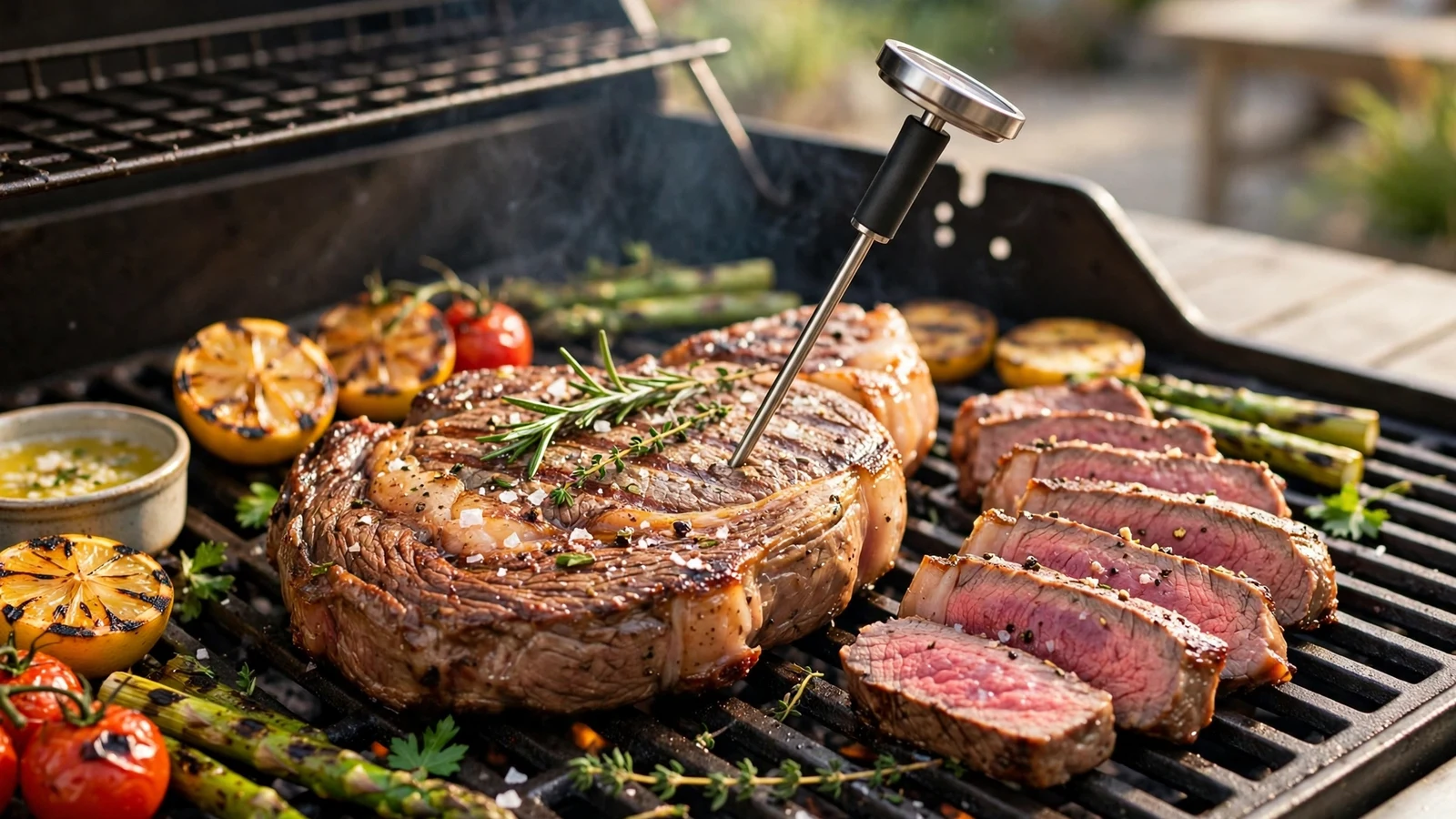
Deciding if you do use meat thermometer while on grill is often the difference between serving a juicy masterpiece or a dry, overcooked disappointment. Many backyard cooks rely entirely on guesswork, slicing open steaks or poking burgers to check their progress. That traditional method lets all the precious juices escape into the fire, leaving you with dry results.
Grilling with precision changes everything about how your food turns out. By understanding how to check doneness accurately, you take total control of your outdoor cooking sessions.
Why Guessing Doneness Ruin Your Cookouts
Cutting into a steak while it rests on the grates is a common habit, but it instantly drains the moisture from the center. When you slice open a cut of beef too early, the internal juices rush out instead of reabsorbing into the muscle fibers. You end up with a dry texture that no amount of barbecue sauce can truly fix.
Color is another unreliable indicator of food safety. A burger patty might look completely brown on the inside, yet still harbor harmful bacteria if it hasn’t reached the right thermal threshold.
Conversely, a steak can look deceptively grey while remaining tender and medium-rare on the inside. Relying on visual cues alone leaves too much to chance, whereas tracking the actual internal temperature gives you absolute certainty.
Different Styles of Grill-Ready Thermometers
Choosing the right hardware makes measuring your food much easier. Instant-read digital models give you a quick temperature reading within seconds, meaning you don’t have to keep the lid open and lose all your heat. These work brilliantly for thin cuts like chops or hot dogs where you just need a fast check before pulling them off.
Leave-in probes offer a totally different approach for long, slow cooks like brisket or pork shoulders. You insert the steel probe before closing the lid and monitor the progress on an external digital display or your smartphone.
For a deeper dive into food safety standards and guidelines, you can consult the USDA Food Safety and Inspection Service for official temperature recommendations. Having the right device ensures you never overcook expensive cuts.
| Thermometer Type | Best Used For | Key Advantage |
|---|---|---|
| Instant-Read Digital | Steaks, chops, burgers | Fast results in 2-4 seconds |
| Leave-In Probe | Roasts, whole chicken, ribs | Monitors without opening the lid |
| Dial Analog | General outdoor cooking | No batteries required |
How to Properly Insert Your Probe
Getting an accurate reading requires hitting the right spot inside the protein. You want to aim for the deepest part of the muscle, making sure the tip rests right in the center without touching any bone, gristle, or fat pockets. Bone conducts heat much faster than muscle tissue, which can trick your device into showing a falsely high reading.
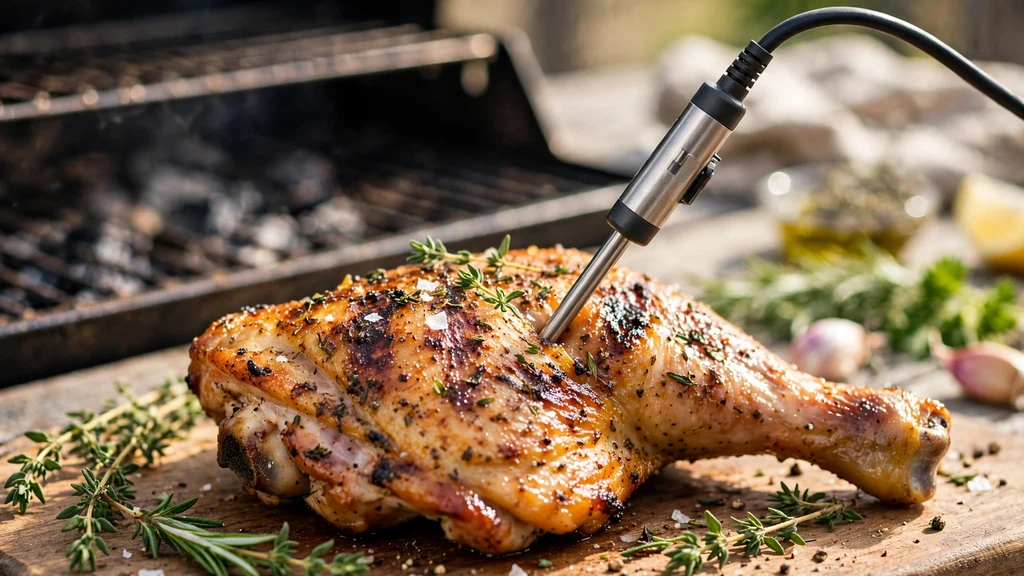
For poultry like chicken breasts or whole birds, slide the probe into the thickest part of the meat without hitting the bone. If you are grilling thick cuts like beef roasts, approach from the side so the sensor sits squarely in the middle core. Proper placement ensures you are measuring the coldest part of the cut, which guarantees the entire piece is safe to eat.
Handling Steaks and Burgers Like a Pro
Thinner cuts require a slightly different technique than massive roasts. When you cook burgers or smaller steaks, slide your instant-read digital tip horizontally into the side of the patty rather than straight down from the top. This horizontal approach ensures the sensor actually reaches the core instead of passing straight through to the hot grates below.
Timing your checks matters just as much as placement. Don’t constantly jab your food every two minutes; let it develop a proper sear first. Check it during the final few minutes of the cooking process so you can pull it off the heat right before it crosses your target doneness level.
Managing Poultry and Pork Safely
Chicken and pork require strict attention to safety standards because undercooked poultry can lead to serious illness. A whole chicken or turkey has multiple density zones, so you should check both the breast and the thigh to ensure complete doneness. The thigh will naturally take longer to cook than the breast meat.
Pork chops and tenderloins benefit immensely from precise monitoring because they dry out rapidly once they pass the ideal zone. Pulling pork chops off the heat a few degrees early and letting them rest under foil allows the residual heat to finish the job while keeping the meat succulent.
Leaving Probes In During the Cook
Some heavy-duty stainless steel probes are specifically designed to withstand high ambient heat and can stay inside the meat for the entire duration of the cooking process. This is especially helpful for low-and-slow barbecue setups where opening the lid constantly drops your cooking temperature. You simply set a high-temperature alarm on your receiver and walk away until it beeps.
However, traditional instant-read models should never be left inside a hot cooking chamber. The plastic housing and electronic components inside standard pocket thermometers will melt or malfunction if exposed to direct grill flames or high ambient temperatures for too long.
Common Mistakes to Avoid
One frequent error is failing to calibrate your gear, which can lead to dangerously inaccurate readings. Ice-water testing is a simple way to check if your digital probe is working correctly by plunging it into a glass of crushed ice and water until the display settles at thirty-two degrees Fahrenheit.
Another mistake is neglecting to clean the probe between uses. Cross-contamination between raw meats and cooked food poses a real health risk. Always wipe your sensor down with hot, soapy water or an antibacterial wipe immediately before and after taking a measurement.
- Never let the metal tip touch the cooking grates directly.
- Avoid leaving non-heat-resistant plastic dials inside a closed cooker.
- Do not rely on color alone to judge food safety.
- Always account for carryover cooking during the resting period.
Frequently Asked Questions
Can you leave a meat thermometer in the meat while it is on the grill?
Yes, but only if you are using a specialized leave-in probe designed to withstand high ambient temperatures. Standard instant-read digital thermometers will melt or break if left inside a closed cooker for an extended period.
How do you use a meat thermometer correctly on the grill?
Insert the metal tip into the thickest part of the food, making sure it reaches the center without touching bone or fat. Wait a few seconds for the digital display to stabilize before recording your measurement.
What temperature should chicken reach when grilled?
Chicken must reach an internal temperature of one hundred sixty-five degrees Fahrenheit to be completely safe for consumption. Check both the breast and the thickest part of the thigh for the most accurate results.
Do you need to let meat rest after checking the temperature?
Yes, resting allows the internal muscle fibers to relax and reabsorb their juices. Cutting into a steak immediately after taking it off the heat will cause all the moisture to spill out onto your plate.
Conclusion
Mastering temperature control transforms your backyard cooking from guesswork into a reliable science. By choosing the right gear and using proper insertion techniques, you ensure every meal turns out safe, juicy, and delicious. Take these habits to your next barbecue and enjoy consistently incredible results.