

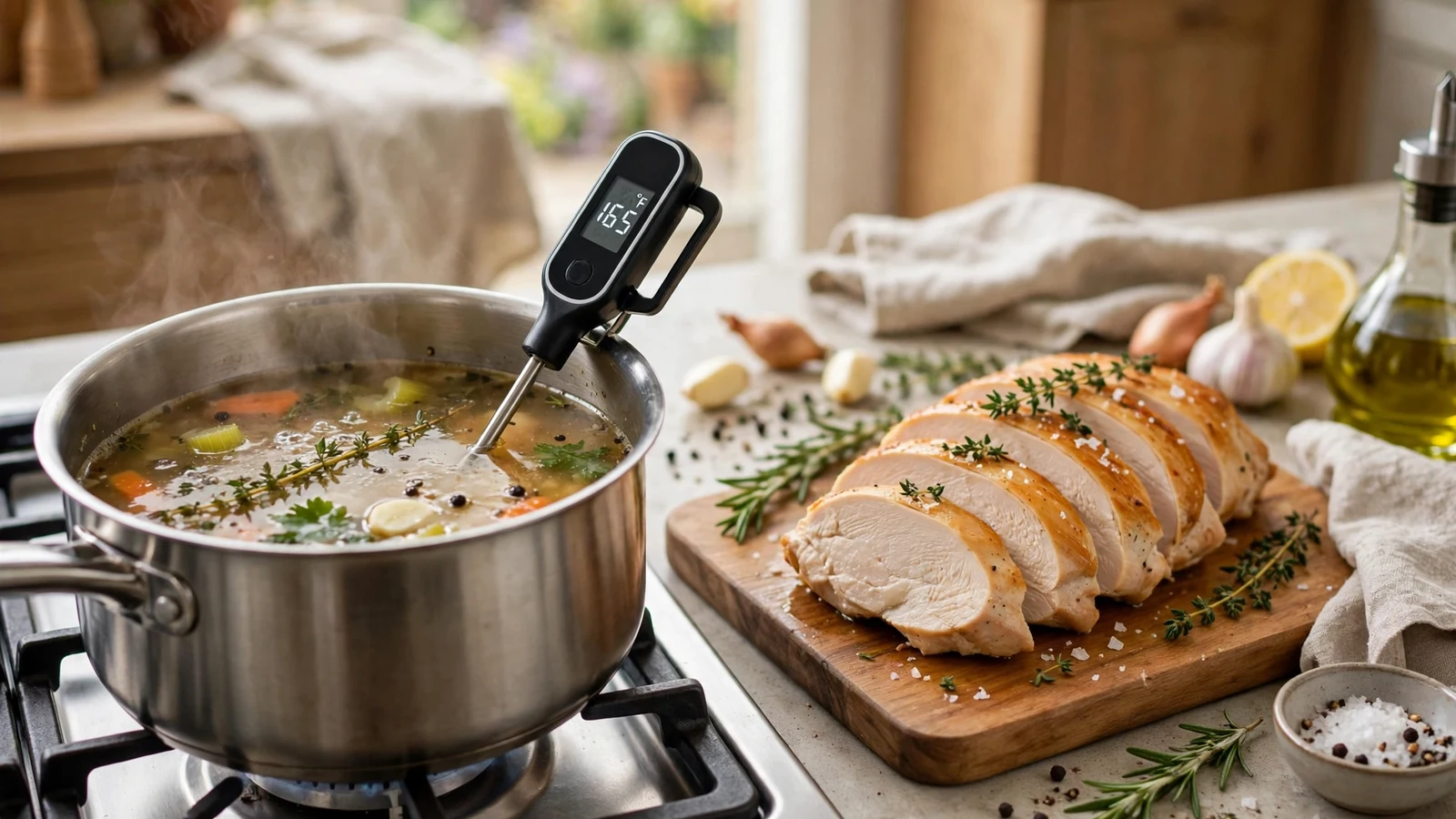
If you have ever stood over a bubbling pot of homemade caramel or a deep fryer sputtering with hot oil, you might have wondered if you can use your trusty kitchen gadget to check the temperature. Wondering whether a meat thermometer can be used for liquids is a common kitchen dilemma. While most standard models will technically give you a reading, understanding their design limitations prevents ruined recipes and damaged equipment.
Different cooking tasks demand specialized equipment to ensure accuracy and safety. Let us dive into the mechanics of temperature measurement, examining how various probes handle everything from boiling water to molten sugar.
Understanding Meat Thermometer Design and Function
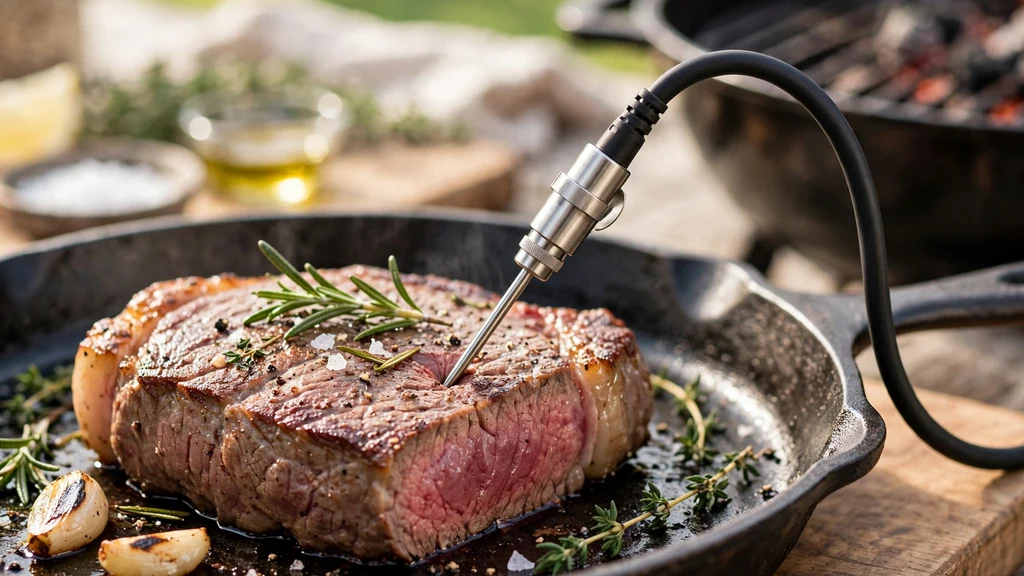
A meat thermometer is engineered to measure the internal temperature of solid or semi-solid proteins like roasts, poultry, and thick cuts of steak. These devices typically feature a thick metal probe designed to withstand being pushed directly into dense muscle tissue. The sensing element, which is the exact spot where the temperature is actually read, is usually located near the tip of the probe, about a half-inch to an inch up.
Because meat is dense, the probe stays firmly in place once inserted, allowing you to walk away or monitor it continuously. This structural integrity makes them heavy-duty tools.
However, this thickness also means they respond slightly slower to temperature shifts compared to delicate glass or ultra-thin digital probes designed specifically for liquids. When you stick one into a roast, you want stability above all else, which dictates how the entire unit is constructed.
Using a Meat Thermometer in Water and Broths
Water and aqueous broths pose few challenges for a standard meat thermometer. If you want to check if your soup is simmering or if water has reached a rolling boil, you can safely insert the probe into the liquid. Just make sure the tip does not touch the bottom or sides of the pot, as cookware surfaces absorb direct heat from the burner and will give you a falsely elevated reading.
You should also verify that your device is waterproof or at least water-resistant. Many digital models have digital displays attached directly to the top of the probe.
If you submerge the entire unit past the rated limit, moisture can seep into the battery compartment and short-circuit the electronics. Keep the digital housing safely outside the rim of the pot.
The Challenges of Measuring Hot Oil and Deep Frying
Deep frying requires extreme precision, often demanding temperatures between three hundred fifty and four hundred degrees Fahrenheit. While many meat thermometers can handle these high temperatures, using them for hot oil introduces unique safety and functional hurdles. Oil is much hotter than cooked meat, and a splash can cause severe burns if you are not careful.
Furthermore, standard meat probes often lack a clip to secure them to the side of a deep pot. Holding a thermometer by hand while standing over splashing grease is dangerous.
For safe cooking habits, you can consult USDA kitchen thermometer guidance to ensure your tools match your cooking methods. Dedicated candy or oil thermometers usually include a built-in pot clip, keeping your hands safely away from the bubbling fat.
Tackling Sugar Syrups and Confectionery
Making candy requires tracking precise stages, from the soft-ball stage all way up to hard crack. While a meat thermometer can technically track these rising temperatures, it is rarely the best choice for the job. Sugar syrups thicken significantly as they cook, and crystallized sugar can bake onto the thick metal probe, making cleanup a nightmare.
Moreover, sugar gets intensely hot—well above the typical internal temperature of a roasted turkey. If your meat thermometer lacks the range to hit three hundred degrees or higher, the internal components could fail. Confectionery work also requires constant stirring and monitoring, meaning you need a tool that can anchor securely to the pan rather than requiring manual intervention.
Instant-Read Versus Dial Models for Liquids
The style of your measuring device dictates how effectively it handles fluids. Dial thermometers, which rely on a coiled bimetallic strip inside the shaft, are notoriously sluggish. It can take up to twenty seconds for the dial to stop moving, which is entirely too long when you are trying to test a rapidly changing liquid.
Instant-read digital alternatives perform much better because their internal sensors register temperature shifts in just a few seconds. If you must use a food probe for a liquid, an instant-read model gives you a fast, accurate snapshot before steam can fog up your glasses or heat up your hand. Look for features like a backlit screen and a wide temperature range to maximize versatility.
Comparing Food Temperature Tools
Different culinary applications require specialized gear. Choosing the right instrument prevents cooking disasters and ensures food safety.
| Tool Type | Best Use Case | Temperature Range | Key Limitation |
|---|---|---|---|
| Meat Thermometer | Roasts, poultry, thick cuts | 0°F to 220°F | Slow response time on dial models |
| Candy/Oil Thermometer | Syrups, deep frying, hot fat | 100°F to 400°F+ | Too bulky for thin cuts of meat |
| Instant-Read Digital | General cooking, liquids, meat | -50°F to 500°F | Not meant to be left in boiling pots |
Risks of Thermal Shock and Calibration Loss
Subjecting any temperature-sensing device to sudden, extreme temperature shifts can ruin its calibration. Moving a cold probe straight from the refrigerator into a pot of boiling broth creates thermal shock. This sudden expansion and contraction of the metal can damage the internal sensors, resulting in inaccurate readings down the line.
To keep your equipment accurate, let cold probes rest at room temperature for a minute before exposing them to extreme heat. Regularly checking your device in an ice-water bath ensures it still reads thirty-two degrees Fahrenheit, confirming it is safe to use for precise cooking tasks.
Best Practices for Safe and Accurate Measurement
Getting reliable results from your kitchen gadgets requires proper technique. Always clean and sanitize the probe before and after every use, especially when switching between different types of ingredients.
- Never submerge non-waterproof digital housings into liquids.
- Stir liquids gently before taking a reading to ensure uniform heat distribution.
- Keep the sensing tip away from the bottom and walls of heated pans.
- Allow hot probes to cool down naturally rather than plunging them into cold water.
Frequently Asked Questions
Do meat thermometers work on liquid?
Yes, they work for measuring the temperature of liquids like water, soup, and milk. However, they are not ideal for deep frying or candy making because they lack high-temperature ranges and pot clips.
What type of thermometer is best for liquids?
An instant-read digital thermometer works best for general liquids like water and broth. For deep frying and candy making, a dedicated candy thermometer with a pan clip is much safer and more accurate.
Can I use a meat thermometer to check oil temperature?
You can, provided the oil temperature stays within the operating limits of your specific model. However, safety is a major concern since meat probes lack clips to secure them inside hot oil pots.
Is there a difference between a food thermometer and a meat thermometer?
A meat thermometer is a specific type of food thermometer optimized for dense solid proteins. Other food thermometers are designed specifically for liquids, sugar work, or general ambient oven temperatures.
Conclusion
You can indeed use a meat thermometer for liquids, provided you mind its temperature limits and waterproof ratings. While it handles broths and water just fine, hot oil and sugar syrups demand specialized tools for safety and accuracy. Treat your kitchen gadgets with care, match the tool to the task, and you will achieve delicious results every time you step into the kitchen.