

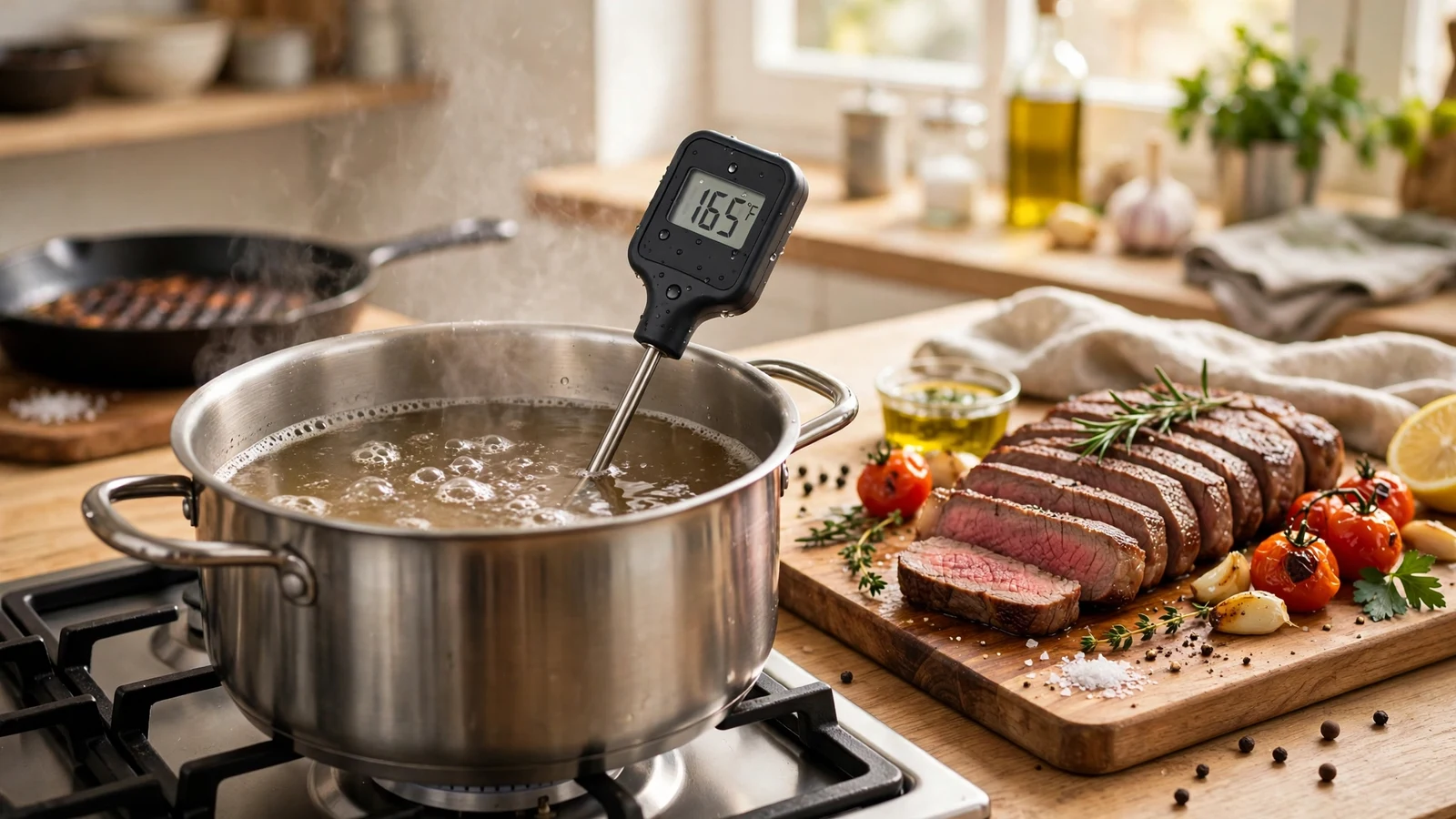
When you’re knee-deep in making a pot of caramel or brewing fresh tea, grabbing the handiest tool in the kitchen drawer just makes sense. You might wonder if a meat thermometer is accurate for liquid when you realize you don’t have a specialized candy or candy-making tool nearby. Kitchen tools often pull double duty, but measuring boiling water versus a thick roast isn’t always a seamless swap.
Let’s dive into how these sensors actually function and whether you can trust your trusty roasting probe in soups, syrups, and frying oils. Getting accurate temperature readings saves ruined batches and keeps meals safe.
How Meat Thermometers Work Under the Hood
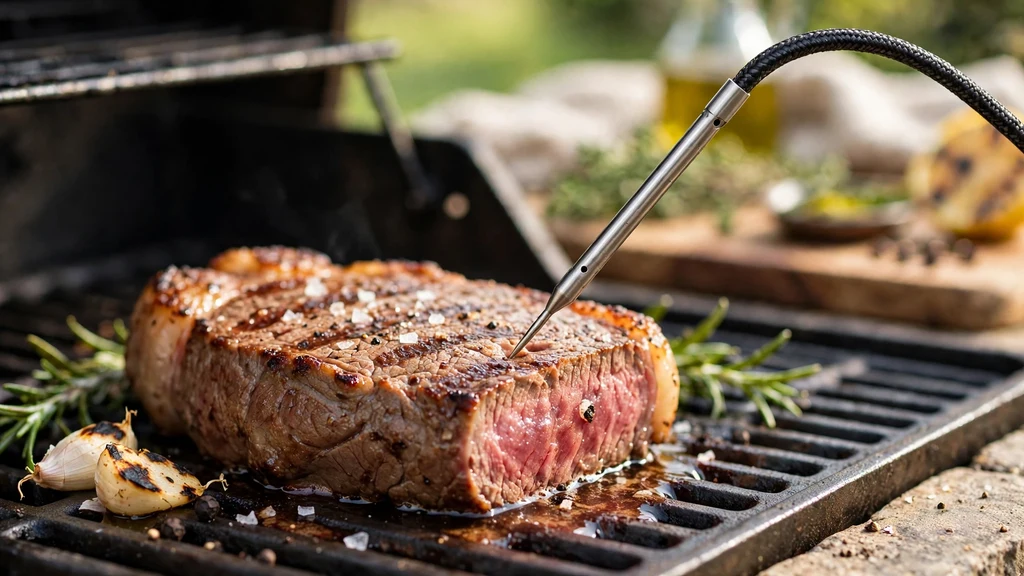
A standard meat thermometer is designed to measure the internal temperature of solid cuts of protein like beef, poultry, and pork. Most modern versions use a metal probe housing a tiny thermocouple or thermistor right near the very tip.
When you jab that spike into a turkey breast, the device senses the thermal energy and sends the data to a digital display. The primary goal is finding the absolute coldest spot, usually the center of the thickest part of the meat, to guarantee safety.
Because these sensors are built for dense solids, their physical construction looks quite different from laboratory glass instruments. They feature rigid stainless steel shafts meant to withstand being pushed through muscle fibers and connective tissue.
While they handle structural resistance easily, liquid environments present a completely different set of physical variables. You have to understand these structural differences before dropping your favorite kitchen gadget into a boiling brew.
Can You Actually Use a Meat Thermometer for Liquids?
Yes, you can use a meat thermometer for liquids, but you need to know its limitations regarding depth and response speed. If you are checking the heat of a simmering broth, hot milk, or bathwater, a digital instant read model works just fine.
The metal shaft conducts heat from the liquid just as it would from a roast. You will get a reliable readout within a few seconds, making casual cooking tasks easy.
However, problems arise when you use the wrong type of device for specialized liquid tasks like deep frying or candy making. Traditional dial models take much longer to register changes, which is a major drawback when hot sugar stages shift rapidly.
Furthermore, many standard roasters aren’t rated for continuous immersion in liquids, meaning steam can creep into the housing and ruin the internal electronics. Always check manufacturer guidelines before submerging any kitchen gadget.
Measuring Boiling Water and Simmering Broths
Testing boiling water is the ultimate way to verify if your kitchen tools are functioning correctly. Pure water boils at 212 degrees Fahrenheit at sea level, giving you a fixed benchmark to evaluate your gear.
When you place a digital meat probe into a rolling boil, the numbers should climb steadily and park right at that magic milestone. If your device reads 205 or 218 degrees, you know calibration is off.
Keep in mind that when checking bubbling pots, you must submerge the probe deep enough to hit its sensing zone. Most units have a specific indentation or dimple marking the sensing area, typically located about half an inch to an inch from the tip.
If you only dip the very edge into the liquid, the surrounding steam will skew the results. Proper immersion guarantees you are measuring the actual fluid rather than the rising vapor.
The Challenge of Deep Frying and Hot Oil
Deep frying requires precise heat control to ensure food cooks thoroughly without turning greasy or burning. While you can technically use a meat probe to check hot oil, safety and design issues make it a risky choice. Frying temperatures easily reach 350 to 400 degrees Fahrenheit, which pushes many basic digital probes to their absolute thermal limit.
Additionally, frying involves deep pots of bubbling fat that can easily splatter and cause severe burns. A standard meat tool usually has a short shaft, requiring you to get your hand dangerously close to the hot liquid.
For deep frying, a dedicated clip-on fry tool is far superior because it stays securely attached to the pot edge. Safety guidelines from culinary institutions like the USDA Food Safety and Inspection Service emphasize using proper tools rated for high-temperature continuous immersion.
Using a Meat Probe for Candy Making and Syrups
Candy making is an exact science where a difference of two degrees separates silky caramel from a scorched mess. People often ask if they can skip buying a candy thermometer and use their standard meat gadget instead. While the numeric readout might be technically correct, the physical design makes it a poor choice for confectionary work.
Sugar mixtures bubble up aggressively and require constant stirring, which is nearly impossible with a short, bulky meat probe in hand. Dedicated candy versions feature long handles, protective glass or stainless shields, and handy pan clips that leave your hands free. Trying to hold a standard digital probe steady in a bubbling sugar syrup for twenty minutes leads to hand fatigue and inaccurate readings.
Key Differences Between Thermometer Types
| Thermometer Type | Best Used For | Pros | Cons |
|---|---|---|---|
| Meat Probe | Roasts, poultry, steaks | Fast digital readout, portable | Short shaft, not for deep pots |
| Candy Tool | Syrups, caramel, jelly | Includes pan clip, long reach | Slow response on some models |
| Fry Instrument | Hot oil, deep frying | High heat tolerance, secure clip | Bulkier design, single purpose |
Checking Calibration and Ensuring Accuracy
No matter what you are measuring, accuracy degrades over time due to drops, steam exposure, and battery drain. Testing your device regularly ensures your culinary creations turn out right every single time. The two easiest ways to check functionality involve extreme thermal states: boiling water and ice water.
To run an ice bath test, pack a tall cup with crushed ice and fill it to the brim with cold water, stirring gently. Insert your probe into the slush without touching the sides or bottom of the container.
A properly calibrated tool should read 32 degrees Fahrenheit within about thirty seconds. If it’s off by more than a couple of degrees, look for a calibration button or plan to replace the unit.
Popular Brands and Everyday Household Use
Many home cooks rely on popular household brands like thermopro for affordable, reliable temperature tracking. These versatile digital tools handle everything from Sunday roasts to a quick cup of bathwater or baby formula. Because they feature sharp, thin probes, they slide effortlessly into liquids without creating a huge splash.
Here are a few common household liquids where a standard digital probe works surprisingly well:
- Checking formula or milk temperature for bottle-fed infants
- Monitoring water warmth for yeast activation in bread making
- Checking soup or stew temperatures in a slow cooker
- Measuring tap water warmth for delicate culinary washing tasks
Common Questions About Temperature and Liquids
Can I use my meat thermometer for liquids?
Yes, you can use a meat thermometer for liquids like soups, broths, and water. Just ensure the sensing portion at the tip is fully submerged and avoid using standard digital models for boiling oil or hot sugar syrup.
How can I tell if my meat thermometer is accurate?
Test your thermometer using an ice water bath or boiling water. An ice bath should read 32 degrees Fahrenheit, while boiling water should read 212 degrees Fahrenheit at sea level.
What type of thermometer is best for liquids?
Dedicated candy or deep-fry thermometers are best for high-heat liquid cooking because they feature long handles, protective clips, and high thermal limits that keep your hands safe.
Is a meat thermometer accurate for water?
Yes, a digital meat thermometer measures water temperature very accurately. Because water transfers heat quickly and uniformly, digital probes give fast, reliable results.
Conclusion
A meat thermometer works surprisingly well for everyday kitchen liquids like broths, milk, and warm water. While it won’t replace a specialized frying or candy tool for high-heat sugary syrups, it handles casual kitchen tasks with ease. Keeping your tools clean, calibrated, and used within their intended limits ensures every dish turns out just right.
Do you have a favorite kitchen tool that you use for everything, or do you prefer keeping a dedicated device for every single task? Share your cooking habits and tips in the comments below.