

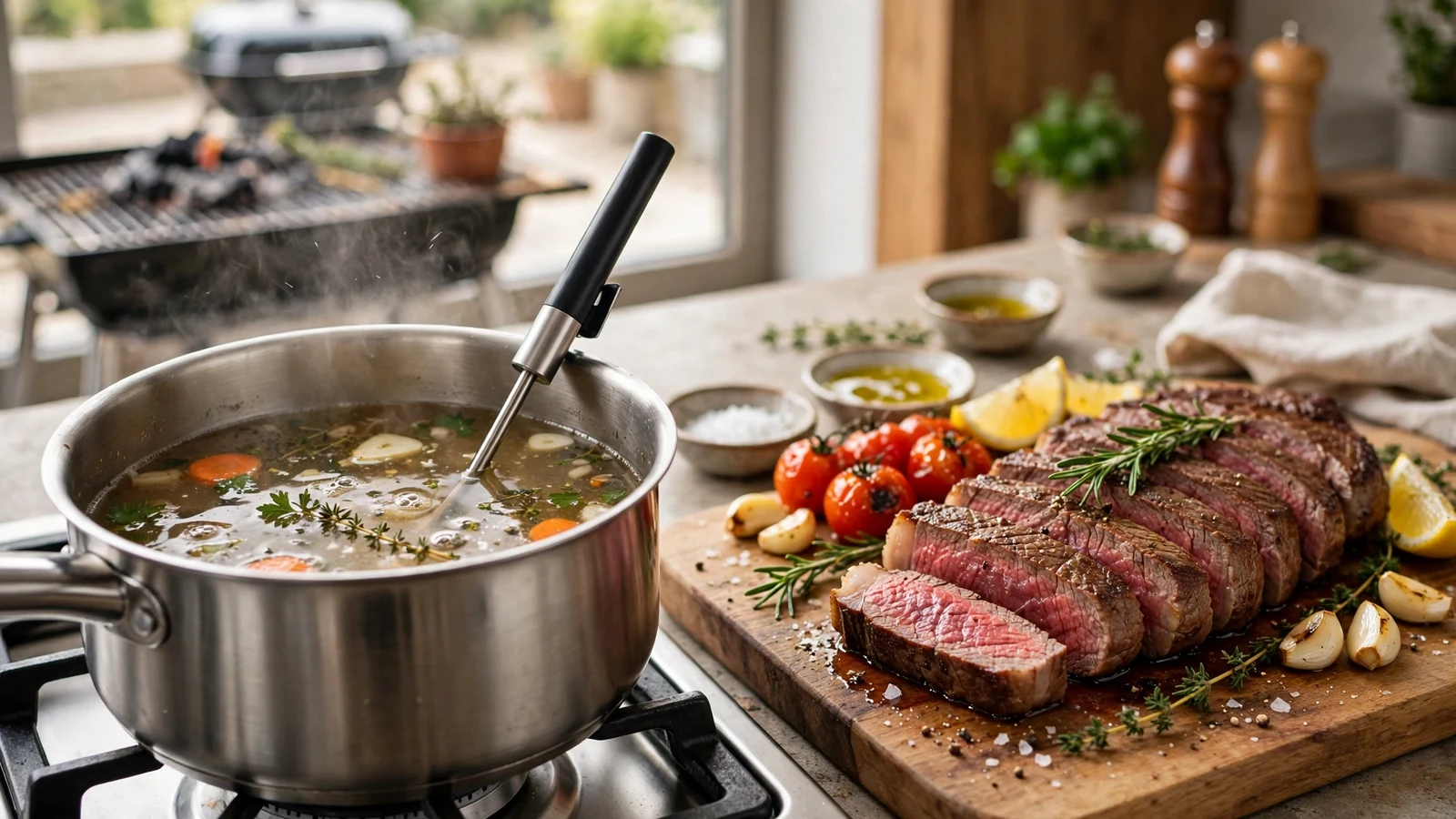
When you’re in the middle of making candy, brewing beer, or frying chicken, figuring out if you can use a meat thermometer for liquid becomes a rather pressing concern. Kitchen tools often blur lines, and grabbing whatever tool sits closest to the stove feels like second nature when meals get chaotic.
Most home cooks wonder if their standard roasting probe will handle boiling water or hot oil without melting or giving completely wrong readings. The short answer is yes, you can do it, but you need to know a few technical limitations before you plunge your favorite kitchen gadget into a bubbling pot of broth.
Understanding how a meat thermometer handles liquid requires a close look at internal sensor placement. Most standard roasting tools feature a metal stem with a sensing element located right near the tip, usually about a quarter-inch to a half-inch up from the pointy end. When checking meat, you must insert this tip deep into the thickest part of the muscle to get an accurate reading.
Liquids behave quite differently because heat distributes evenly throughout the pot, meaning depth matters less for heat distribution but matters a lot for sensor coverage. If you only dip the very tip of a dial model into a shallow saucepan, the metal casing conducts ambient air and skews the data. Digital instant-read models require proper immersion just like traditional ones, meaning the tip needs to sit submerged completely inside the fluid without touching the hot bottom of the pan.
Many people wonder if deep frying oil can be safely checked with standard roasting gear. Oil reaches much higher heat levels than roasted poultry or beef ever does, often climbing past four hundred degrees Fahrenheit. Standard dial models with plastic or rubber dials near the top will melt or warp rapidly when exposed to hot steam or boiling fat.
High-end digital units often tolerate higher ranges, but you must check the manufacturer specifications before dipping them into boiling fat. If the housing isn’t completely sealed, bubbling liquids will seep inside the digital display, causing permanent electronic failure. Using a dedicated candy or deep fry tool remains much smarter when dealing with bubbling fats and boiling sugar syrups.
Measuring water temperature for yeast activation, tea brewing, or sous-vide baths calls for extreme precision. Even a tiny error of five degrees can kill active dry yeast or ruin a delicate brew. Digital instant read units excel in these scenarios because their internal thermistors or thermocouple sensors react to temperature shifts in just a single second.
You simply stir the fluid gently with the metal stem to ensure even heat distribution before reading the digital display. Avoid letting the metal tip rest directly against the bottom of a metal saucepan sitting over a burner, as the metal surface conducts direct flame heat and gives an artificially inflated number.
Boiling water calibration checks serve as a practical way to test your cooking gear at home. Pure water boils at 212 degrees Fahrenheit at sea level, giving you a reliable benchmark to verify accuracy. When you submerge your probe into rolling boils, the digital readout should stabilize right around that magic number.
If the device shows a wildly different value, you may need to recalibrate it or replace the battery. Keeping tabs on device health ensures your roasted dinners and complex liquid reductions turn out right every single time.
| Thermometer Type | Max Heat Tolerance | Best Use Case | Liquid Suitability |
|---|---|---|---|
| Dial Meat Probe | 350°F to 500°F | Roasts, whole poultry | Poor (steam and condensation ruin dials) |
| Digital Instant-Read | 250°F to 572°F | Steaks, quick checks | Good (if submerged past the sensor line) |
| Candy and Deep Fry | 400°F to 500°F | Sugars, hot oil, jams | Excellent (designed for full immersion and clips) |
Candy making presents unique challenges where standard roasting gear often falls short. Sugar syrups climb to hard-crack stages exceeding three hundred degrees, demanding continuous monitoring over long stretches. Leaving a standard digital probe resting against the side of a pot full of boiling sugar will ruin the delicate electronics inside.
Specialized candy tools feature handy pot clips that secure the metal stem safely away from direct contact with the burner while allowing continuous monitoring. For more insights on kitchen safety and tools, check out this guide on safe food handling guidelines.
Checking frying oil requires specialized gear to prevent dangerous flare-ups or messy accidents. Lower-quality models often lack the waterproof sealing required to handle splattering grease and aggressive steam clouds. When hot oil meets moisture trapped inside a poorly sealed probe housing, it creates miniature explosions of hot fat.
Dedicated frying tools feature rugged stainless steel construction and long handles that keep your hands safely away from the splatter zone. Investing in the right instrument saves you money and prevents frustrating cooking disasters.
Using your digital probe for liquids requires proper cleaning protocols immediately after use. Sugary syrups, thick broths, and greasy oils cling tightly to metal stems and crevices around the sensor. Wash the metal stem with warm soapy water right away, but never submerge the entire digital body unless the manufacturer explicitly states it is fully waterproof.
Letting sticky residue dry on the sensor ruins calibration and creates breeding grounds for bacteria. A clean probe guarantees reliable performance whether you are roasting a turkey or brewing craft beverages.
Frequently Asked Questions
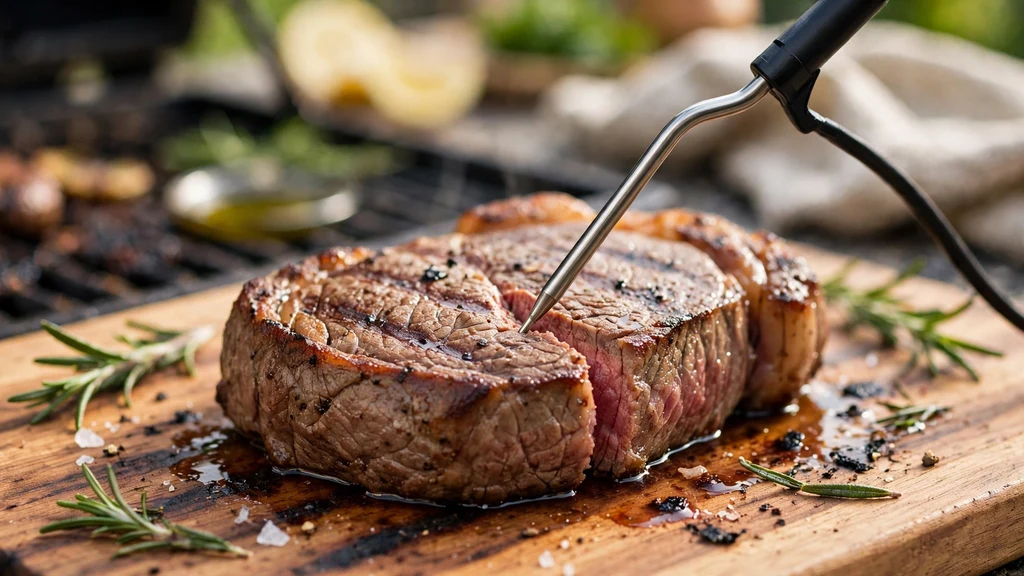
Will a meat thermometer work on liquids?
Yes, you can use a meat thermometer on liquids as long as the temperature stays within the device’s operating range. Ensure the sensor tip is fully submerged without touching the bottom of the pan for an accurate reading.
Can I put a meat thermometer in oil?
You can use digital models in oil if the temperature does not exceed the manufacturer limits. However, dial models or units with plastic components near the stem will melt or warp in hot oil.
Can a meat thermometer be submerged in water?
Most digital probes allow you to submerge the metal stem into water. Never submerge the entire plastic or digital housing unless the unit is explicitly rated as waterproof to prevent short-circuiting.
What kind of thermometer to use for liquids?
Digital instant-read models work wonderfully for quick liquid checks like water or milk. For boiling sugar syrups or deep frying, a dedicated candy or deep fry tool with a pot clip is much better.
Conclusion
Using a meat thermometer for liquid tasks works fine in a pinch, provided you respect the temperature limits and immersion depth of your specific tool. Water baths and broths pose little threat to digital instant-read models, while hot oil and boiling sugar demand specialized gear.
Taking a moment to verify your tool’s capabilities prevents ruined recipes and damaged equipment. Grab your gear, check your temperatures carefully, and enjoy cooking with confidence in your kitchen.