

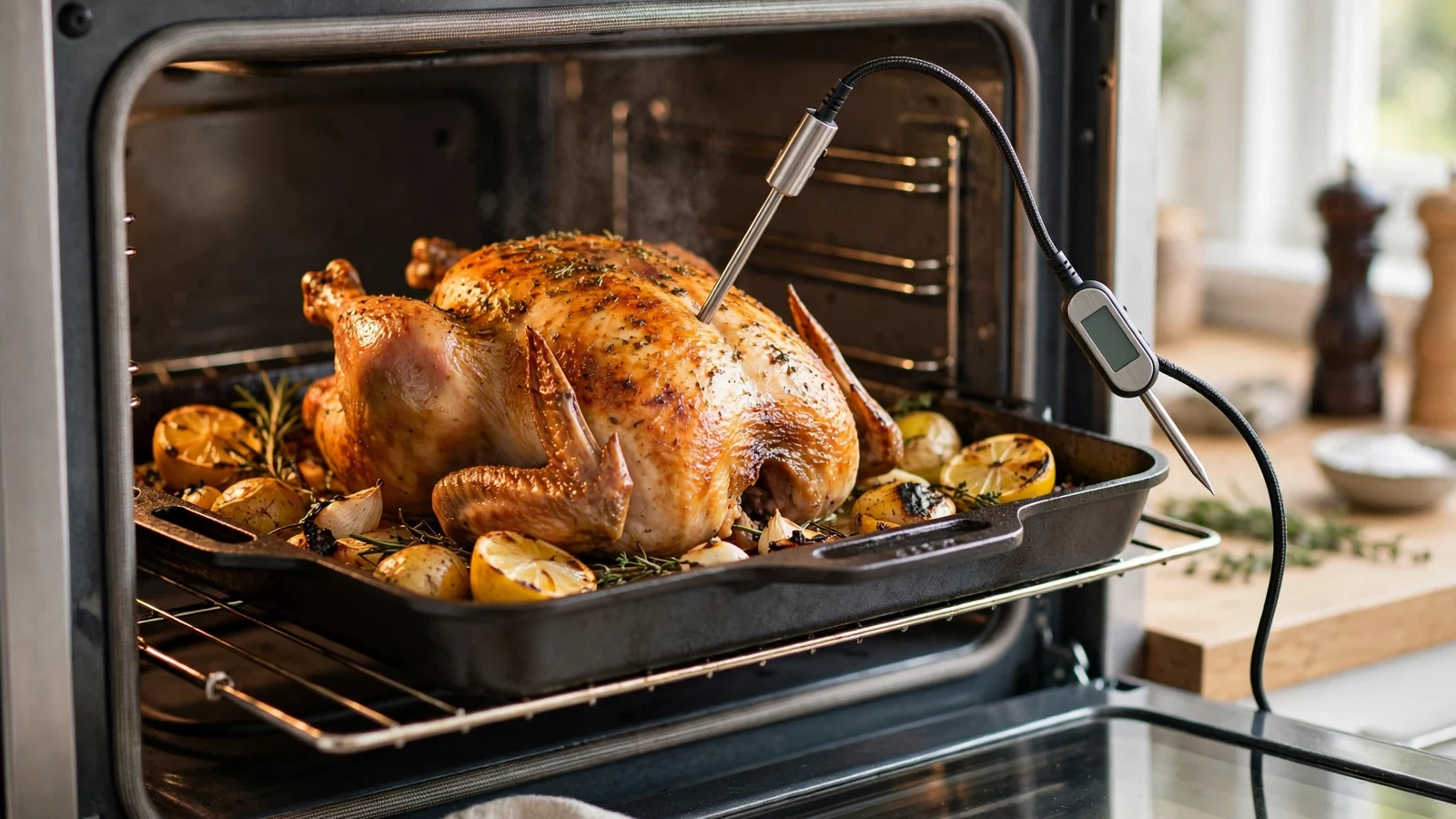
Wondering if you can leave a meat thermometer in the oven while your roast slowly cooks is a common dilemma for home cooks aiming for perfection. Figuring out whether your specific tool can handle continuous high heat without melting or ruining your dinner matters immensely. Read on to discover the exact rules governing leave-in probes, dial indicators, and digital gadgets so your next culinary project turns out just right.
Understanding Oven-Safe Thermometers Versus Instant-Read Models
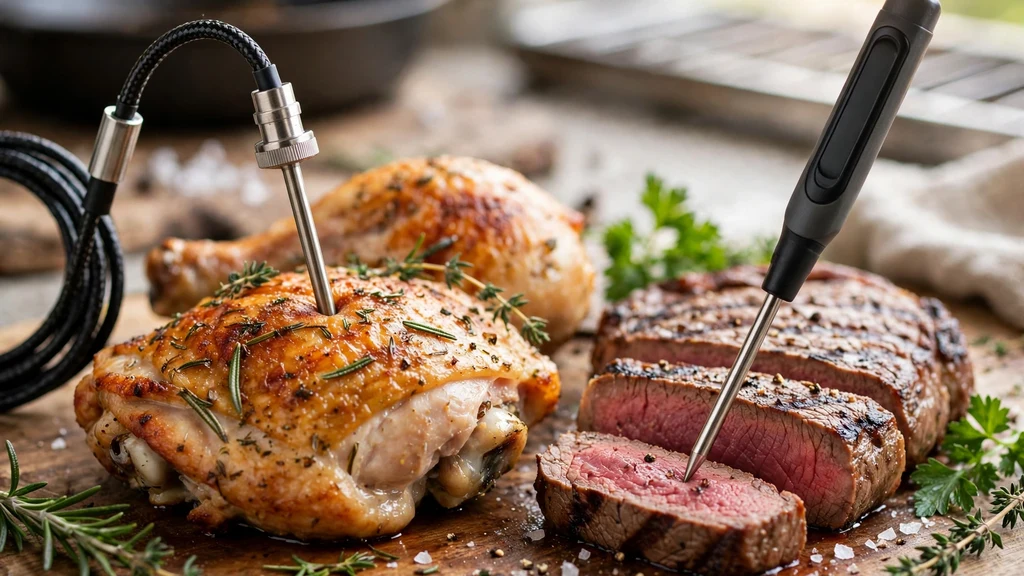
The short answer is yes, but only if you are using the right device. Many home cooks make the mistake of shoving a standard instant-read digital gadget into a raw roast and closing the oven door, only to watch the plastic housing melt within minutes. To answer whether a meat thermometer can stay in the oven, you must first distinguish between leave-in models and quick-check tools.
Instant-read gadgets feature delicate internal sensors housed in plastic handles meant to be used for mere seconds at the end of the cooking process. Leave-in meat thermometers, on the other hand, use stainless steel probes connected to heat-resistant silicone cables that withstand blazing oven environments for hours on end.
When you want to monitor your temperature meat levels continuously, a dedicated oven-safe probe is your best friend. These specialized tools let you track the internal progression of a thick cut of beef, pork, or poultry without ever opening the door and letting heat escape. The probe stays buried deep inside the muscle while the display unit sits safely on your countertop, often featuring a loud alarm to notify you the exact moment your target doneness is reached.
How Leave-In Probes Work in High Heat Environments
Leave-in units are engineered to endure harsh cooking conditions without failing. The thin metal spike is filled with specialized thermistor or thermocouple wires protected by braided steel shielding.
This robust construction ensures that high ambient temperatures inside an oven grill or roasting chamber do not damage the sensitive electronics housed further down the line. When you insert the probe into your roast, you are relying on continuous reading capabilities that update you on every degree of change.
Using these tools correctly means understanding their design limits. While the metal spike and wire can easily handle up to 700 degrees Fahrenheit, the digital base unit or transmitter almost always needs to stay outside the hot zone.
Placing a plastic digital display directly onto a hot oven rack will quickly cause structural failure. Following these boundaries ensures your equipment lasts for years of heavy kitchen use.
Risks of Leaving the Wrong Thermometer in the Oven
Mistaking a standard digital or dial model for an oven-safe variant creates a messy and potentially hazardous situation. Plastic melts, LCD screens black out under excessive heat, and cheap internal components warp instantly.
Beyond ruining a twenty-dollar kitchen tool, melting plastic can release foul chemical odors and potentially toxic fumes into your food and kitchen. If you ever find yourself wondering whether an older, unmarked device is safe to leave inside, it is always wise to err on the side of caution and keep it out of the heat.
Another hidden risk involves liquid mercury or alcohol in older glass dial gauges. While rare in modern digital kitchen gear, traditional glass dial indicators can shatter under thermal shock if exposed incorrectly.
For deeper insights into food safety and proper handling of hot kitchen tools, consult resources like the USDA Food Safety and Inspection Service for official guidelines on roasting meat. Protecting your health and your dinner starts with using proper hardware.
The Best Ways to Use Digital Leave-In Probes
Getting accurate results requires proper placement every single time you cook. You want to slide the tip of the probe into the thickest part of the meat, making sure it avoids large fat pockets or bone cavities that can throw off your readings. Bone conducts heat much faster than muscle tissue, leading to a false high reading that might trick you into pulling your roast early while the center is still raw.
Modern culinary tech has evolved past simple wired probes, offering advanced wireless options that completely eliminate tangled cables. These smart gadgets use Bluetooth or Wi-Fi to beam real-time data straight to your smartphone, giving you the freedom to step away from the kitchen entirely. Whether you are smoking a brisket for twelve hours or roasting a holiday turkey, having remote access to your internal cooking metrics provides incredible peace of mind.
Step-by-Step Placement Guide
- Trim your cut of meat and pat it dry with paper towels.
- Insert the metal probe horizontally into the thickest section of the roast.
- Double-check that the tip is not touching any bone, gristle, or the bottom of the roasting pan.
- Run the heat-resistant cable out of the door, ensuring the door closes snugly without pinching the wire too hard.
- Plug the external end into your monitor, set your desired target, and let the cooking begin.
Dial Versus Digital: Which Handles Heat Better?
Old-school dial indicators have been around for generations, and many models feature all-metal construction that lets them stay inside a hot roasting environment indefinitely. These mechanical tools rely on a bimetallic coil inside the stem that expands as it warms, turning the needle on the face. While durable and battery-free, dial gauges are often harder to read at a glance and lack the programmable alert features found on modern digital units.
Digital devices offer superior precision and convenience, but they require power sources like batteries and feature vulnerable display screens. When shopping for reliable kitchen gear, look for units explicitly labeled as oven-safe on the packaging. To help you choose the right equipment, consider how different models compare across key performance categories.
| Thermometer Type | Can Stay in Oven? | Max Heat Tolerance | Key Feature |
|---|---|---|---|
| Instant-Read Digital | No | Usually 200°F (Handle only) | Fast reading in seconds |
| Leave-In Wired Probe | Yes | Up to 700°F (Probe only) | Continuous alarm monitoring |
| Classic Dial Gauge | Yes | Up to 500°F – 600°F | No batteries required |
| Smart Wireless Probe | Yes | Up to 527°F (Internal) | Smartphone app integration |
How to Test Your Equipment for Accuracy
Even the finest kitchen tools can fall out of calibration over time due to accidental drops or extreme thermal stress. Checking your equipment before preparing an expensive cut of meat prevents cooking disasters. The ice water test is the easiest and most reliable method to verify that your gear is giving you true numbers.
Fill a tall glass to the brim with crushed ice and top it off with cold water, stirring the mixture for thirty seconds to ensure uniform chill. Insert your probe into the center of the slush without letting it touch the sides or bottom of the glass.
A properly calibrated tool should read exactly 32 degrees Fahrenheit within a minute. If your device is off by more than a few degrees, look for a manual calibration button or consider replacing it.
Common Mistakes When Monitoring Roast Temperatures
Even when using an approved leave-in probe, small user errors can ruin your cooking results. One frequent blunder is failing to push the spike deep enough into the roast. If only the very tip enters the meat, ambient oven heat can skew the sensor and make the display read much higher than the actual core temperature.
Another issue is wrapping the excess cable too tightly around hot metal pans or letting the wire dangle directly over an open flame on a gas stove. While the braided shielding is tough, direct contact with open burner flames or broiler elements exceeds rated temperature limits and destroys internal wiring. Keep cables neatly routed away from direct radiant heat sources to ensure long-lasting performance.
Why Calibration and Maintenance Matter
Taking care of your kitchen gear guarantees consistent results meal after meal. After every cooking session, let the metal probe cool down completely before washing it with warm soapy water. Never submerge the digital display housing unless the manufacturer explicitly states it is waterproof, as moisture seepage ruins circuit boards quickly.
Storing your probes loosely in a crowded drawer can bend the thin metal tips or crush delicate cables. Use a dedicated storage pouch or hang your wired units on a kitchen rack. Taking these simple preventive steps keeps your equipment accurate, dependable, and ready for your next culinary adventure.
Frequently Asked Questions
Can I leave any digital meat thermometer in a hot oven?
No, only probes specifically rated as leave-in or oven-safe can stay inside. Standard instant-read digital models have plastic components that melt quickly under continuous high heat.
How do I know if my probe is oven-safe?
Check the manufacturer packaging or manual for explicit leave-in instructions. If the unit includes a thin metal probe attached to a silicone or braided steel cable, it is generally designed for continuous oven use.
What happens if the thermometer cable touches the broiler?
Direct contact with a blazing broiler element or open flame can melt the protective shielding and ruin the internal wiring instantly, rendering the device permanently useless.
Can I use a meat thermometer in a microwave?
Never put a metal meat thermometer inside a microwave oven. The metal creates dangerous electrical sparks and arcs that can destroy your microwave and start a fire.
Conclusion
Knowing whether a meat thermometer can stay in the oven transforms how you approach roasting, baking, and smoking proteins. By using proper leave-in probes, respecting heat limits, and regularly checking your calibration, you ensure flawless results every single time you cook. Take a moment to inspect your current kitchen tools today, and upgrade to a reliable leave-in probe for effortless cooking moving forward.