

If you have ever stared at a roast in the oven wondering if you can leave a metal meat thermometer in while cooking, you are definitely not alone in this kitchen dilemma. Knowing how to monitor your food without ruining your equipment or your dinner is a fundamental skill for anyone who loves to cook.
We will break down everything you need to know about leaving various types of temperature probes in your food during the baking, roasting, or smoking process, ensuring your meals come out safe and perfectly cooked every single time.
Understanding Oven-Safe Thermometers
Not all kitchen tools are built to withstand high ambient heat for hours on end. Knowing the difference between an instant-read tool and a dedicated leave-in probe prevents ruined equipment and warped dials.
Traditional analog dials and specific digital probes are engineered for extended heat exposure. When you ask yourself whether you can leave a metal meat thermometer in while cooking, the answer depends entirely on the design of the device you are holding.
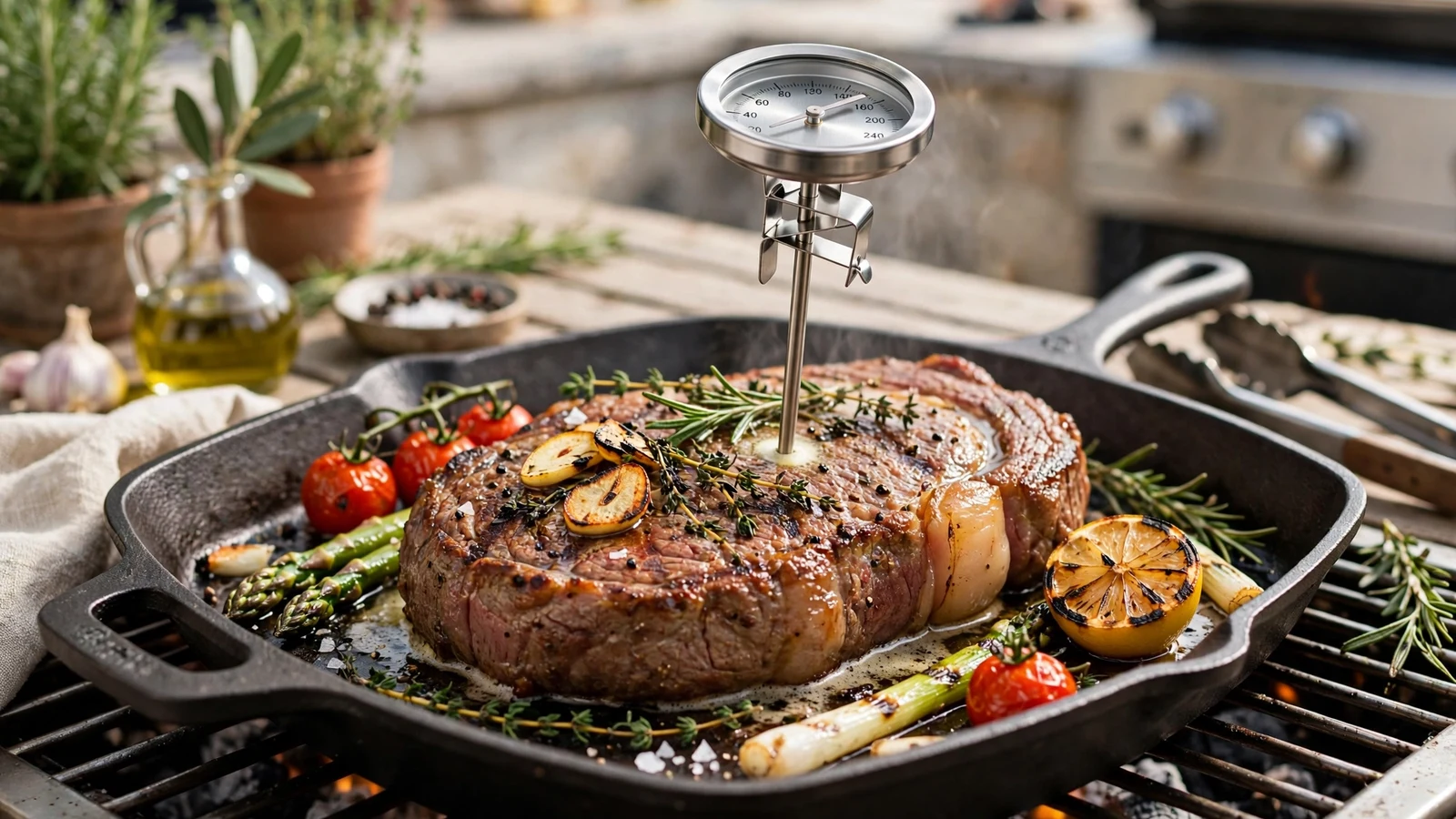
Traditional dial thermometers are often made of stainless steel and are designed to stay inside a roast throughout the entire cooking cycle. They feature a wide dial face that lets you monitor the temperature at a glance through the oven glass. However, digital instant-read models contain sensitive electronic components in their plastic heads that will melt or fail if left inside a hot oven.
Before sticking any probe into your roast, check the manufacturer’s manual or look for stamped markings on the metal stem. Using the wrong tool in a high-heat environment can shatter glass lenses or fry internal circuits, leaving you with inaccurate readings and a useless gadget.
Analog Dial Models
Analog dial models are the classic workhorses of the culinary world. These mechanical devices rely on a bimetallic strip inside the metal stem that expands as it heats up, turning the needle on the face.
Because they contain no delicate microchips or batteries, they handle high ambient temperatures with ease. You can safely insert an analog dial into a thick cut of beef, pork loin, or poultry and leave it there from start to finish.
The main drawback of these classic tools is their speed and calibration. They take about thirty to sixty seconds to register a stable temperature, which means holding your oven door open longer than you might like. Over time, banging them around in a kitchen drawer can also throw off their calibration.
To check if your analog tool is still accurate, plunge the stem into a glass of ice water. The needle should point right around thirty-two degrees Fahrenheit. If it drifts significantly, most models have a tiny calibration nut on the back or under the dial that lets you adjust the needle manually.
Digital Leave-In Probes
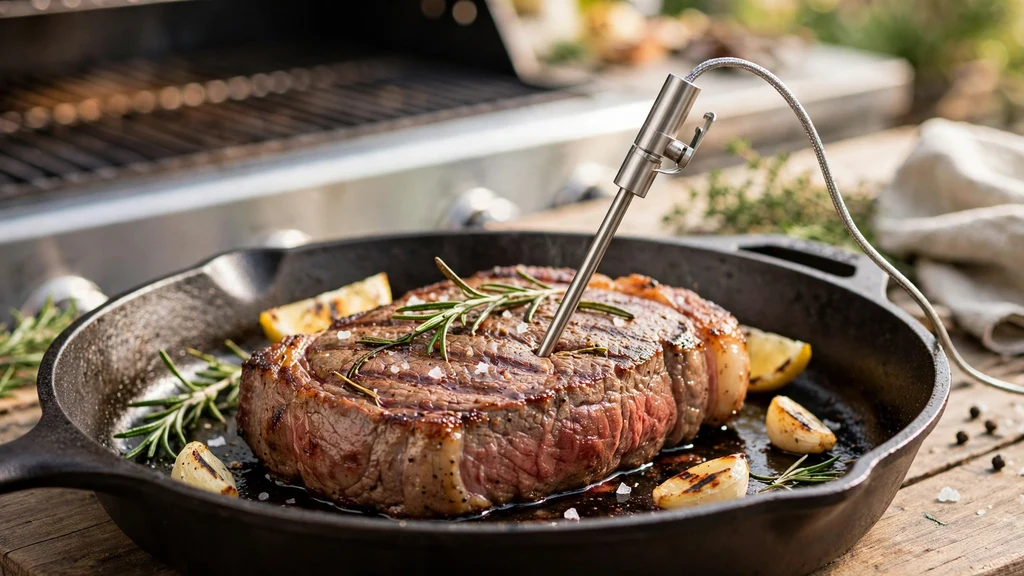
Digital leave-in probes offer a modern approach to kitchen temperature monitoring. These devices feature a thin metal probe connected via a heat-resistant wire cable to a digital base unit sitting outside your oven or grill.
The cable itself is typically shielded in braided stainless steel or silicone, designed to withstand temperatures well over four hundred degrees Fahrenheit. This setup allows you to monitor your food continuously without opening the oven door and losing valuable heat.
The real magic of these tools lies in their programmable alarms. You can set a target temperature for your meat, and the base unit will beep loudly the moment your roast hits perfection. This eliminates the guesswork and prevents overcooking expensive cuts of meat like prime rib or tenderloin.
You do need to be careful with the wire cables, though. Never slam a heavy oven door directly onto the braided cable, as this can pinch the internal wires and ruin the sensor. Always route the cable gently through the door seal where the rubber gasket can cushion it.
Wireless and Bluetooth Units
Wireless and Bluetooth units represent the cutting edge of culinary technology. These smart devices eliminate wires entirely by housing the battery and transmitter inside the metal probe itself.
You insert the entire probe into the meat, close your oven door, and stream live temperature data straight to your smartphone. This freedom lets you mingle with guests or prep side dishes in another room while keeping a close eye on your main course.
These advanced tools are engineered to handle the harsh environment inside an oven, smoker, or on the grill without missing a beat. Their internal ceramic shields protect the sensitive electronics from direct radiant heat. However, you must insert them past a certain safety line marked on the metal shaft to protect the internal battery from exploding.
While they are remarkably convenient, wireless probes tend to be significantly more expensive than traditional analog or wired digital options. They also require regular charging or battery replacement, adding a bit of prep work to your cooking routine.
Safe Usage Guidelines
Getting accurate readings and keeping your food safe requires proper placement techniques. Simply shoving a metal spike into the middle of a roast isn’t enough to guarantee success.
You must aim for the thickest part of the meat while avoiding bones, gristle, and deep pockets of fat, which can damage the insulation. Bones conduct heat much faster than muscle tissue, giving you a falsely high reading that leaves your meat undercooked. Fat pockets cook differently than protein, leading to skewed results as well.
Here are the core rules for proper probe placement:
- Target the geometric center of the thickest muscle mass.
- Keep the tip away from direct contact with any roasting pan or grill grates.
- Ensure poultry probes are inserted into the meatiest part of the thigh, not touching bone.
- Verify that the insertion depth meets the manufacturer’s minimum requirements for accurate sensing.
- Sanitize the metal stem thoroughly with hot soapy water before and after every single use.
- For guidance on proper food handling temperatures, consult the USDA Food Safety and Inspection Service for official safety benchmarks.
Following these steps ensures that your temperature readings reflect the actual doneness of the meat rather than the temperature of the surrounding pan or bone.
Oven Versus Grill and Smoker Environments
The cooking environment plays a massive role in how your temperature tools perform. An enclosed kitchen oven provides steady, radiant heat that heats the air and the meat evenly. Conversely, an open grill or a long low-and-slow smoking process exposes your equipment to harsh flare-ups, direct flames, and corrosive wood smoke that can degrade cheap materials quickly.
Low-temperature smoking sessions often last for twelve to sixteen hours, putting immense strain on wired probes and their cable insulation. Cheaper cables can crack under this prolonged exposure, allowing moisture from the meat and smoke to ruin the internal sensors. Investing in heavy-duty commercial-grade probes pays off quickly if you smoke meats regularly.
Grilling presents the opposite challenge of extreme radiant heat. Flare-ups can easily spike the ambient temperature right around the grill grates far beyond the maximum rating of your equipment, melting silicone handles and ruining exposed digital displays.
Comparison of Temperature Tools
Choosing the right monitoring equipment depends entirely on your cooking style and budget. To help you decide which tool fits your kitchen habits, review the following comparison table.
| Thermometer Type | Oven Safe? | Best Used For | Key Advantage |
|---|---|---|---|
| Analog Dial | Yes | Large roasts, whole poultry | Inexpensive, no batteries required |
| Wired Digital | Yes (Probe only) | Baking, roasting, smoking | External display with target alarms |
| Wireless Bluetooth | Yes | Rotisserie, grill, smoker | Completely cord-free monitoring |
| Instant-Read | No | Quick spot-checks at the end | Lightning-fast readings in seconds |
Reviewing this breakdown highlights why keeping an instant-read tool on hand is smart, even if you own a great leave-in probe for your roasts. They serve completely different roles in the kitchen.
Troubleshooting Common Issues
Even with high-end equipment, things can occasionally go wrong in the middle of preparing a meal. If your digital display reads an erratic number or fails to register any heat at all, the culprit is usually a loose plug connection at the base unit. Push the audio jack firmly into its port to ensure it clicks securely into place.
Another common issue is a sudden drift in accuracy caused by residue buildup. Baked-on grease and protein crusts can act as insulators, slowing down reaction times and skewing your numbers. Scrub the metal stem gently with a scouring pad and warm soapy water after every use to prevent buildup.
If your wireless probe drops its Bluetooth connection, interference from thick kitchen walls or other electronic devices is usually to blame. Moving your smartphone closer to the oven or resetting the transmitter usually restores the signal instantly.
Frequently Asked Questions
Can you leave an instant-read thermometer in the oven?
No, standard instant-read models contain sensitive digital electronics in their plastic heads that will melt and fail under high ambient oven heat. Use them only for quick spot-checks at the end of the cooking cycle.
What happens if a probe touches the bone?
Bones conduct heat much faster than meat tissue, which causes the thermometer to give a falsely high reading. This can trick you into thinking your roast is done when the surrounding meat is still raw.
Are silicone-coated wires safe for high heat?
Yes, quality silicone and stainless steel braided wires are specifically rated to withstand high oven and smoker temperatures, often up to seven hundred degrees Fahrenheit without melting or degrading.
How do I clean my metal temperature probe safely?
Wash the metal stem with warm soapy water using a sponge or cloth. Never submerge the entire digital unit or cable plug in water, as moisture will ruin the internal electronics.
Conclusion
Mastering your kitchen equipment makes preparing delicious meals much less stressful. Whether you rely on a classic mechanical dial or a modern wireless probe, knowing your tools allows you to cook with total confidence.
Treat your equipment with care, follow safe placement rules, and you will never have to guess if your dinner is ready to serve. Enjoy experimenting with your next roast and sharing great food with the people you love.