

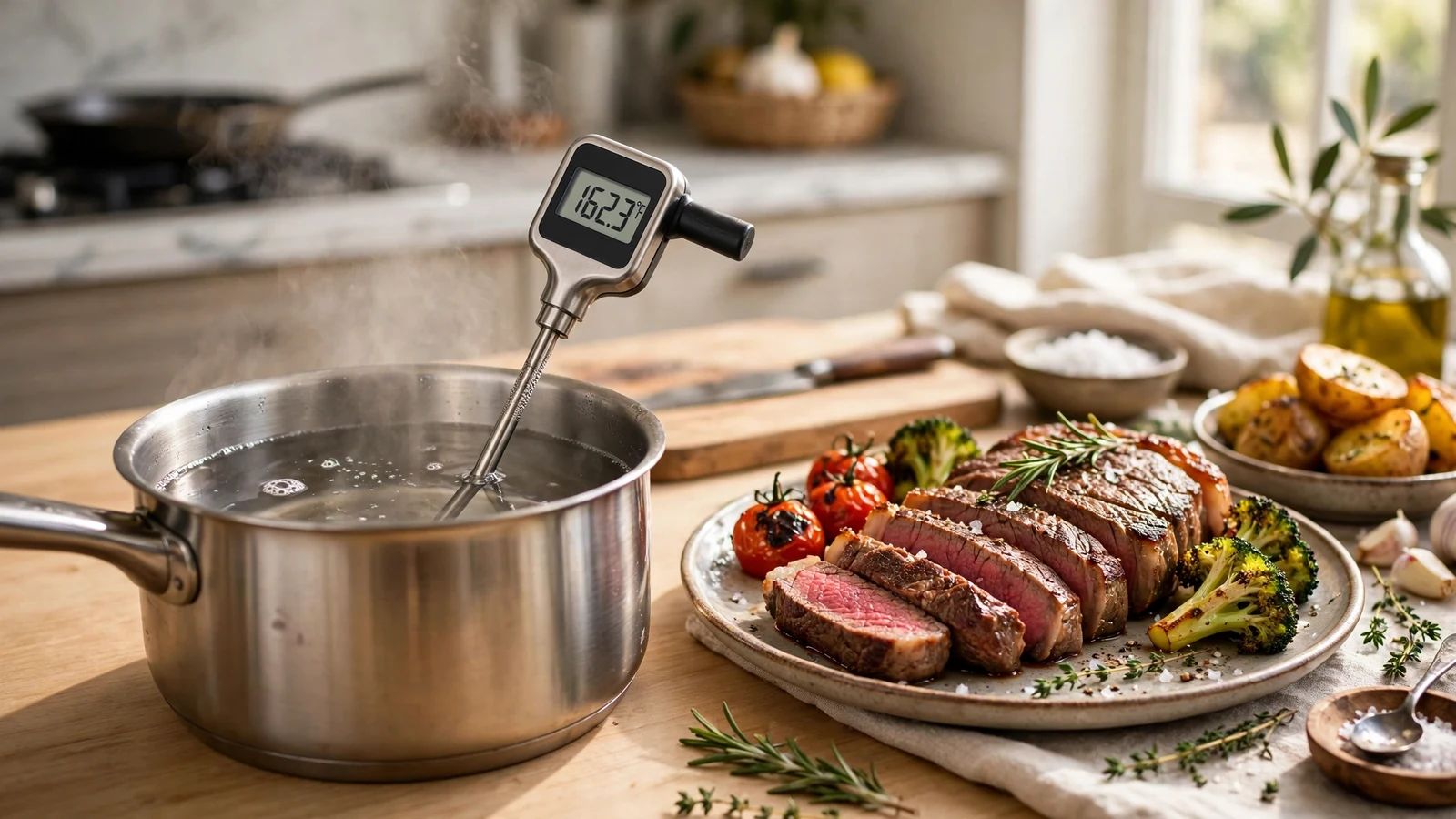
If you are standing in the kitchen staring at a pot on the stove and wondering if can you measure water temperature with a meat thermometer, the short answer is yes, absolutely. Most culinary probes work fine in liquids, provided you respect their design limits and avoid dunking the electronic housing beneath the surface.
Kitchen tools often double up nicely when you find yourself in a pinch. Whether you are brewing craft coffee, proofing yeast for bread, or deep-frying chicken, knowing your exact liquid heat level matters. This deep dive covers everything you need to know about using a meat probe for liquids.
Understanding Meat Thermometer Design and Liquid Compatibility
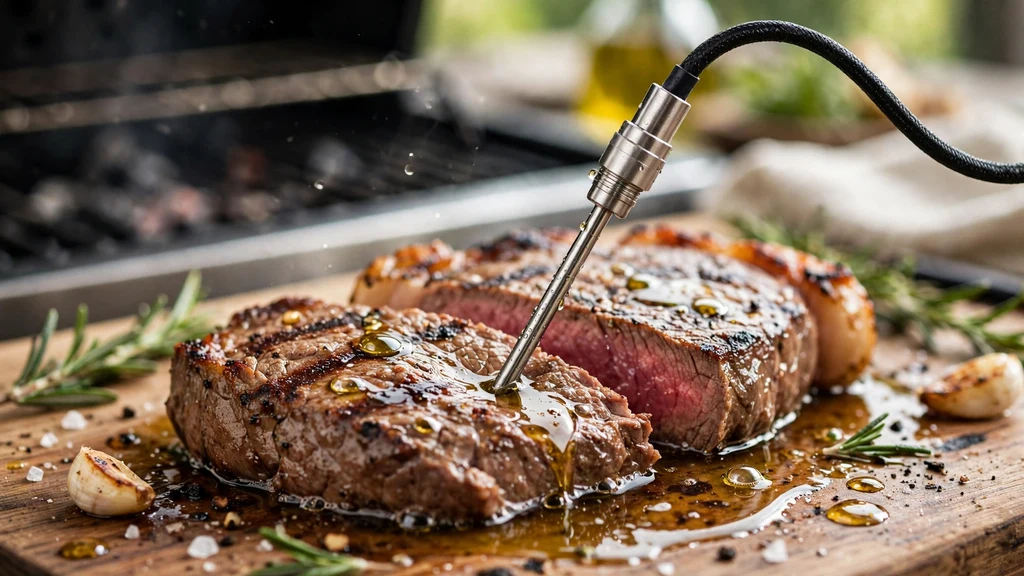
A meat probe is fundamentally built to measure thermal energy, which means it handles hot liquids just fine. Most modern kitchen gauges feature a stainless steel stem connected to either a digital readout or an analog dial.
Because water has a high specific heat capacity, it transfers thermal energy rapidly to the metal probe. You get a fast reading because the conduction happens almost instantly.
However, you must check the waterproof rating of your specific device. Traditional dial models are completely sealed mechanical units that can take a bath without breaking. Digital models with a wired cord are also safe at the probe end, but the base unit or digital display usually cannot handle being submerged.
If you drop the whole digital body into a boiling pot, you will likely ruin the internal electronics. Always keep the plastic housing or digital screen well clear of the steam and the rim of the pot.
Digital Versus Dial Probes for Water Readings
Choosing the right tool for the job prevents kitchen accidents and inaccurate measurements. Digital instant-read tools provide speed and precision, while traditional dial models offer rugged simplicity.
- Digital Instant-Read: Delivers a reading in under five seconds, perfect for delicate tasks like blooming yeast.
- Dial Probes: Slower to react, but require no batteries and tolerate full immersion much better.
- Wired Probes: Great for monitoring long boils, though the cord must never rest directly against a scorching burner edge.
When you want to check a rolling boil, a digital instant-read gives you the data in a flash. Dial models require about fifteen to thirty seconds for the bi-metallic strip inside to fully expand and stabilize.
How to Take an Accurate Liquid Reading
Plunging a metal stem into a pot sounds simple, but technique dictates whether your numbers are trustworthy. Never let the tip touch the bottom or the sides of a heated metal vessel. The pan absorbs direct heat from the burner, meaning a resting probe will report the temperature of the cookware rather than the liquid itself.
Suspend the tip right in the middle of the fluid column. Stir the liquid gently for a few seconds to eliminate hot spots, especially if you are dissolving sugar or salt.
If you are using a wired unit, clip it to the side of the pot so the tip floats freely in the fluid without touching metal surfaces. For more details on heat transfer principles, you can read about temperature measurement standards from a recognized national metrology institute.
Limitations When Measuring Boiling and Freezing Points
Standard culinary probes are built to handle roasting environments, which usually means they easily track ranges from freezing up to five hundred degrees Fahrenheit. This broad range covers almost any kitchen task involving water.
| Task | Target Range | Suitability |
|---|---|---|
| Yeast Proofing | 105°F – 110°F | Excellent |
| Simmering Stock | 185°F – 200°F | Excellent |
| Rolling Boil | 212°F at sea level | Good |
| Deep Frying Oil | 350°F – 375°F | Fair (Check Max Rating) |
Keep in mind that barometric pressure alters boiling points. If you live at a high altitude, water boils at a lower threshold than standard sea level specs. Your gauge will faithfully report this lower number, which can sometimes confuse home cooks who expect a strict two hundred twelve degrees.
Checking Calibration for Precision Tasks
Inaccurate tools ruin baking projects and candy making. Before trusting your kitchen gauge with sensitive tasks, perform a simple ice bath or boiling water check.
Fill a glass with crushed ice and top it off with cold water. Stir for a minute, then insert your probe without touching the sides of the glass. The display should read thirty-two degrees Fahrenheit.
For a boiling check, bring pure water to a rolling boil and insert the stem. If your device reads significantly off from the expected benchmark, look for a calibration nut on dial models or consult the manufacturer manual for digital reset procedures.
Alternative Uses in Beverage and Confectionery Prep
Liquids require varying degrees of thermal precision depending on what you are making. Making candy requires hitting hard-crack or soft-ball stages, where a few degrees change the final structure completely.
Beverage preparation also benefits greatly from precise thermal tracking. Green tea tastes bitter if steeped in boiling water, requiring a cooler range around one hundred seventy-five degrees.
Pour-over coffee thrives when brewed between one hundred ninety-five and two hundred five degrees. Using your kitchen probe for these drinks ensures optimal extraction without scorching the delicate flavor compounds.
Safety Precautions and Common Mistakes
Thermal shock remains the primary hazard when transferring metal probes between extreme environments. Dropping a scorching hot probe straight into ice water can crack the glass sensor inside digital units or warp the metal stem.
Always let your hardware cool down gradually before cleaning it. Wash the stem with warm soapy water, but never submerge the entire digital unit in the sink. Avoid leaving your tools resting inside a hot pan unattended, as prolonged exposure to direct radiant heat melts plastic handles and ruins internal circuits.
Frequently Asked Questions
Can a meat thermometer tell the temperature of water accurately?
Yes, a meat thermometer measures water accurately as long as the tip is suspended in the center of the liquid without touching the sides or bottom of the heated pan.
Can I use a regular meat thermometer for candy making?
You can use one for basic sugar work, but dedicated candy thermometers feature a wider scale and a helpful pan clip designed specifically for high-sugar boiling stages.
Will boiling water ruin a digital meat probe?
Boiling water will not ruin the metal stem, but submerging the plastic digital housing or the display unit will destroy the internal electronics instantly.
How do I know if my kitchen thermometer is broken?
Test the probe in a cup of crushed ice and water; if the display fails to register thirty-two degrees Fahrenheit, the device needs calibration or replacement.
Conclusion
Using a kitchen probe for liquids is a smart, practical shortcut that saves you from cluttering drawers with single-purpose gadgets. As long as you keep the electronics dry and avoid touching the hot pan surface, you will get reliable readings every single time. Take a moment to check your tool’s calibration, mind the placement in the pot, and you are ready to tackle any recipe requiring precise thermal control.