
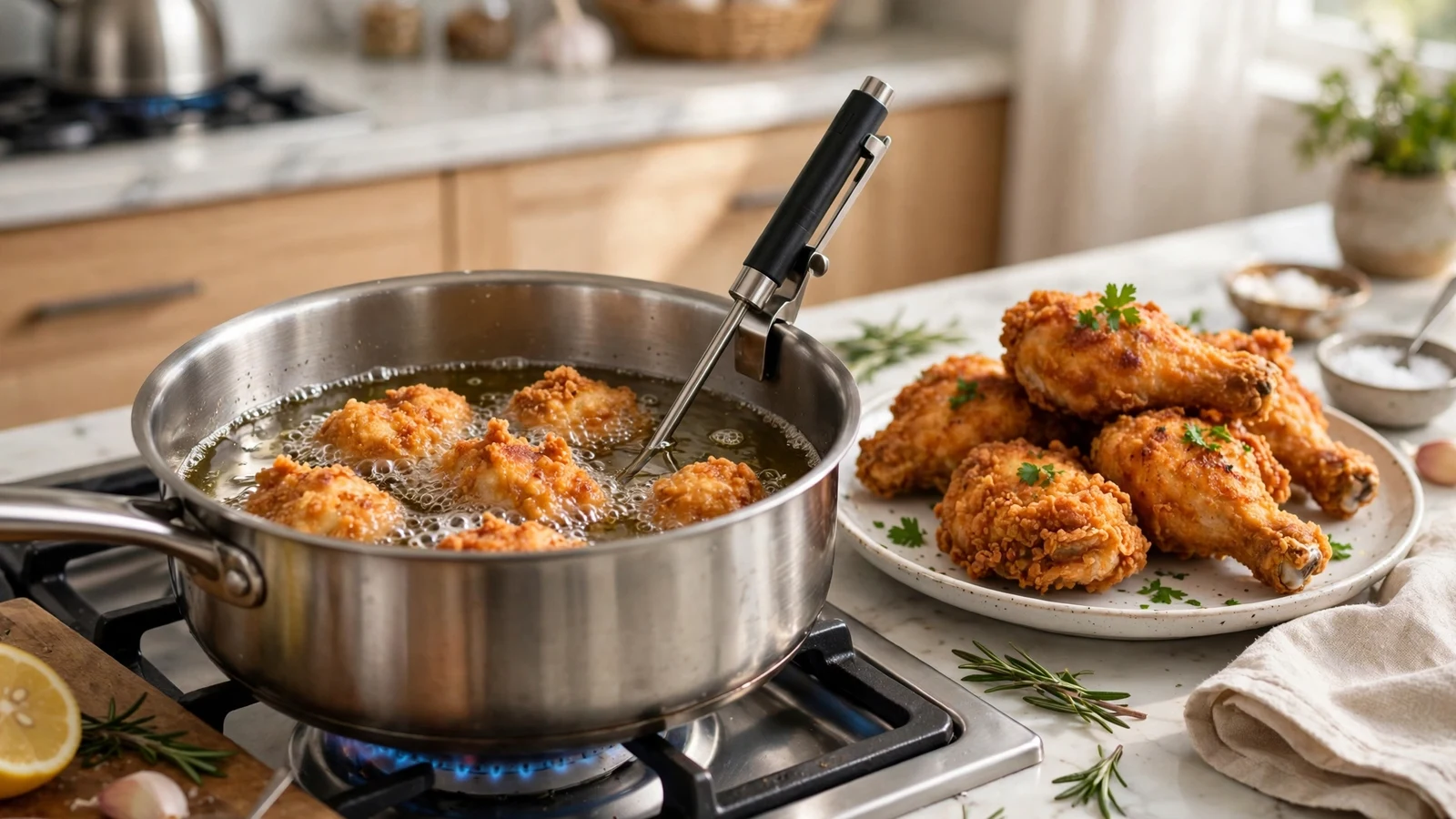
If you are standing in the kitchen staring at a pan of sizzling fat, wondering if you can use a meat thermometer to check oil temp, you are definitely not alone. It is a classic cooking dilemma that pops up whenever someone decides to fry up some chicken or potatoes without specialized gear.
Figuring out if this kitchen shortcut actually works will save your dinner and protect your equipment. We will break down how these tools function, the hidden risks involved, and better alternatives for your kitchen.
Understanding How Meat Thermometers Work

Meat thermometers are built to measure the internal temperature of solid proteins like roasts, chicken breasts, and pork chops. When you use a meat thermometer, you typically insert the tip into the thickest part of the food, away from fat or bone.
These devices rely on internal sensors that absorb ambient heat very slowly compared to specialized cooking thermometers designed for liquid immersion. Because meat is mostly water, the sensor reads the thermal energy held inside the solid object rather than the fluctuating currents of a hot fluid.
The manufacturing specifications of a standard kitchen tool dictate how much heat it can handle safely. Most dial-type models and many older digital versions feature plastic components near the dial face or housing that cannot tolerate intense radiant heat from a stovetop burner.
If you submerge the entire metal stem or get the housing too close to boiling fat, the internal calibration can slip permanently. Knowing the limits of your specific equipment prevents you from destroying a perfectly good kitchen tool just to fry a batch of fries.
The short answer is yes, you can technically use a meat thermometer to check oil temp, but only under very specific conditions. If your device features an all-metal construction and a digital readout with a remote probe on a high-heat cable, it will likely survive the process.
However, standard analog dial models meant for a Sunday roast often lack the necessary range and structural resilience. Frying requires precision, and plunging the wrong tool into a hot skillet can lead to inaccurate readings or damaged equipment.
Safety is the primary concern when mixing standard kitchen tools with boiling liquids. Fat gets much hotter than cooked poultry, often reaching 375 degrees Fahrenheit or higher during standard frying sessions.
If your tool is only rated up to 200 degrees, the internal wax or electronics can fail rapidly. Always check the manufacturer guidelines stamped on the back or in the manual before letting metal touch your hot frying medium.
The Dangers of Thermal Shock and Glass Breakage
Thermal shock occurs when a rapid temperature change causes materials to expand or contract unevenly, leading to cracks or shattering. Traditional glass-stem thermometers, often used in candy making, are notoriously fragile when exposed to sudden temperature spikes or drops.
If you drop a cold glass probe into a boiling pan of fat, it can snap instantly, releasing glass shards and mercury or colored alcohol into your food. This turns a simple cooking task into an immediate safety hazard that ruins your meal.
Even metal probes can suffer structural fatigue if subjected to extreme thermal gradients too quickly. While steel is much more resilient than glass, sudden exposure to high heat can warp the casing or trap moisture inside digital components. Letting the metal tip touch the bottom of a blazing hot cast-iron skillet will also give you a false reading because you are measuring the pan, not the fluid.
Digital Versus Analog: Which Probes Handle Heat Better?
When evaluating different models for high-heat tasks, digital instant-read devices usually outperform old-fashioned mechanical dials in speed. A digital tool uses a thermocouple or thermistor at the tip to register thermal changes in a matter of seconds. This quick response time is crucial because standing over a smoking skillet waiting for a slow dial to creep upward exposes you to dangerous splatters.
However, digital units have vulnerable electronics that require careful handling around steam and splattering grease. The table below compares how different measuring tools perform in high-heat frying environments:
| Thermometer Type | Max Heat Tolerance | Response Time | Suitability for Frying |
|---|---|---|---|
| Digital Probe with Wire | 500°F – 700°F | 2-4 seconds | High |
| Analog Dial Meat Probe | 220°F – 250°F | 15-30 seconds | Poor |
| Candy and Jelly Glass Unit | 400°F | 5-10 seconds | Moderate |
| Infrared Surface Gun | 900°F+ | Instant | Moderate (Surface Only) |
How to Measure Frying Conditions Accurately
Achieving the right frying conditions depends entirely on maintaining a steady, reliable thermal range. If your fat is too cool, your food absorbs excess grease and turns out soggy.
If it is too hot, the exterior burns before the inside cooks through. Here are the best practices for monitoring your setup:
- Clip the probe securely to the side of your pot so it stays suspended in the middle of the fluid without touching the metal bottom.
- Keep the electronic housing and plastic parts well away from the rising steam and open flame.
- Allow the reading to stabilize for at least thirty seconds before dropping any food into the pot.
- Clean the metal stem immediately after use with hot soapy water to prevent sticky residue buildup.
Common Signs Your Tool Is Failing
Using worn-out or damaged equipment in a hot kitchen can lead to inconsistent culinary results. If your display shows erratic numbers, jumps randomly, or refuses to return to room temperature when removed from the heat, the internal sensor is likely compromised. Moisture infiltration behind the digital screen is another clear indicator that the waterproof seal has failed during washing or exposure to heavy steam.
Calibrating your equipment regularly helps catch these issues before they ruin your food. You can easily test accuracy by plunging the tip into a cup of ice water, which should read precisely 32 degrees Fahrenheit, or boiling water, which should register at 212 degrees depending on your elevation. If your device is off by more than a couple of degrees, it is time for a replacement.
Alternative Ways to Check Heat Without a Specialized Device
If you decide against using your standard meat probe and lack a dedicated deep-fry tool, you can still test your setup using common kitchen items. These traditional methods provide a reliable estimation of whether your pan is ready for action:
- The Wooden Spoon Test: Dip the handle of a wooden spoon into the fluid; if steady bubbles form rapidly around the wood, the medium is hot enough.
- The Bread Cube Test: Drop a small cube of white bread into the skillet; if it turns golden brown in about sixty seconds, you are sitting at roughly 350 degrees.
- The Water Drop Test: Flick a tiny drop of water off your fingertip into the pan; if it dances and evaporates instantly, the temperature is moderately high.
Frequently Asked Questions
Can I leave a meat probe in the pot while frying?
Leaving a standard meat probe sitting in boiling fat will usually melt the plastic housing or damage the internal electronics. Only leave specialized remote probes with braided steel cables in the pot, keeping the digital base unit safely on the counter.
What temperature should frying medium reach for chicken?
Most breaded chicken pieces require a steady cooking range between 325 and 375 degrees Fahrenheit. This ensures the coating crisps up nicely while the internal meat reaches a safe doneness level without drying out.
Is a candy thermometer the same as a frying thermometer?
They are nearly identical in function and construction, as both are designed to handle high boiling points up to 400 degrees or more. You can easily use a candy unit for frying tasks without risking damage to the device.
Why did my analog dial crack in hot oil?
Analog dials often contain internal glass covers and calibration springs that cannot handle rapid thermal expansion. Submerging a cold metal stem directly into hot liquid creates intense stress that shatters the fragile internal components.
Conclusion
Checking your cooking fluid with standard kitchen gear is possible if you verify the heat tolerances first, though dedicated tools always perform better. By keeping an eye on your equipment limits and following proper safety steps, you will master crispy frying results every single time. Grab your gear, watch your levels, and enjoy your next homemade meal.