


You might be standing at your stove right now, staring at a pot of bubbling broth or hot oil, wondering if does a meat thermometer work for liquid, or if you are about to ruin your dinner. It is a common kitchen dilemma when you realize your candy thermometer is missing and dinner depends on an accurate reading. The good news is that you can often use your standard kitchen tool for soups, milk, and frying oil, provided you understand its design limitations.
In this deep dive, we will look at how different temperature tools function, where they overlap in the kitchen, and when you really need a specialized device. You will learn the exact mechanics of these sensors, how to avoid damaging your equipment, and the best practices for getting a precise measurement every time.
Understanding Meat Thermometer Mechanics
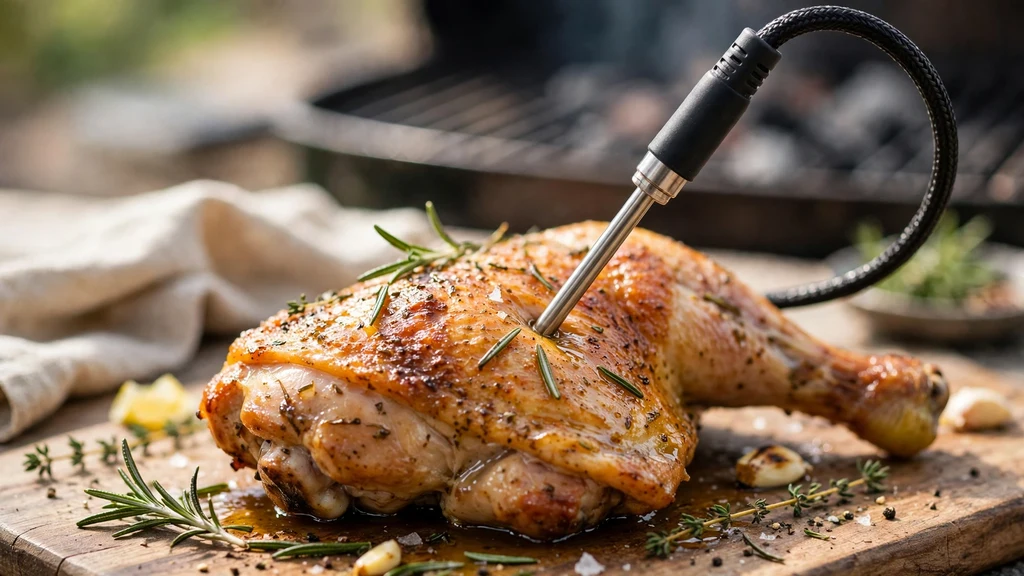
To figure out if a meat thermometer works for liquid, you first need to understand how the sensor actually operates. Most modern digital options rely on a thermistor or a thermocouple located near the tip of the metal stem. When you push that probe into a roast, the metal conducts heat from the surrounding flesh directly to the sensor inside.
Traditional dial variants use a coiled bimetallic strip that expands at different rates when heated, moving the needle across the face. These mechanical gauges are notoriously sluggish, often taking up to thirty seconds to register a stable temperature. That delay can be a major disadvantage when you are trying to track rapidly changing liquid temperatures on a hot stove.
Digital models are much faster, giving you a reading in just a few seconds. This speed makes them surprisingly versatile for checking hot water, sauces, and deep-frying fat. However, the internal electronics of a digital model are rarely fully waterproof, meaning you have to be careful about how deeply you submerge the device.
Can You Submerge a Meat Thermometer in Water?
Yes, you can submerge the probe of a meat thermometer in water, but you must never submerge the entire unit. The metal stem is designed to withstand high temperatures and moisture, but the plastic housing or digital display head is usually only water-resistant at best.
If you drop a digital unit into a deep pot of boiling soup, steam and liquid can seep into the battery compartment or ruin the circuit board. Manufacturers typically mark a maximum insertion line or a notch on the stem. Keeping the liquid level safely below that line ensures your equipment survives the test.
For a deeper dive into food safety standards and proper equipment handling, you can review the guidelines provided by the USDA Food Safety and Inspection Service. They offer comprehensive resources on how temperature control keeps home-cooked meals safe to eat.
Checking Liquid Temperatures with Instant-Read Probes
An instant-read thermometer is your best option when you need to check a liquid quickly. Unlike leave-in probe models meant for roasting large cuts of meat over several hours, instant-read tools give you a snapshot of what is happening right now.
When you measure the temperature of water, milk, or sauce, you need to ensure the tip is suspended in the middle of the fluid rather than resting against the hot bottom of the pot. The metal pot conducts direct heat from the burner, which will give you an artificially high reading that does not reflect the actual temperature of the liquid.
Here are the core steps to take when checking liquids with an instant-read probe:
- Stir the liquid gently to ensure an even temperature throughout the pot.
- Hold the probe by the handle and insert the tip at least an inch into the fluid.
- Make sure the tip does not touch the bottom or sides of the cooking vessel.
- Wait a few seconds until the digital display stops climbing and locks in.
Using a Meat Thermometer for Deep Frying Oil
Frying chicken or french fries requires precise heat control, making it tempting to grab whatever tool is closest. While a meat thermometer can handle the heat of frying oil, you need to be cautious about temperature ranges.
Most standard meat probes are rated up to around 300 to 450 degrees Fahrenheit, which usually covers standard frying temperatures between 350 and 375 degrees. However, pushing them past their maximum limit will permanently damage the internal sensor.
Furthermore, hot oil is much more dangerous than boiling water. Holding a short probe by hand right above a splattering pot of grease increases your risk of burns. A dedicated deep-fry thermometer usually features a longer stem and a clip that attaches securely to the side of the pan.
Can You Use It for Candy Making?
Candy making is an exact science that relies on specific sugar stages, from soft ball to hard crack, ranging from 235 degrees all the way up to 310 degrees Fahrenheit and beyond. While a meat probe can technically read these temperatures, it is rarely the right tool for the job.
The main issue is that candy mixtures require constant monitoring as the sugar syrup concentrates and gets hotter. Standing over a hot stove holding a standard probe for twenty minutes is tedious and unnecessary.
The differences between common kitchen temperature tools become clear when you compare their design features:
| Thermometer Type | Max Temperature | Best Use Case | Primary Limitation |
|---|---|---|---|
| Meat Probe | 450°F | Roasts, poultry, quick liquid checks | Short stem, not fully submersible |
| Candy Tool | 400°F+ | Sugar syrups, deep frying | Bulky glass design, slow response |
| Infrared Device | 600°F+ | Surface temperatures of pans | Cannot measure internal liquid temps |
Accuracy Differences Between Air, Meat, and Liquids
Measuring the temperature of a solid object is very different from measuring a fluid. Meat is dense and conducts heat relatively slowly, whereas liquids circulate heat through convection currents as they warm up.
Because liquids move and distribute heat evenly once stirred, you get a much faster reading than you would in the center of a dense piece of beef. However, this mobility also means the temperature can fluctuate rapidly if you remove the pot from the burner.
Calibration is another vital factor to keep in mind. If your device has been dropped or banged around in a kitchen drawer, its accuracy will drift. Testing it in an ice water bath or boiling water ensures you are getting true data whether you are cooking meat or brewing tea.
Common Pitfalls When Measuring Liquids
Even if your equipment is rated for high heat, simple user errors can ruin your measurements. The most frequent mistake is letting the probe rest against the metal wall of a saucepan, which absorbs direct radiant heat from the burner.
Another issue is failing to account for steam. Digital displays can fog up or malfunction if held directly over a rolling boil for too long. Always angle the probe slightly away from the rising steam plume to protect the electronic components.
Finally, do not assume all kitchen tools are microwave safe. Leaving a metal probe inside a liquid while heating it in a microwave will cause electrical arcing and destroy your appliance instantly.
Best Practices for Multi-Purpose Kitchen Tools
If you only own a single digital meat probe and want to use it for liquids safely, a few simple habits will extend its lifespan. Clean the metal stem immediately after use with warm, soapy water, but wipe the digital housing down with a damp cloth instead of running it under the faucet.
Store your device in a dry place with a fresh battery so it is always ready when you need to check a quick batch of homemade broth or warm milk for baking. Knowing the limits of your tools prevents kitchen disasters and ensures your food always hits the correct safe zone.
Frequently Asked Questions
Can I use my meat thermometer for boiling water?
Yes, you can safely dip the metal probe into boiling water to check if it has reached 212 degrees Fahrenheit. Just make sure you do not submerge the plastic digital housing, and keep the tip away from the bottom of the pot.
What type of thermometer is best for hot liquids?
An instant-read digital probe is ideal for quick checks of soups and milk, while a clipped candy or deep-fry thermometer is better for long-term monitoring of hot oil and sugar syrups on the stove.
Can a meat thermometer be used for body temperature?
It is not recommended or sanitary to use a kitchen probe for medical purposes. Kitchen tools are not calibrated for the precise narrow range required for human fevers and are difficult to sterilize adequately.
Why is my thermometer reading the pot instead of the liquid?
If the tip of your probe is touching the metal bottom or sides of the pan, it will measure the temperature of the cookware rather than the food. Always suspend the tip in the center of the liquid.
Conclusion
A standard meat probe handles liquids remarkably well as long as you respect its design limits, avoid total submersion, and keep the tip away from hot pan surfaces. By understanding how these tools measure heat, you can easily adapt your equipment for broths, sauces, and frying oil.
Take a moment to test your current setup in an ice bath today so you can cook with complete confidence tomorrow. Feel free to drop a comment below if you have any questions about your specific kitchen tools.