

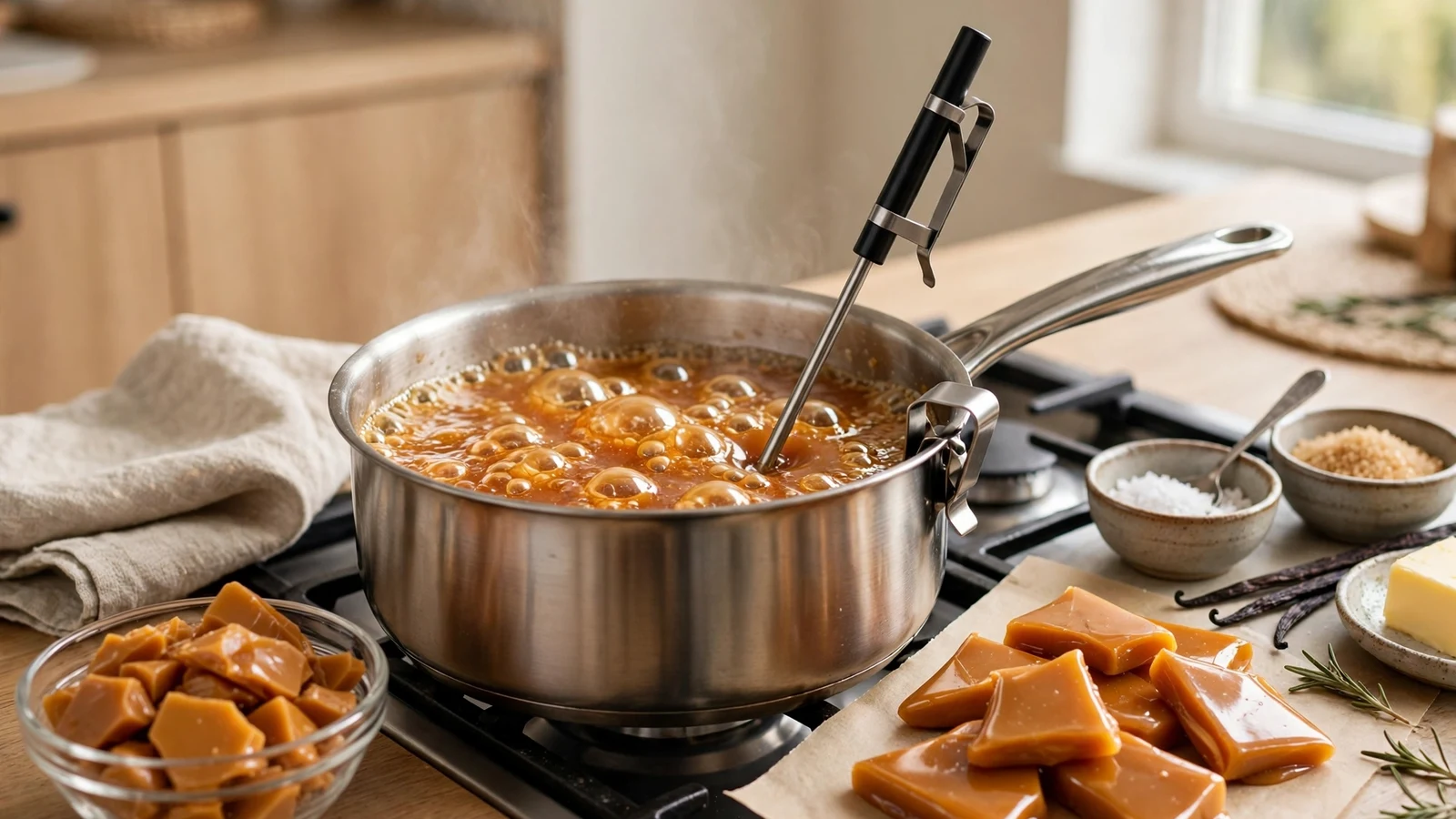
If you have ever stared at a bubbling pot of sugar syrup wondering whether does a meat thermometer work for candy, you are not alone in your kitchen dilemma. Navigating sugar stages requires precision, and grabbing whatever kitchen tool is closest feels tempting when you are knee-deep in a recipe.
Understanding whether a meat thermometer works for candy comes down to temperature ranges, probe design, and how each tool handles extreme heat. We will look at why these devices differ and how you can avoid a ruined batch of caramel.
The Core Difference Between Meat and Candy Thermometers

When you ask whether a meat thermometer works for candy, you first need to look at how these instruments are built. A meat thermometer is designed to monitor the internal temperature of dense proteins like roasts, pork chops, and whole chicken.
These foods finish cooking at relatively low thresholds, usually between 145 and 185 degrees fahrenheit. Because of this intended purpose, traditional meat thermometers measure lower maximum thresholds.
On the flip side, candy thermometers must withstand scorching heat. Boiling sugar reaches temperatures well over 300 degrees fahrenheit, especially when you venture into the hard crack stage for lollipops and toffee. If you submerge a standard roasting probe into molten sugar, the internal components can easily max out, warp, or shatter. The structural design of each device dictates its survival in a hot pot.
Can You Actually Use a Meat Thermometer for Sugar Work?
Technically, you can use certain meat thermometers for light sugar work, but only under very specific conditions. If you are making simple syrup or jam that stays below 220 degrees fahrenheit, a digital probe might get the job down safely. However, for traditional confectionery where precise heat dictates the final texture, standard meat thermometers usually fall short.
The primary issue lies in the temperature range. Most old-school dial roasting gauges stop around 220 degrees fahrenheit. If you push past that point while making candy, the needle will stick or the digital sensor will fail.
You also have to consider the physical clip. Dedicated confectionery tools feature a handy clip that attaches to the side of your saucepan, keeping your hands safely away from splattering hot syrup.
Understanding the Temperature Stages of Sugar
Confectionery is an exact science where a difference of five degrees can turn a batch of soft fudge into a hard, unchewable brick. You need to check your readings constantly as the moisture evaporates from your mixture. The table below outlines the critical milestones you must hit.
| Sugar Stage | Temperature Range (F) | Ideal Confection |
|---|---|---|
| Thread | 230 – 233 | Syrups, candied fruit |
| Soft Ball | 234 – 240 | Fudge, pralines |
| Firm Ball | 242 – 248 | Caramels |
| Hard Ball | 250 – 266 | Marshmallows, nougat |
| Soft Crack | 270 – 290 | Taffy |
| Hard Crack | 300 – 310 | Lollipops, toffee |
Risks of Using the Wrong Instrument
Trying to force a standard roasting probe to perform tasks outside its design can lead to frustrating kitchen mishaps. Digital instant-read models often have plastic housings near the display that melt if they rest against the rim of a boiling saucepan. Furthermore, many roasting models are not calibrated to handle the aggressive bubbling of molten sucrose.
You also risk inaccurate readings if the probe touches the bottom of the pan rather than the liquid itself. Confectionery units usually feature a rounded flat bottom or a protective shield to prevent direct contact with the hot metal surface.
If your gauge gives you a false reading, your batch will seize up before you realize what happened. For safe food preparation guidelines, you can consult resources like the USDA Food Safety and Inspection Service for standard culinary safety practices.
When an Instant-Read Digital Probe Might Save the Day
Not all digital roasting tools are completely useless at the stove. Modern digital probes often boast a much wider temperature range than their analog predecessors, sometimes reaching up to 500 degrees fahrenheit. If yours has a long stainless steel wire and a high heat threshold, it can read sugar syrups effectively.
- Check the manufacturer specifications to verify the maximum heat tolerance.
- Ensure the cord is heat-resistant so it doesn’t melt on the burner.
- Stir the syrup gently to distribute heat evenly before taking a reading.
- Hold the probe manually if it lacks a pot clip, keeping your fingers clear of steam.
Alternative Tools for Confectionery Success
If you discover your roasting gauge isn’t up to the task, you don’t necessarily have to abandon your recipe. Experienced bakers often rely on the cold water test as a reliable backup. By dropping a tiny spoonful of your boiling syrup into a bowl of ice water, you can instantly observe its physical properties and determine its exact stage.
If the droplet forms a pliable ball between your fingers, you are in the soft ball territory. If it shatters like glass, you have reached the hard crack threshold.
This ancient technique requires no electronics, though it does demand your full attention at the stove. It proves that specialized thermometer candy gear is helpful, but keen observation remains the ultimate culinary asset.
Best Practices for Accurate Heat Measurement
Whether you use meat equipment or specialized confectionery gear, proper technique ensures reliable results. Always insert your probe into the center of the liquid without letting it touch the bottom or sides of the vessel. Pan metal conducts heat much faster than liquid sugar, which creates false high readings.
Make sure to clean your measuring device thoroughly between uses. Residual sugar hardened on the metal can insulate the sensor, causing delayed or inaccurate feedback. Taking these small precautions keeps your recipes consistent and prevents costly kitchen disasters.
Frequently Asked Questions
Can I use a regular meat thermometer for candy?
You can use certain digital meat probes if their maximum temperature threshold exceeds 300 degrees fahrenheit. However, traditional dial meat models will break or give inaccurate readings when exposed to boiling sugar.
What can I use if I don’t have a candy thermometer?
You can perform the cold water test by dropping a small amount of hot syrup into ice water. The way the sugar hardens in the cold water tells you exactly which cooking stage you have reached.
What kind of thermometer is best for making candy?
A dedicated glass or digital confectionery thermometer with a built-in pan clip is best. These tools are designed to measure high heat accurately while hanging securely on the side of your pot.
Is there a difference between a candy thermometer and a food thermometer?
Yes, they are calibrated for completely different temperature spans. Confectionery tools measure up to 400 degrees fahrenheit, whereas standard meat probes typically max out around 180 to 220 degrees fahrenheit.
Conclusion
Figuring out if a meat thermometer works for candy comes down to knowing your equipment’s limits and the demands of hot sugar. While a high-heat digital probe can sometimes pinch-hit in a pinch, dedicated confectionery tools give you the safety and accuracy required for flawless treats. Keep your ingredients prepped, watch your heat thresholds closely, and enjoy experimenting with your next sweet creation.