

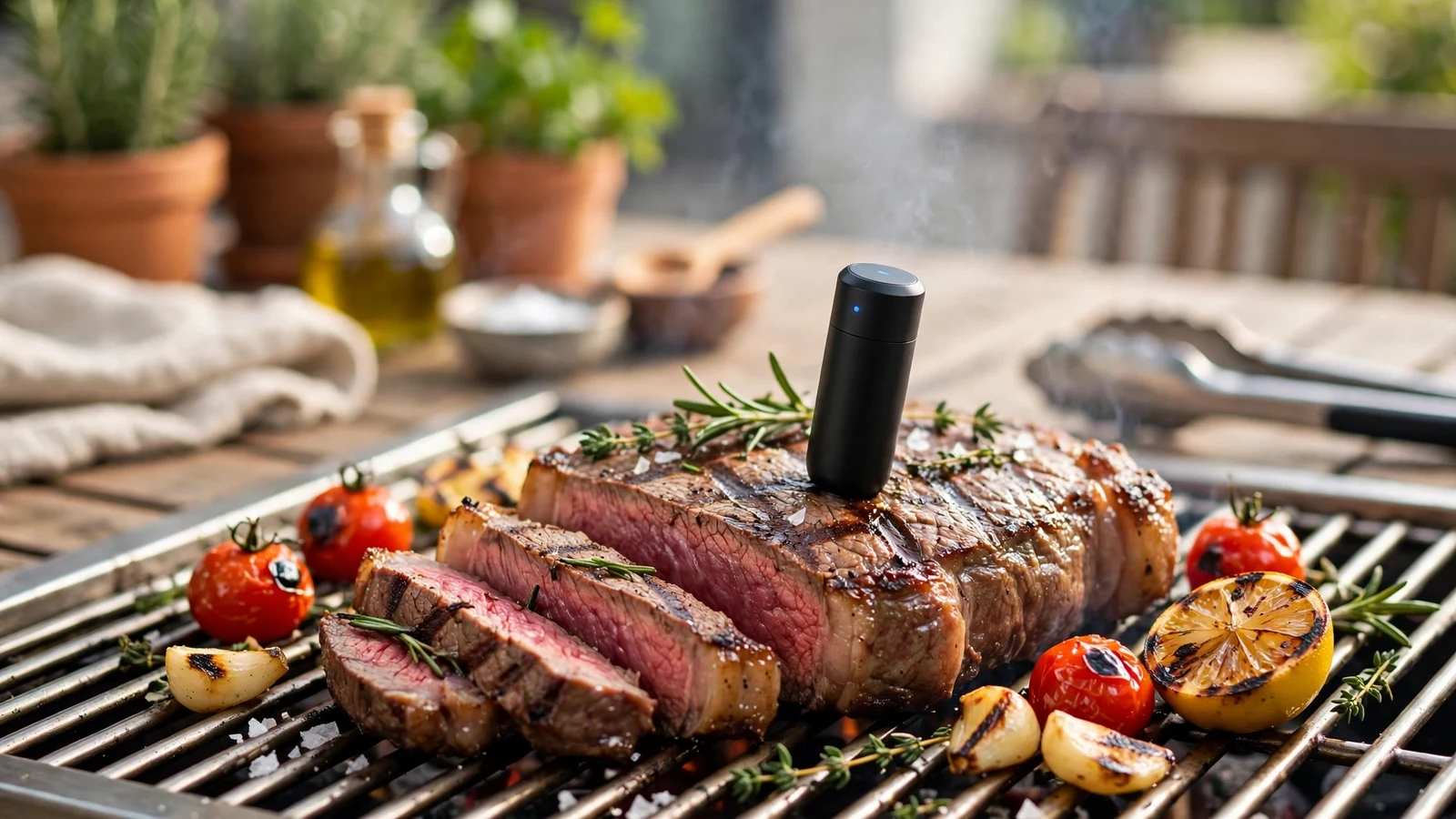
Leaving the oven door closed while a roast cooks to perfection sounds like a luxury, but understanding how a wireless meat thermometer works reveals a clever mix of thermal engineering and short-range radio signals. Instead of opening the grill or oven every few minutes to poke a steak with a traditional instant-read tool, home cooks now rely on sealed stainless steel probes that transmit internal temperatures straight to a smartphone.
The Anatomy of a Wireless Meat Probe
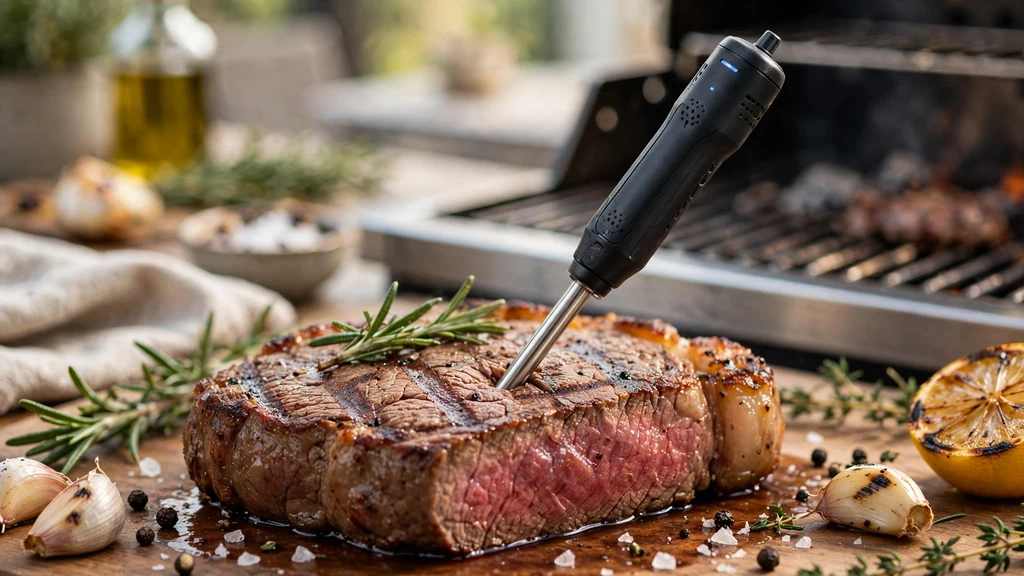
At the heart of any modern cooking gadget sits a tiny stainless steel spike packed with sophisticated electronics. Inside that slender metal tube, manufacturers pack one or more electronic sensors that measure heat. Most smart devices use a dual sensor design to capture both the internal temperature of the food and the ambient temperature of the cooking environment.
The tip of the probe houses a precision thermistor or thermocouple. These components change their electrical resistance as the temperature shifts around them. A small onboard microprocessor inside the cap of the probe reads this electrical change instantly.
It then converts those raw measurements into digital data ready for transmission. Because the entire unit must survive extreme heat, the exterior is usually sealed with a ceramic or high-temp plastic handle that protects the battery and transmitter from melting.
Radio Frequencies and Bluetooth Communication
Once the probe collects thermal data, it needs a way to escape a sealed oven or heavy smoker without melting standard wires. This is where short-range Bluetooth communication steps in to bridge the gap. The transmitter embedded in the probe’s end beams the digital data through metal walls directly to a nearby receiver or phone.
Bluetooth signals struggle to penetrate thick steel smoker walls or double-paned oven doors easily. To combat this limitation, many setups use a two-step relay system.
The probe talks to a charging base sitting right next to the grill, and that base uses a stronger radio frequency or Wi-Fi bridge to reach your phone inside the house. This setup allows you to monitor your brisket from the living room without losing connection.
App Integration and Real-Time Monitoring
Having a remote sensor means little without a way to read the data clearly. A dedicated mobile app acts as the central dashboard for your cooking session. Once paired with the hardware, the software translates raw numbers into dynamic graphs and estimated finish times.
Good software does more than just display a static number. It calculates how fast the meat is heating up and predicts when it will hit your target done-ness.
You can program custom alerts for different types of meat, whether you are smoking a pork shoulder or roasting a delicate cut of beef. The app rings your phone the moment your food reaches the desired threshold, preventing overcooking.
Placement and Finding the Thickest Part
Technology handles the data transfer, but proper physical placement remains entirely up to you. To get an accurate reading, you must slide the metal spike deep into the thickest part of the cut.
Avoid hitting large bones or pockets of pure fat, as both conduct heat differently than muscle tissue and will skew your readings. If you are roasting a whole chicken or a large turkey, aim for the center of the breast or the deep joint of the thigh. Proper positioning ensures the internal sensor truly reflects how done the meal is from edge to center.
Ambient vs. Internal Temperature Tracking
Modern cooking gadgets do more than just track how hot the interior of your roast gets. They also monitor the surrounding environment to help you manage your heat source. Understanding the difference between these two metrics changes how you manage your grill or oven.
| Sensor Type | Location | Primary Function |
|---|---|---|
| Internal Sensor | Deep inside the meat | Tracks doneness and progress |
| Ambient Sensor | Exposed to the cooker air | Monitors oven or grill heat |
Tracking the surrounding heat helps you spot temperature spikes in your smoker before they ruin your dinner. If your grill suddenly flares up, the ambient sensor catches it immediately. You can make adjustments to vents or burners long before the meat itself starts to suffer.
Battery Power and Charging Technology
Packing a transmitter, sensors, and a power source into a metal spike smaller than a marker requires clever engineering. Most wireless units run on tiny rechargeable lithium-ion batteries housed in the handle or the storage block.
When you place the metal spike back into its wooden or plastic charging case, metal contacts complete a circuit to juice it back up. A quick charge of twenty minutes can often power a multi-hour smoke session. For more details on safe food handling temperatures during long cooks, you can review guidelines from the Food Safety and Inspection Service.
Common Wireless Thermometer Features
* Rechargeable battery systems housed in portable storage blocks
* Extended range boosters for tracking meals from indoors
* Multi-probe support for monitoring several cuts at once
* Guided preset programs for poultry, beef, lamb, and fish
Overcoming Obstacles and Signal Loss
Metal acts as a natural shield against radio signals. If you close a heavy steel smoker lid, your phone might suddenly lose connection to the probe inside. Manufacturers design their antennas to push through these barriers, but physical distance and thick walls still cause interference.
If your connection drops, moving your phone closer to the cooker usually solves the problem instantly. Some advanced models use signal repeaters that sit on the side table to catch the weak Bluetooth wave and boost it into a stronger Wi-Fi signal. This ensures you never lose sight of your dinner progress, even if you run errands down the street.
Frequently Asked Questions
Can you leave a wireless meat thermometer in the oven?
Yes, these devices are specifically engineered to withstand high oven and grill temperatures. The entire probe goes right inside the cooking chamber alongside the food, unlike older digital models with external wires that often fail when exposed to direct heat.
How do I know if my wireless thermometer is accurate?
You can test your equipment using a simple ice water bath. Fill a glass with crushed ice and water, then insert the tip. The display should read very close to thirty-two degrees Fahrenheit if the calibration is working properly.
Is a wireless meat thermometer worth the investment?
These tools eliminate guesswork during long smoking sessions or holiday roasts. Being able to monitor your food from another room saves you from constantly opening the oven door and losing valuable heat.
How far away can I be from my grill?
Standard Bluetooth models usually maintain a connection up to thirty or fifty feet away. Models that include a signal booster base station or cloud connectivity over Wi-Fi allow you to monitor your meal from virtually anywhere.
Conclusion
Getting reliable results in the kitchen comes down to managing heat with precision, and understanding how a wireless meat thermometer works makes that job much easier. By combining tiny sensors, short-range radio signals, and smart software, these tools take the guesswork out of roasting and smoking.
Equipping your kitchen with the right gear lets you spend less time hovering over a hot stove and more time enjoying the company of your guests. If you haven’t tried cooking with one yet, give it a shot on your next weekend roast.