

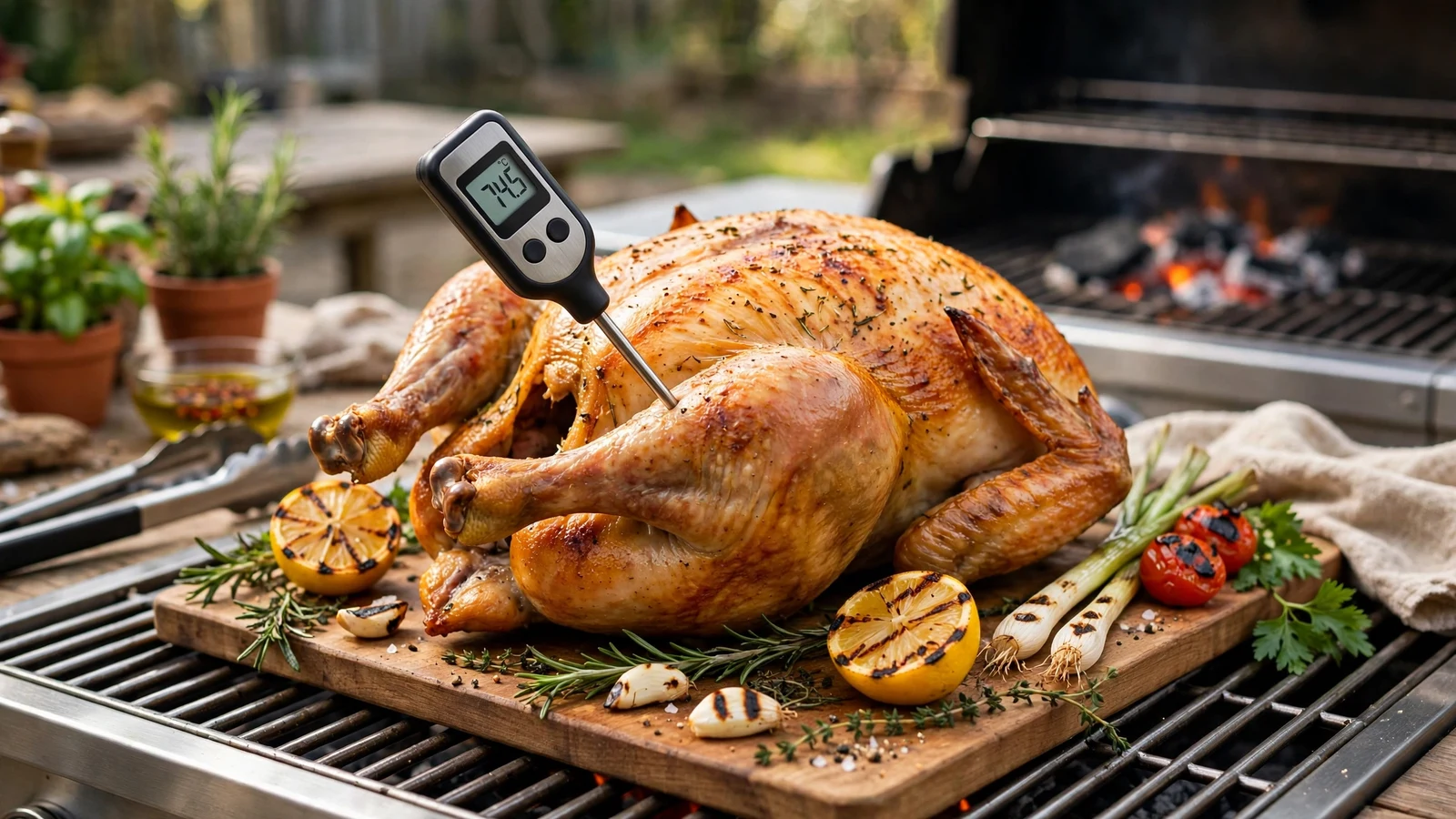
If you have ever stared at a golden bird in the oven and wondered if it is truly safe to eat, you already know the panic of overcooking dinner just to be careful. Knowing where to put meat thermometer in chicken takes the guesswork out of roasting, frying, or grilling poultry so you never have to hack the bird open to check.
Getting this step right means trading dry, chalky meat for juicy, perfectly cooked poultry every single time. Let’s break down the exact placement techniques for every cut of chicken you might be cooking today.
Understanding Proper Internal Temperatures for Chicken
Safety dictates that whole poultry reaches a specific heat level before leaving the heat source. Government food safety guidelines require poultry to hit an internal reading of 165 degrees Fahrenheit. Hitting this target ensures harmful bacteria like salmonella are destroyed.
Different cuts behave differently during the cooking process. Breasts dry out quickly if overheated, while dark meat tolerates a higher reading much better. When you use a digital food probe, always target the densest area of the meat.
You want to make sure the tip of the tool sits right in the middle without grazing any skeletal structures. If your tool touches hard bone, you will get a false high reading. This happens because bone conducts heat much faster than the surrounding flesh.
Finding the Sweet Spot in Whole Roasts
A whole roasted bird requires careful placement to get an accurate reading. The most reliable spot is the thickest part of the breast, right near the cavity opening. You can also slide the probe into the inner thigh, making sure it stays away from the pelvic bone.
When roasting, position the bird so you can easily access it without burning your hands on the hot oven walls. Insert the probe horizontally into the breast if you are working with a very large bird. This gives you more surface area contact than dropping it vertically from the top.
* Slide the probe parallel to the breastbone for stability.
* Keep the tip away from the hollow cavity to avoid measuring pocket air.
* Push the metal past the halfway mark for deep reading accuracy.
* Pull the bird once the gauge hits 165 degrees Fahrenheit in the breast.
Mastering Chicken Breasts and Cutlets
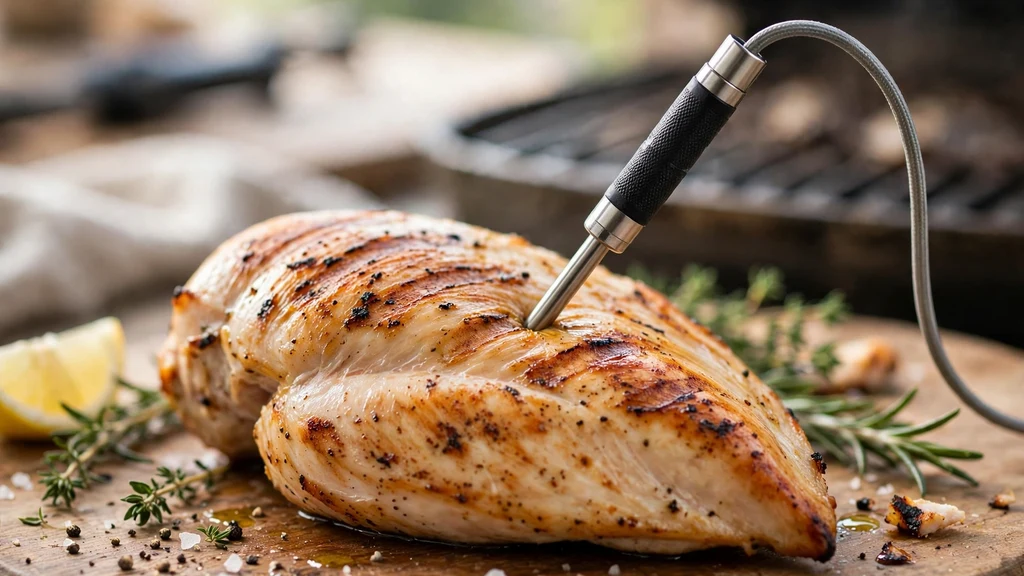
Boneless cuts present a unique challenge because they are thin and easy to push straight through. If your probe goes all the way through the meat and touches the pan, you are measuring pan heat instead of poultry heat.
Enter the side of the cutlet rather than the top surface. This allows more of the metal stem to remain surrounded by hot tissue. If you are cooking thin cutlets on a stovetop skillet, a digital pocket read-out with a thin needle tip works best.
Wait until the edges turn opaque before testing. Push the thin needle straight into the side until you reach the center. Watch the digital display stabilize for a few seconds before making your final call.
Navigating Thighs and Leg Quarters
Dark meat contains more fat and connective tissue, meaning it actually tastes better when cooked slightly past the minimum safety threshold. Thighs and legs can easily go up to 175 degrees Fahrenheit and still taste tender and juicy.
When dealing with a chicken thigh, insert the probe into the meatiest section. Avoid the main joint where the drumstick meets the thigh bone. The joint area heats up faster and will lie to you about the true doneness of the surrounding meat.
For leg quarters, slide the probe into the thickest part of the leg meat, parallel to the bone. You want to feel zero resistance as the metal slides into position. If you hit hard bone, pull back slightly and angle the tip into the surrounding flesh.
Using Digital Versus Dial Thermometers
The style of your measuring tool dictates how you approach the bird. Dial gauges have a sensing area that spans the bottom two inches of the stem, requiring deep insertion. Digital instant-read models house their sensor only at the very tip, giving you pinpoint accuracy.
For reliable results, many home cooks rely on leave-in digital probes connected via a wire cable to an external display. You can monitor the heat climb without opening the oven door and letting out valuable heat.
| Thermometer Type | Sensor Location | Insertion Depth |
|---|---|---|
| Digital Instant-Read | Extreme tip of the probe | At least half an inch |
| Dial Gauge | Lower two inches of stem | Deep into the thickest mass |
| Leave-In Probe | Tip of the connected wire | Center of the dense muscle |
Common Mistakes to Avoid While Testing
Even experienced home cooks make errors that lead to inaccurate kitchen measurements. The most common mistake involves touching the pan or the roasting rack. Always lift the bird slightly if you are unsure whether the tip has poked through the bottom.
Another frequent issue is checking too early in the cooking cycle. Wait until you believe the meat is close to finished before poking holes in it. Every puncture lets out a little bit of flavorful natural juice.
You also want to steer clear of cartilage and fat pockets. Fat holds heat differently than muscle fiber, which throws off your reading. For more deep dives into safe food preparation, you can check out the United States Department of Agriculture food safety guidelines for expert recommendations on poultry handling.
Letting Meat Rest After Cooking
Taking the bird out of the oven does not mean the cooking process stops instantly. Residual thermal energy continues to cook the interior for several minutes after removal.
This post-cooking rise usually adds about five degrees of internal heat. Pulling your roast slightly early accounts for this carryover effect. Let the bird sit undisturbed on a cutting board for ten to fifteen minutes before carving.
This resting period allows the hot juices to redistribute evenly throughout the muscle fibers. If you carve immediately, all those flavorful juices will run out onto the board instead of staying in your dinner.
Frequently Asked Questions
Should the thermometer touch the bone?
No, the metal tip should never touch bone because bone conducts heat much faster than meat. This contact results in a falsely high temperature reading, making you think the poultry is safe when the center might still be undercooked.
What temperature should chicken reach?
Poultry must reach an internal temperature of 165 degrees Fahrenheit at its thickest point to be completely safe for consumption. Dark meat cuts like thighs can be cooked to 175 degrees for a more tender texture.
Can I leave the thermometer in the oven?
You can leave a digital probe with an oven-safe wire cable inside the meat while it cooks. Standard dial thermometers left in the oven may get damaged by high ambient heat and are generally meant for quick spot checks.
Why is my chicken tough even at 165 degrees?
Breasts dry out very quickly if left in the heat a fraction too long or if they lack sufficient fat content. Using a reliable probe helps you pull the meat the exact moment it hits safety so it stays juicy.
Conclusion
Mastering where to put meat thermometer in chicken removes all the guesswork from preparing your favorite poultry dishes. By targeting the densest parts of the meat and avoiding bones, you ensure both absolute food safety and incredible flavor.
Take your time, check your depths, and always let the roast rest before slicing. Enjoy your perfectly cooked meal!