


Cooking without a probe doesn’t have to feel like a blind guess, especially when you know how to tell if meat is done without a thermometer using tactile and visual clues. You might have left your gadget in a drawer or simply prefer trusting your senses in the kitchen.
Either way, reading a steak or a roast takes a bit of practice and attention to detail. Let us look at the reliable kitchen techniques that keep dinner safe and delicious.
Understanding Meat Doneness Through Texture and Resistance
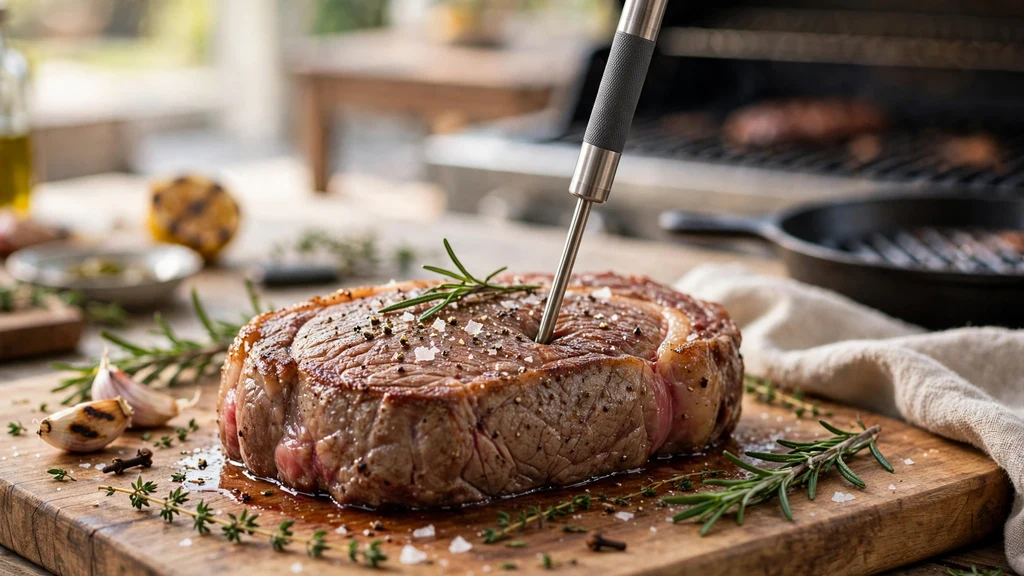
Checking firmness is one of the most dependable ways to judge doneness on the fly. As proteins denature and tighten up under heat, muscle fibers contract and push moisture outward. This physical transformation changes how a cut responds to pressure.
Raw meat yields completely under a fingertip, whereas a well-done cut pushes back with rigid resistance. You can gauge these changes by comparing the feel of the protein to parts of your own hand.
The Hand Test for Steaks provides a handy anatomical benchmark for this exact reason. Relax your hand entirely and touch the fleshy part of your palm right below your thumb. That soft, yielding cushion mimics the spring of a raw or very rare cut.
As you gently touch your thumb to different fingertips, the muscle beneath your thumb tenses up. Touching your index finger simulates a rare finish, your middle finger feels like medium-rare, your ring finger matches a medium steak, and your pinky represents a well-done piece.
Applying this method takes a light touch and a bit of calibration in your own kitchen. Press the center of your steak with clean tongs or your index finger, then immediately press your palm using the finger-touch reference.
Keep in mind that hand shapes and muscle densities vary from person to person. Use this technique as a general guide rather than an absolute rule, and combine it with other sensory checks for the best results.
Visual Indicators for Different Meats
Looking closely at surface color, juices, and structural changes gives you immediate clues about what is happening inside the pan. Visual Indicators for Different Meats vary wildly depending on whether you are searing a ribeye, roasting a tenderloin, or pan-frying chicken breasts. Raw muscle contains myoglobin, a protein that carries oxygen and gives red meat its distinct crimson hue. As heat penetrates the fibers, myoglobin breaks down, causing the color to shift from bright red to pink, and eventually to a dull gray-brown.
Juice color also tells a compelling story during the cooking process. When you pierce or press a cut, pay attention to the liquid pooling on the surface. Clear juices usually indicate that proteins are fully set and the internal heat has reached a higher stage.
Pink juices point toward medium or medium-rare territory in beef and lamb. Red juices mean the interior remains raw or barely warmed. Poultry juices must always run clear without a hint of pink before you pull the bird off the heat.
The way fat renders adds another layer of visual confirmation. Marbling within a steak melts slowly as temperature rises, basting the surrounding muscle fibers from the inside.
When you notice the fat shrinking and turning translucent, the cut is well on its way to being cooked. Paying attention to these surface details prevents you from cutting into the roast prematurely and losing precious moisture.
Beef and Steaks
Cooking red meat offers the widest margin for error because many cuts taste best when served below the maximum temperature limit. As beef cooks, the natural sugars and amino acids undergo the Maillard reaction on the exterior, creating a rich crust while the interior transitions through distinct stages of doneness.
A rare steak feels very spongy and springs right back without holding a dent. Cut into it slightly, and you will see a bright red center that is similar to a rare steak.
Medium-rare beef hits the sweet spot for many grill masters, balancing a warm pink center with a juicy bite. The exterior feels slightly firm while retaining a distinct bounce when pressed.
Once you cross into medium territory, the meat feels noticeably firmer and the center turns pale pink. Well-done beef loses its bounce almost entirely, feeling stiff and dense under pressure.
Resting plays a massive role in finishing beef properly without gadgets. When you pull a thick cut off the heat, residual energy continues to cook the center for a few degrees.
Letting the meat rest on a warm cutting board for five to ten minutes allows the muscle fibers to relax and reabsorb escaping juices. Skipping this step results in a dry plate because all the moisture rushes out the moment the knife cuts through.
Pork Chops and Roasts
Pork has a reputation for drying out quickly, making accurate doneness checks essential for a good meal. Historically, cooking guidelines demanded that pork be cooked until gray and completely dry to eliminate foodborne risks.
Modern farming standards have shifted those guidelines, allowing pork to be safely enjoyed with a slight blush of pink in the middle. A properly cooked pork chop should feel firm yet springy, yielding gently under finger pressure.
Juice clarity remains your best friend when dealing with bone-in chops or thick loin roasts. Make a small nick near the thickest part of the cut with a paring knife to inspect the interior color.
The flesh should be opaque and tender rather than translucent or rubbery. If the juices run slightly rosy, the chop is likely at a juicy medium state, provided it spent adequate time on the heat.
Resting pork is just as important as resting beef to ensure maximum tenderness. Wrap your roasted pork in foil and let it sit in a warm spot for at least ten minutes before slicing.
This pause ensures the moisture redistributes evenly throughout the dense muscle tissue. For official safety recommendations on pork preparation, you can review guidelines from the United States Department of Agriculture.
Poultry
Poultry requires much stricter attention because undercooked chicken and turkey carry significant food safety risks. Poultry must reach a high enough internal heat to neutralize harmful pathogens throughout the entire bird.
Unlike beef, you never want poultry to be pink in the center. The meat must transition completely from translucent pink to opaque white.
Checking a whole chicken or turkey involves probing the thickest part of the thigh and breast junction. Without a probe, you can insert a metal skewer into the deepest part of the thigh. Hold it there for a few seconds, then touch it to the inside of your wrist.
If the skewer feels hot, the heat has penetrated the core. More importantly, the juices escaping from that puncture site must run completely clear.
Bone mobility also gives away poultry doneness in whole birds. Grab the drumstick and wiggle it gently back and forth in its socket.
If the joint moves loosely and the skin begins to pull away from the bone, the bird is fully cooked. The breast meat should feel firm and spring back instantly when pressed, showing no signs of squishiness.
Alternative Physical and Sensory Tests
Experienced home cooks often rely on secondary senses like sound, smell, and visual steam to gauge cooking progress. Sizzling sounds change pitch as water content evaporates from the surface of the protein. A quiet pan means moisture is still actively boiling off, while a sharp crackle often indicates that the exterior moisture has vanished and searing is well underway.
Aromas shift dramatically as proteins brown and fats render in the pan. Raw meat has a neutral, clean scent, but as it cooks, savory Maillard notes emerge alongside rendered fat aromas. If you smell burning or acrid smoke, your heat is likely too high, and the exterior is charring before the interior is heated through.
Steam production also offers a visual hint about internal activity. A steady plume of light steam rising from the surface usually means the moisture inside is reaching high temperatures. Combining these sensory cues builds an intuitive cooking style that works in almost any kitchen environment, even when your favorite tools are missing.
| Meat Type | Visual Indicator | Tactile Feel | Juice Color |
|---|---|---|---|
| Beef (Medium-Rare) | Pink center, browned crust | Springy, like the base of your thumb | Pink and slightly red |
| Pork Chop | Slightly blushing or white interior | Firm with slight resistance | Clear to faint pink |
| Chicken Breast | Completely opaque white | Firm and unyielding | Clear juices |
Food Safety Considerations
Cooking without a temperature gauge requires extra vigilance to ensure every meal is safe to eat. Pathogens thrive in the danger zone between forty and one hundred forty degrees Fahrenheit, making proper cooking times critical.
Visual cues help estimate doneness, but they do not replace the absolute certainty of scientific measurement. When cooking for vulnerable populations, erring on the side of caution is always the smart choice.
Cross-contamination poses another major hazard in any kitchen setting. Always wash your hands, cutting boards, and knives thoroughly after handling raw animal proteins.
Never place cooked protein back onto a plate that previously held raw meat without washing it first. Maintaining strict kitchen hygiene protects everyone at the dinner table from foodborne illness.
Trusting your senses takes practice, so do not get discouraged if your first few attempts require a bit of guesswork. Pay close attention to how different cuts look and feel every time you cook. Over time, you will build a natural intuition that makes checking dinner effortless.
Frequently Asked Questions
Can you safely cook steak without any tools?
Yes, you can cook steak safely by relying on visual cues, the hand-firmness test, and proper resting times. While less precise than electronic probes, experienced cooks use tactile feedback to achieve great results.
How do you know if ground beef is cooked through?
Ground beef is done when the meat turns entirely brown with no pink remaining, and the juices run clear. Breaking the meat apart during cooking ensures even heat distribution.
Is it safe to eat a pork chop with a little pink?
Modern culinary standards confirm that pork cooked to a medium doneness with a faint pink blush is safe and tender, provided it reached adequate heat.
What is the easiest meat to cook without a thermometer?
Thin-cut steaks and boneless chicken tenders are the easiest because they cook quickly and show visual doneness changes rapidly on the surface and in their juices.
Conclusion
Mastering how to tell if meat is done without a thermometer opens up a world of intuitive cooking where your hands, eyes, and ears do the heavy lifting. By paying close attention to texture, juice color, and structural changes, you can pull delicious meals off the heat at the exact right moment. Keep practicing these tactile techniques in your own kitchen, and you will soon cook with total confidence every single time.