

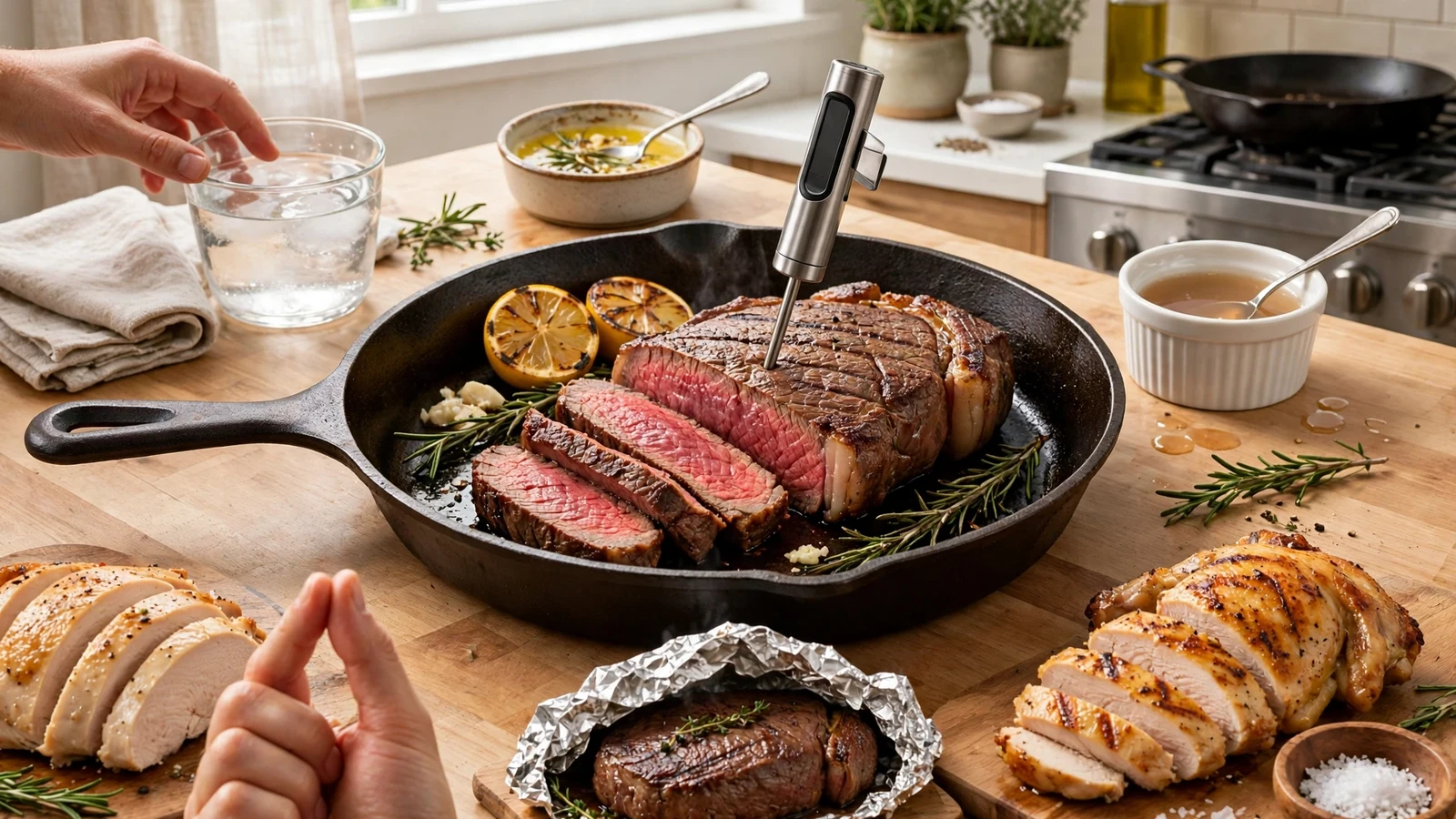
Standing in front of the grill without a digital probe can feel like flying blind, especially when expensive cuts of beef or pork are on the line. Figuring out how to tell meat temp without thermometer equipment requires tuning into your senses and learning the subtle physical changes that happen as proteins heat up. You can master this kitchen skill and consistently hit your target doneness by using tactile cues.
Mastering this technique saves you from dry, overcooked dinners and keeps your meals safe. You will discover time-tested tactile methods, visual indicators, and structural clues that take the guesswork out of outdoor cooking and stovetop searing.
Understanding the Hand Test for Meat Doneness
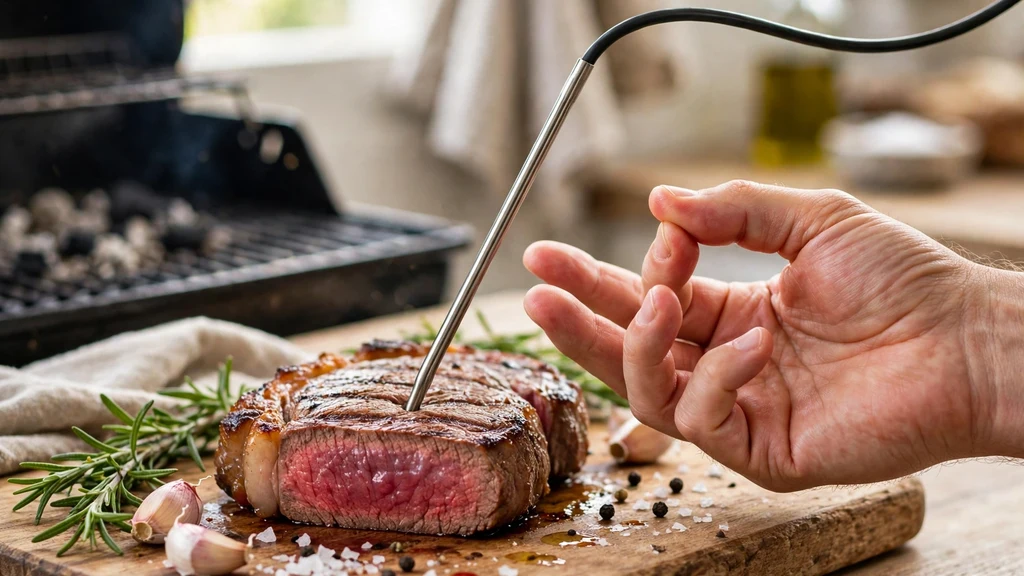
The human hand offers a surprisingly reliable reference point for estimating internal doneness. To use this method, relax your hand completely and touch the fleshy area at the base of your thumb.
That soft, yielding texture mimics the consistency of a raw piece of protein. As you bring your thumb into contact with your different fingers, that muscle tightens up to simulate various stages of internal heat.
Professional chefs have relied on this anatomical trick for decades because it requires no extra tools. It works by comparing the tension in your palm hand to the give of the muscle fibers in your steak or chicken breast. While it takes some practice to calibrate your hand to different cuts, it becomes second nature after a few grilling sessions.
Using Finger Position to Gauge Steak Doneness
Connecting your thumb to different fingers changes the density of your palm muscle, creating a progressive scale for your cooking. This tactile reference helps you translate a visual look into a reliable internal temperature estimate without any digital gadgets.
- Thumb and index finger: Simulates rare doneness, feeling very soft and squishy with plenty of bounce.
- Thumb and middle finger: Represents medium-rare, offering a slightly springier resistance while remaining tender.
- Thumb and ring finger: Mirrors a medium-cooked piece, providing moderate firmness and less give.
- Thumb and pinky finger: Matches well-done meat, feeling quite rigid and firm to the touch.
Press your index finger gently against the surface of your steak to compare the resistance. If it yields exactly like your relaxed palm, you are looking at a rare profile. If it feels dense and unyielding like your pinky connection, that protein is fully cooked through.
Visual Cues and Surface Texture Changes
Watching how proteins transform visually gives you another solid layer of information. Raw steak shines with moisture and features a deep red color that dulls into a pale pink as heat penetrates the fibers.
Once you flip a cut on a hot skillet, moisture begins to pool on the top surface. That pooling moisture signals that the internal juices are starting to push upward under thermal stress.
As cooking continues, the surface loses its glossy sheen and takes on an opaque, matte appearance. Lean cuts like pork chops and chicken breasts turn from translucent pink to solid white. Paying attention to these subtle color shifts prevents you from cutting open the meat prematurely, which lets precious juices escape onto the cutting board.
The Skewer and Fork Test for Internal Heat
Inserting a metal skewer, cake tester, or a clean fork directly into the thickest part of the meat gives you direct tactile feedback about internal heat. Hold the metal shaft against your wrist or the back of your hand for a few seconds after pulling it out. If the metal feels hot to the touch, the interior is likely well on its way to being cooked.
This trick is especially helpful for thick roasts, whole chickens, and dense cuts of beef where surface pressing tells you very little. A warm skewer indicates that thermal energy has successfully reached the core. If the skewer feels cool or barely warm upon removal, you need to give it more time on the heat.
Juice Color and Clarity Indicators
Observing the color of the juices escaping from a punctured cut provides an instant read on doneness. Clear juices indicate a higher level of cooking, while red or pink juices point toward rare or medium-rare stages. When cooking poultry, you want to see completely clear juices without any pink tint to ensure safety.
Beef and lamb offer more flexibility since many people prefer them cooked with pink interiors. When checking steaks, press down lightly with a spatula and watch the released liquid. If the juices run pale pink, you are typically sitting right around a medium profile.
Comparing Common Meat Temperatures and Tactile Feels
Different proteins require different approaches when you are cooking without a digital probe. Understanding how specific cuts react under heat helps you adapt these tactile methods across beef, pork, and poultry.
| Protein Type | Target Doneness | Tactile Feel | Visual Clue |
|---|---|---|---|
| Ribeye Steak | Medium Rare | Springy and yielding | Pink center, slight surface browning |
| Pork Chop | Medium | Firm with slight bounce | Slightly pink core, opaque edges |
| Chicken Breast | Fully Cooked | Firm and tight | White interior, clear juices |
| Ground Beef Patty | Well Done | Stiff and dense | Brown throughout, no pink |
Keep in mind that fat content changes how a piece feels under pressure. A well-marbled ribeye naturally feels softer than a lean filet mignon even at the same internal heat level. Factor in the natural composition of the cut before making your final call.
Resting Time and Carryover Cooking
Heat transfer does not stop the second you pull a steak off the grill. Carryover cooking continues to raise the internal temperature for several minutes while the meat rests on a cutting board. Factoring this resting period into your cooking time prevents accidental overcooking.
If you prefer a medium steak, pull it off the heat just before it feels completely firm to your touch. Letting it rest allows the muscle fibers to relax and reabsorb their flavorful juices. For more details on safe culinary practices, consult the USDA Food Safety and Inspection Service guidelines on safe preparation limits.
Frequently Asked Questions
How do I know if my steak is medium without a thermometer?
Press the center of the steak with your index finger and compare it to the muscle at the base of your thumb when you touch your thumb to your middle finger. A medium steak should feel moderately firm with a slight spring.
Can I use the hand test for chicken and pork?
You can use the hand test for relative firmness, but poultry and pork require more caution than beef. Always verify that chicken juices run completely clear and the meat feels quite firm before serving.
Why do juices change color as meat cooks?
As proteins are exposed to heat, muscle fibers contract and squeeze out moisture. The red color comes from myoglobin, a protein that turns brown or clear as it denatures under high temperatures.
Does the size of the cut affect the hand test?
Thicker cuts take longer to cook through the middle, meaning the surface might feel firm while the center remains raw. Adjust your expectations based on thickness and rely on skewer tests for large roasts.
Conclusion
Relying on your senses to judge doneness takes patience, observation, and a bit of kitchen experience. By paying attention to tactile feedback, surface textures, and juice colors, you can achieve fantastic results on the grill or stovetop. Trust your instincts, practice these physical cues regularly, and enjoy the rewarding process of outdoor cooking.