


Finding what is the most dependable meat thermometer changes everything about how you approach the kitchen or the backyard grill. When you stop guessing and start relying on hard data, dry chicken breasts and overcooked briskets become a thing of the past. Let us look at what separates commercial-grade reliability from cheap kitchen gadgets that fail when you need them most.
Understanding Core Mechanics Behind Dependable Temperature Reads
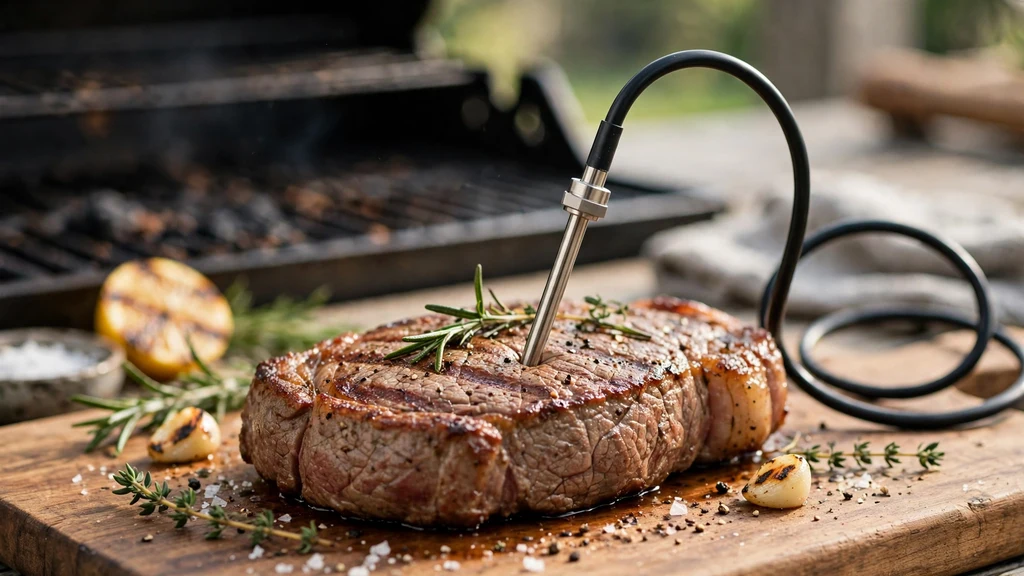
Getting a reliable temperature read comes down to sensor technology and internal build quality. The most dependable meat thermometer usually relies on a thermocouple or a high-end thermistor rather than cheap, sluggish bimetallic coils. Thermocouples measure voltage changes at the junction of two different metals, allowing for near-instantaneous calculations.
You want an instant-read thermometer that cuts through the waiting game, giving you stable numbers in under three seconds. Cheaper models might wander aimlessly, leaving your food exposed to heat loss while you wait for the display to settle. Calibration matters immensely too.
A reliable unit holds its factory calibration over hundreds of cooking cycles without drifting. If a device drops on your kitchen floor and suddenly reads boiling water at 205 degrees instead of 212, it is useless. Look for models featuring user calibration modes so you can fine-tune them against an ice bath whenever necessary.
Why Calibration and Speed Matter for Every Cook
Speed dictates whether a device earns a spot in your daily rotation. When you pull a roast out of a hot oven, steam fills the air and heat radiates intensely from the pan. You need a thermapen one or a similarly swift tool to capture the thermal center of the meat before your hand gets too hot. Accurate readings prevent you from second-guessing whether that pork chop is safe to eat.
A slow sensor forces you to hold the probe in the meat longer, which causes precious juices to escape through the puncture hole. Furthermore, fast response times let you map multiple spots on a large turkey or brisket to find the coolest zone.
- Responds to temperature shifts in less than three seconds
- Features a sharp, tapered tip to minimize juice loss
- Maintains factory calibration through extreme temperature swings
- Offers high-contrast viewing angles for awkward grill positions
Wired Versus Wireless Probes for Low and Slow Smoking
Barbecue enthusiasts often spend hours managing long cooks, making the choice between wired and wireless setups a crucial decision. A traditional wired probe runs out of the smoker to a base unit, letting you monitor internal and ambient temperature simultaneously without opening the lid. Advanced wireless units cut the cord entirely, utilizing Bluetooth or Wi-Fi to beam data straight to your smartphone.
When shopping for these setups, pay attention to the signal range through thick metal smoker walls. A weak connection drops out right when you need to wrap your ribs.
| Thermometer Type | Best Use Case | Key Advantage |
|---|---|---|
| Instant-Read | Steaks, chicken breasts, quick checks | Blazing fast speed and portability |
| Wired Remote | Briskets, pork shoulders, smokers | Continuous monitoring without opening the lid |
| Fully Wireless | Rotisseries, high-heat grills | Zero cables to tangle or melt |
Water Resistance and Durability in Extreme Environments
Kitchens and backyards are brutal environments for delicate electronics. Splattering grease, billowing smoke, and sudden rainstorms test the physical shell of any device. The most dependable meat thermometers feature robust, IP-rated waterproof casings that survive accidental dips in sink water or messy marinades.
Cleaning up should be as simple as running the probe under the tap rather than worrying about water seeping into the battery compartment. Commercial-grade plastics and silicone grips prevent thermal shock when you move from a freezing refrigerator straight onto a blazing hot grill grate. If a housing feels flimsy or flexes under a firm grip, it will likely crack after a few drops on concrete patio pavers.
Display Clarity and Ergonomic Design Choices
Reading a tiny screen while smoke stings your eyes is frustrating. Premium tools incorporate a large, auto-rotating display with a crisp backlight that adjusts to bright sunlight or pitch-black evening cookouts. Ergonomics dictate how naturally the tool fits into your hand.
A well-balanced body allows you to probe a Thanksgiving turkey at an awkward angle without straining your wrist. Button placement matters just as much; you want simple controls that you can operate with one hand while holding a heavy cast-iron skillet with the other.
Battery accessibility is another hidden pain point. Devices running on standard coin cells or AAA batteries save you from hunting down proprietary chargers when the power runs low.
Comparing Industry Giants Like ThermoWorks and ThermoPro
The market features several heavy hitters, with brands like thermoworks setting the gold standard for professional kitchens and backyard enthusiasts alike. Their engineering focuses on extreme precision, commercial durability, and fast response times that outperform generic department store alternatives. Competitors like ThermoPro carved out a massive following by offering feature-packed dual-probe units at a fraction of the cost, making advanced cooking tech accessible to everyone.
Deciding between them depends on whether you prioritize absolute laboratory-grade accuracy or budget-friendly versatility. You can learn more about food safety standards and proper internal targets by checking the USDA safe minimum internal temperature chart before starting your next big cook. Evaluating user reviews helps determine which brand’s interface aligns best with your cooking style.
Battery Life and Power Management Realities
Nothing ruins dinner prep faster than picking up a tool only to find a dead battery. Dependable cooking thermometers manage power efficiently, often featuring auto-sleep functions that kick in the moment you fold the probe away or set the unit down. Lithium-ion rechargeable packs offer convenience, but traditional alkaline batteries remain popular because you can swap them out instantly in the middle of a cook.
Look for devices that warn you well in advance when energy levels dip. A low battery can cause erratic sensor readings or dim the screen until it becomes completely unreadable under direct sunlight.
Real-World Testing on Steaks, Chicken, and Brisket
Theory means nothing if a device fails during a real-world test on demanding cuts of meat. Thick proteins like whole chickens present challenges because the breast and thigh cook at different rates, requiring pin-point accuracy to avoid dry meat while ensuring safety. Steaks demand lightning-fast decisions so you pull them off the fire right at medium-rare.
When testing performance across these varied proteins, consistency stands out as the ultimate marker of quality. A dependable unit gives you the exact same reading every time you test a stable thermal bath, eliminating the doubt that ruins otherwise great meals.
Frequently Asked Questions
How often should I calibrate my cooking thermometer?
You should check your device’s accuracy every few months or whenever you suspect it has suffered a hard drop. Testing it in an ice water bath takes less than a minute and ensures your readings stay trustworthy for every meal.
Can I leave an instant-read probe inside the oven while cooking?
No, instant-read sensors are designed for quick checks and contain sensitive electronics in the handle that will melt or fail under prolonged high oven heat. Use a dedicated leave-in probe or wireless unit for continuous monitoring.
Which brand dominates the high-end thermometer market?
ThermoWorks leads the professional and enthusiast space with rigorous engineering standards. Their flagship models deliver exceptional speed, durability, and precision that justify the higher investment for dedicated home cooks.
Do wireless Bluetooth probes lose connection through smoker walls?
Some budget wireless units struggle with signal penetration through thick steel smoker walls or ceramic grill domes. Higher-end models utilize signal boosters or Wi-Fi bridging to maintain a stable connection throughout long cooks.
Conclusion
Choosing the right monitoring tool transforms cooking from a stressful guessing game into an exact science. By prioritizing rapid sensor response, rugged build quality, and clear displays, you eliminate kitchen anxiety and serve perfectly cooked meals every single time. Take a close look at your cooking habits, pick a dependable model that fits your workflow, and enjoy the confidence that comes with absolute precision.