

If you have ever stood over a sizzling pot of frying chicken or doughnuts, wondering if you can use a meat thermometer for oil, you are definitely not alone in asking this question. Getting cooking oil to the right heat level is the secret difference between a crispy golden crust and a soggy, grease-soaked disaster. Let us dive straight into what happens when you grab a standard kitchen probe for deep frying.
Can You Actually Use a Meat Thermometer for Oil?
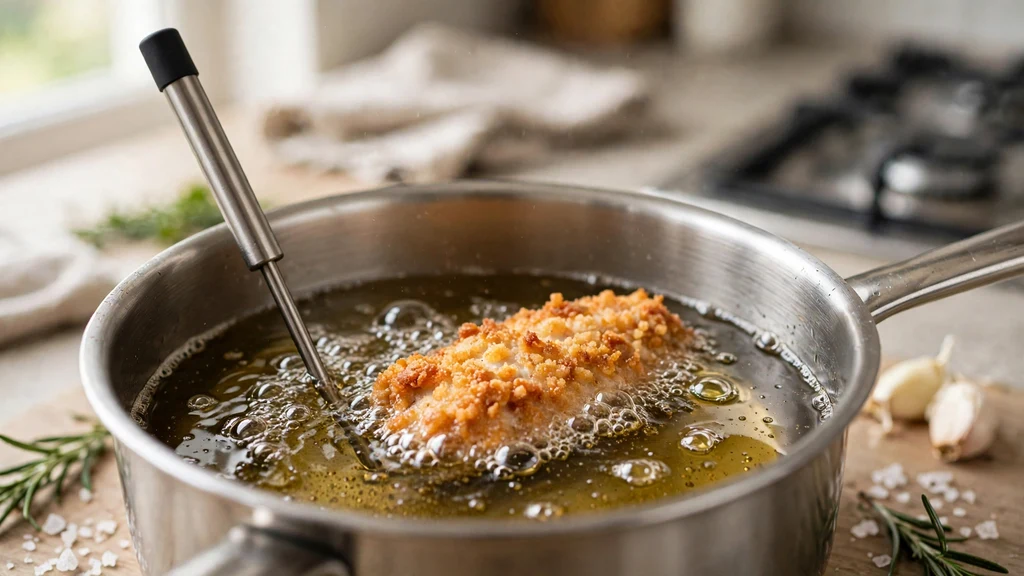
The short answer is yes, you can technically use a meat thermometer for oil, but you need to check a few specific details first. Not every kitchen probe handles high heat gracefully.
A standard meat thermometer is built to check the internal temperature of a solid piece of protein, like a Thanksgiving turkey or a thick pork chop. When you drop that same tool into boiling cooking fat, you are dealing with a totally different thermal environment. Cooking oil can easily climb past four hundred degrees Fahrenheit, which tests the limits of cheap metal shafts and digital sensors.
You must look at your device’s temperature range before dipping it into a hot pan. Many basic analog dial models lack the scale needed for deep frying. A proper thermometer measure for hot fat needs to register up to at least four hundred degrees.
If you push a low-range sensor past its maximum limit, the internal mechanism can warp or snap permanently. Always check the manufacturer specifications printed on the back or in the manual before risking your favorite kitchen gadgets.
Digital Versus Analog Meat Probes in Frying Fat
The style of your kitchen tool dictates how well it handles liquid heat. A digital probe connected to a wire cable often performs much better than an old-fashioned dial model because the sensitive electronic components stay safely outside the hot pan.
When using a corded unit, only the very tip goes into the liquid. This design protects the fragile circuitry from intense steam and radiant heat.
Traditional dial variants require you to submerge the lower portion of the stem into the liquid to get an accurate reading. However, these mechanical springs inside the dial can easily lose their calibration if exposed to extreme thermal shock. If you drop a cold metal probe straight into bubbling fat, the rapid expansion can crack the glass or ruin the spring mechanism. Let us look at how different styles compare:
| Thermometer Type | Max Heat Tolerance | Best Use Case |
|---|---|---|
| Dial Meat Probe | Usually 220F – 300F | Roasts, poultry, basic oven cooking |
| Digital Corded Probe | Often 450F – 570F | Oven meats, smoking, light frying |
| Candy / Oil Specific | Up to 400F – 500F | Deep frying, sugar syrups, hot fat |
The Danger of Steam and Water Infiltration
Moisture is the sworn enemy of hot fat. When you lower a damp tool into a pan, the water droplets instantly flash into steam, causing aggressive spatter.
Many people do not realize that cheap cooking thermometers are not fully waterproof along the shaft. If oil seeps into tiny hairline fractures in the metal casing, it can ruin the device or create a dangerous mini-explosion inside your pan.
You also have to worry about your fingers getting too close to the surface. A standard instant-read model requires you to hold it steady in the hot pan.
Because frying fat is significantly hotter than most baked meats, steam rising off the surface can cause painful burns. If you choose to use a handheld probe, wear a long oven mitt and keep your face well away from the rim of the pot.
Why Dedicated Deep Fry Tools Work Better
Specialized gear always outperforms multi-purpose tools when you tackle tricky kitchen tasks. A dedicated deep-frying or candy thermometer is engineered specifically to withstand continuous immersion in boiling liquids for extended periods. These specialized tools usually feature a handy pot clip that attaches securely to the side of your Dutch oven or skillet, keeping your hands completely free.
When you rely on a dedicated tool, you don’t have to guess if the tip is touching the bottom of the pan, which gives you false, overly high readings. The metal clip holds the sensor suspended right in the middle of the liquid flow. For a deeper dive into professional kitchen standards and safety guidelines, you can consult food safety guidance from the FDA to ensure your cooking practices remain completely hazard-free.
How to Measure Oil Temp Without Melting Your Gear
Checking the heat level of your pan correctly prevents ruined meals and damaged equipment. If your standard meat probe is all you have on hand, use it cautiously by inserting it only when the burner is turned down slightly. Never leave a plastic-handled meat probe resting on the rim of a hot iron skillet because radiant heat will melt the casing within minutes.
Here are the best habits to follow when checking hot frying liquid:
- Turn off or lower the burner momentarily while taking a reading to minimize dangerous steam surges.
- Ensure the tip sits squarely in the center of the liquid without touching the metal bottom of the pot.
- Wipe the probe clean immediately after removal using a dry, heat-resistant paper towel.
- Store analog dials away from humid areas to prevent internal fogging and calibration drift.
- Replace any unit that shows visible cracks, loose casing parts, or erratic display numbers.
Common Mistakes When Checking Cooking Oil Heat
Many home cooks make simple errors that ruin their food and their kitchen tools. One major mistake is assuming that a tool designed for ovens can handle prolonged immersion in boiling lipids.
Meat is mostly water, which naturally caps internal cooking limits around two hundred degrees Fahrenheit. Frying fat, by contrast, operates safely between 325 and 375 degrees, pushing standard probes past their intended design parameters.
Another frequent error is letting the tip touch the bottom of a heavy cast-iron pan. The metal surface of the pan itself absorbs direct heat from the burner, meaning it runs much hotter than the surrounding liquid. If your probe touches that hot metal, you will get a false high reading, causing you to drop your food into fat that is actually too cold to fry properly.
Wireless Probes and Modern Cooking Tech
Modern kitchen technology has introduced advanced options like wireless Bluetooth probes that monitor heat from a smartphone app. These high-tech gadgets are typically designed for smokers and grills, featuring thick ceramic handles and multi-sensor arrays. While some modern units can handle high ambient environments, you still need to verify their fluid immersion ratings before tossing them into a deep fryer.
The tiny screen on a traditional handheld unit can be hard to read through thick grease steam anyway. Smart app notifications help you maintain exact ranges without hovering over a spitting pan. However, always check the manufacturer guidelines because heavy frying fat is far denser and hotter than circulating air inside a barbecue smoker.
Alternative Ways to Test Frying Fat Without a Gauge
If your digital tool fails or you simply do not own one, you can still test your pan using reliable kitchen tricks. Drop a single kernel of popcorn into the pot; when it pops, your liquid is sitting right around 325 to 350 degrees.
Alternatively, dip the wooden handle of a wooden spoon into the liquid. If steady streams of tiny bubbles form immediately around the wood, your fat is hot enough to start frying.
You can also test with a tiny cube of white bread. Toss it into the pan and count how many seconds it takes to turn golden brown.
Sixty seconds means you are sitting near 350 degrees, while rapid burning indicates the heat is way too high. These old-school kitchen hacks save the day when your specialized gear breaks down mid-recipe.
Frequently Asked Questions
Can I use a meat thermometer for deep frying?
Yes, you can use a meat thermometer for deep frying as long as its maximum temperature range exceeds four hundred degrees Fahrenheit and the casing can handle liquid immersion safely.
What is the difference between a meat thermometer and a candy thermometer?
A meat thermometer measures solid protein interiors up to lower limits, whereas a candy or oil thermometer features a wider range and a pot clip for continuous liquid monitoring.
How do I know if my oil is hot enough without a thermometer?
You can test your frying fat by dropping in a wooden spoon handle or a piece of white bread to check for steady bubbling and browning reactions.
Will putting a cold thermometer into hot oil shatter it?
Yes, thermal shock can crack glass dial covers or warp metal mechanisms, so always introduce probes gradually to prevent sudden temperature spikes.
Conclusion
Using a meat thermometer for oil works in a pinch, provided you check the maximum temperature range and avoid submerging fragile plastic components. While dedicated frying tools with secure pot clips offer much better safety and precision, a sturdy digital probe with a corded sensor gets the job done nicely.
Take your time, monitor those heat levels closely, and enjoy your perfectly cooked meals. Drop a comment below if you have a favorite kitchen testing trick you swear by!