


You might find yourself wondering if a meat thermometer will work for water when you are standing in the kitchen, staring at a bubbling pot or a brewing vessel, realizing you lack a specialized liquid tool. It is a surprisingly common culinary dilemma that pops up when brewing tea, proofing yeast, or making simple syrup. Fortunately, standard kitchen gear is often more versatile than people realize, though you do need to know the limitations of your equipment before plunging a sharp metal probe into a boiling pot.
Can You Actually Use a Meat Thermometer for Liquids?
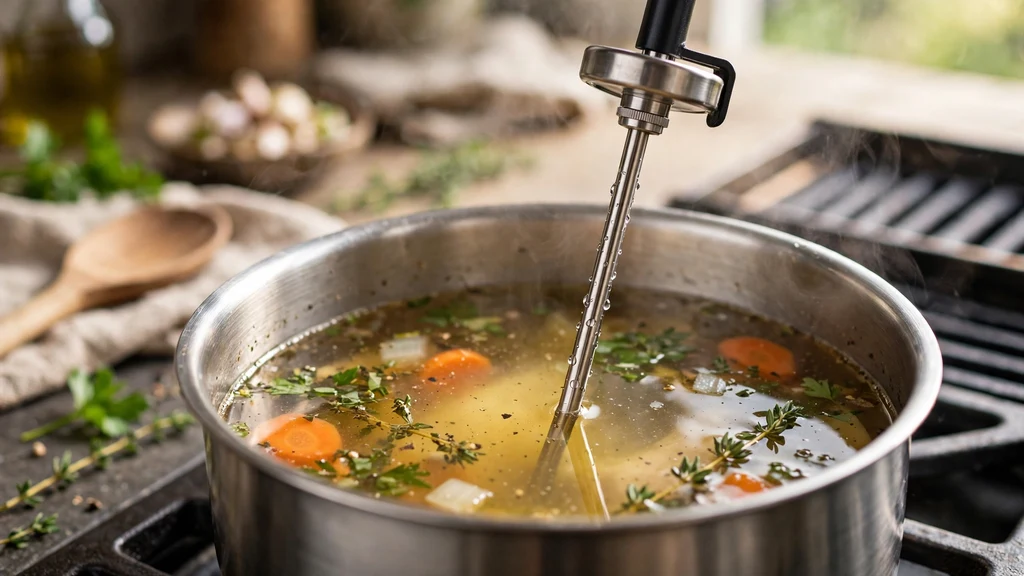
Yes, you can certainly use a meat thermometer for water and other liquids, provided you respect its physical design. Most digital instant-read devices and traditional dial models are fully capable of registering liquid temperatures accurately.
The primary function of any kitchen thermometer is simply to measure thermal energy, regardless of whether that energy resides inside a thick beef roast or a rolling boil of tap water. You just need to ensure the sensitive thermal sensor at the tip is fully submerged without letting the display unit get drenched.
Dial thermometers, which feature a round analog gauge at the top, typically have a dimpled mark on the stem indicating the minimum insertion depth. If you do not submerge the probe past this line, the reading will be skewed by ambient air temperature. Digital models are generally much easier to use in liquids because only a small tip needs to touch the water to give you an accurate digital readout.
Just remember that a meat probe is built for piercing solid muscle tissue, meaning it usually comes to a sharp, needle-like point. Handle it with care around delicate glass cookware to avoid accidental scratches or chips.
Digital Instant-Read Versus Dial Models in Water
When dipping a measuring device into hot liquid, the type of tool you hold in your hand makes a massive difference in speed and convenience. Digital instant-read probes dominate modern kitchens because they deliver stable numbers within a few seconds.
They allow you to hold the instrument steady in the middle of a pot without leaning over a cloud of rising steam. Analog dial models, on the other hand, require a bit of patience as the metal coil inside expands or contracts to move the physical needle.
- Digital Probes: Fast response times, usually under five seconds, with easy-to-read LCD screens.
- Analog Dials: Slower to react, require proper depth immersion, but need no batteries.
- Probe Length: Longer stems protect your fingers from steam burns when checking deep pots.
Another factor to consider is water resistance. Many digital cooking gadgets feature splash-proof bodies, but very few are completely waterproof.
If you accidentally drop a digital meat thermometer into a deep stockpot, the electronic components inside will likely short out instantly. Analog versions are mechanical and can usually survive a quick tumble into water, though the dial fogging up with condensation can temporarily obscure your view.
Temperature Range Limitations for Water
Water transitions through distinct thermal phases, and your measuring tool must handle the entire spectrum without breaking down. Water freezes at zero degrees Celsius and boils at one hundred degrees Celsius, which falls well within the standard operating range of almost any cooking probe. Most meat variants measure anywhere from negative fifty degrees up to three hundred degrees Celsius, meaning normal household cooking tasks will never push them to their absolute limits.
However, problems arise if you venture outside of basic water tasks into high-heat confectionery work. Making hard candy or deep-frying oil requires temperatures well above standard boiling water, often reaching over one hundred fifty degrees Celsius.
While a heavy-duty stainless steel model can handle these intense environments easily, cheaper plastic-cased models might melt or warp if exposed to extreme radiant heat near the burner’s edge. Always check the manufacturer specifications printed on the packaging or the back of the unit before exposing it to extreme heat.
How to Measure Water Temperature Accurately
Getting a precise reading from a liquid requires more than just dunking a metal stick into a container. If you touch the probe directly against the bottom or sides of a metal saucepan, you will end up measuring the temperature of the cookware rather than the water itself. Metal conducts heat much faster than liquid, meaning your display will read significantly higher than the actual thermal state of your brew.
To avoid this common mistake, suspend the probe directly in the center of the liquid. Ensure the tip is fully submerged at least an inch deep, but do not let it rest flat against the bottom surface.
Stir the liquid gently for a few seconds to distribute the heat evenly before taking your final reading. This technique prevents hot spots near the burner from throwing off your measurements and ensures your coffee or yeast gets the exact treatment it requires.
Comparing Common Kitchen Thermometers
Not all thermal measurement tools are created equal, and choosing the right one for your specific task saves you from culinary disasters. The following breakdown highlights how different kitchen instruments stack up when dealing with water and other liquids.
| Thermometer Type | Best Used For | Water Compatibility | Pros & Cons |
|---|---|---|---|
| Meat Probe | Roasts, poultry, steaks | Good (if submerged correctly) | Fast and versatile, but sharp tip requires care |
| Candy Tool | Sugar syrups, deep frying | Excellent | Often includes a pot clip, built for high heat |
| Infrared Gun | Surface temps, pizza stones | Poor | Measures surface only, struggles with steam and boiling water |
| Wine/Dairy | Fermentation, milk, wine | Excellent | Calibrated for lower temperature ranges with high precision |
Potential Risks to Your Equipment
Using a tool outside its primary intended environment always carries a small amount of risk. Thermal shock is the number one enemy of delicate kitchen electronics.
Plunging a freezing cold metal probe straight out of the refrigerator into a rolling boil can crack glass-encased sensors or warp internal calibration springs. Always let your equipment adjust to room temperature for a minute before exposing it to extreme thermal shifts.
Steam damage is another hidden hazard. As water bubbles and boils, dense clouds of hot moisture rise straight up into the air.
If you hold a digital unit directly over the opening for too long, steam can slip past the battery compartment or button seals, causing internal corrosion over time. Protect your investment by tilting the pot lid back, sliding the probe in quickly, and stepping back slightly while you wait for the numbers to stabilize.
Using Meat Probes for Specialized Drinks and Baths
Beyond basic cooking, people often wonder if they can repurpose their kitchen tools for lifestyle tasks like brewing craft beer, making yogurt, or drawing a bath. The short answer is yes, but hygiene and cleanliness become major priorities when dealing with consumable liquids or personal skin contact. A probe that just pierced a raw chicken breast harbors harmful bacteria like salmonella and must be thoroughly sanitized before touching infant bathwater or a batch of homemade kombucha.
Sanitizing a stainless steel stem is simple. Wash it thoroughly in hot, soapy water or wipe it down with an alcohol prep pad before and after every use.
When checking bathwater for a baby or a soothing soak, a clean meat probe gives you a reliable digital readout in seconds. Just be mindful that you are dipping a greasy kitchen tool into your relaxation water, so proper washing beforehand is non-negotiable.
Common Mistakes to Avoid
Even when a tool works in theory, human error can easily ruin your measurements. The biggest mistake is failing to calibrate your device periodically.
Over time, drops and bumps can knock a sensor out of alignment, leading to inaccurate readings that can ruin your recipe. Testing your instrument in an ice-water bath and a boiling water bath is a quick way to verify its accuracy.
Another frequent error is misreading the response time. Some analog dials take up to thirty seconds to settle completely on the correct number.
Pulling the probe out too early means you are reading a rising or falling value rather than the true thermal state. Give the device enough time to stabilize, especially when moving between drastically different environments in the kitchen.
Frequently Asked Questions
Can I leave a meat thermometer in boiling water?
Leaving a standard meat probe in boiling water for an extended period can damage the internal electronics or melt plastic housing near the display. Most instant-read models are designed to be inserted briefly for a reading, not left inside a hot pot on the stove.
How do I know if my thermometer is accurate?
Test your device by submerging the tip in a cup filled with crushed ice and cold water, which should read zero degrees Celsius. You can also test it in a rolling boil, which should register right around one hundred degrees Celsius at sea level.
Can I use an oven-safe probe for liquids?
Yes, oven-safe leave-in probes with heat-resistant silicone or braided steel cables work wonderfully in liquids. They let you monitor a pot of soup or brewing liquid continuously without having to stand over the stove holding the display.
Is it safe to use a dirty meat thermometer in drinking water?
No, using an unwashed probe that previously touched raw meat can contaminate your water with harmful foodborne pathogens. Always wash and sanitize the metal stem thoroughly with hot soapy water before using it in any beverage or liquid.
Conclusion
Finding out if a meat thermometer will work for water comes down to understanding your equipment and following proper measuring techniques. While these tools are primarily built for solid cuts of meat, their metal probes handle liquids brilliantly when used safely and kept clean.
Remember to avoid touching the bottom of the pan, protect digital components from steam, and always sanitize the metal stem before your next culinary project. Give these tips a try during your next kitchen session, and enjoy more precise results in all your favorite recipes.